Installation guide
 Owner’s manual
 Error Codes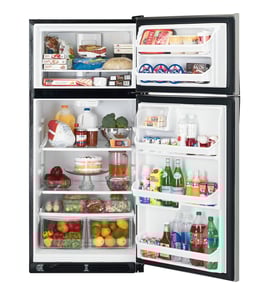


What are the advantages of a top mount fridge?
A top-mount refrigerator like the Frigidaire LFHT2131QP0 puts the freezer on top and the fresh-food section below, which many households find practical and cost-effective. This layout typically offers straightforward storage, easy access to frozen foods, and simpler installation clearances when set up correctly per the LFHT2131QP0 installation guide.
- Easy freezer access: Frozen foods sit higher, so you bend less to reach them.
- Simple, familiar layout: Traditional shelves and bins make organizing groceries straightforward.
- Often lower purchase and repair cost: Fewer complex features can mean fewer failure points over time.
- Good overall capacity for the footprint: Many top-mounts balance freezer and refrigerator space well.
- Flexible placement: With proper clearances (sides/top and rear), they fit many kitchens.
Top-mount benefits are best when the refrigerator is installed level and has room to breathe.
- Keep the unit level and slightly tilted back so doors close and seal properly.
- Allow airflow clearances (commonly about 1 inch at the back and a small gap at sides/top).
- Avoid placing it near heat sources or in extreme room temperatures.
- Confirm the door swing works with nearby walls and cabinets.
- If your model has an ice maker, plan for water supply or keep the ice maker turned off.
| Feature | Top-mount refrigerator | Bottom-freezer refrigerator |
|---|---|---|
| Freezer access | Higher, easier reach | Lower, more bending |
| Fresh-food access | Lower, more bending | Higher, easier reach |
| Layout complexity | Typically simpler | Often more complex |
| Common fit in kitchens | Very common | Common |
Choosing a top-mount refrigerator is often about daily ergonomics and reliability. If you use the freezer frequently, the upper freezer position can make meal prep faster, and correct leveling and clearances help the doors seal and the compressor cool efficiently.
Last updated: January 2026
What is the upper part of a fridge called?
On a Frigidaire top-mount refrigerator like model LFHT2131QP0, the upper section is the freezer compartment. It’s the coldest area of the appliance and is designed to keep foods frozen; on some setups it can also support an ice maker.
- Maintains below-freezing temperatures for long-term storage
- Helps chill air that circulates through both compartments
- Often contains cold air vents that should not be blocked by food
- May include ice-making components on models equipped for an automatic ice maker
| Term you might hear | What it usually means | Where it is on LFHT2131QP0-STYLE units |
|---|---|---|
| Freezer compartment | The upper frozen-food section | Top |
| Fresh food compartment | The main refrigerator section | Bottom |
| Temperature control | Dial/knob that adjusts cooling | Typically inside the fresh food section |
Knowing the correct name helps when you’re troubleshooting cooling issues (for example, warm freezer or warm refrigerator), checking airflow, or ordering parts such as a door gasket or fan components. For operating details and control locations, use the LFHT2131QP0 owner's manual.
Last updated: January 2026
Why is my Frigidaire top mount freezer not freezing?
If your Frigidaire LFHT2131QP0 top-mount freezer is not freezing, the most common causes are incorrect temperature control settings (including being set to 0/OFF), poor airflow from blocked vents, or a fan or sealed-system cooling problem. Start with the controls and airflow checks first; they solve many “not freezing” complaints.
- Confirm the refrigerator/freezer control is not set to “0” or “OFF”; that setting stops the compressor and cooling.
- Adjust temperatures gradually and wait 24 hours for the freezer temperature to stabilize.
- Make sure food packages are not blocking the cold air vents between the freezer and fresh food section.
- Verify the freezer door closes fully and the gasket seals all the way around.
- Listen for the evaporator fan running when the compressor is on; no airflow usually means no freezing.
The LFHT2131QP0 uses a main refrigerator/freezer control that changes temperatures in both compartments. The auxiliary freezer control can usually stay at the factory “Normal” setting and be adjusted only if needed.
| What you change | What it affects | What to do |
|---|---|---|
| Refrigerator/freezer control | Freezer and refrigerator temps | Move in small increments; wait 24 hours |
| Auxiliary freezer control | Fine-tunes freezer airflow/temps | Leave at “Normal” first; adjust only if needed |
For the exact control locations and recommended settings, follow the LFHT2131QP0 owner’s manual.
If the controls are set correctly and airflow is not blocked, a “not freezing” symptom often comes down to airflow or heat removal.
Common part-related suspects include:
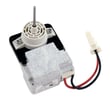
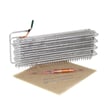
- Evaporator fan not running or noisy: consider the refrigerator evaporator motor 242077705
- Condenser fan not running (warm cabinet sides, poor cooling): consider the refrigerator condenser fan motor 242018301
- Frost buildup on the freezer back wall (airflow restricted): defrost system troubleshooting is needed
A freezer that is not freezing is usually either (1) the compressor is not running because the control is set to 0/OFF, (2) cold air cannot circulate due to blocked vents or a failed fan, or (3) the sealed system cannot remove heat effectively. Fixing the root cause quickly helps prevent food spoilage and reduces strain on the compressor.
Last updated: January 2026
What is the most common problem with a Frigidaire refrigerator?
Cooling problems are the most common issue we see with Frigidaire refrigerators, including the LFHT2131QP0. Most “not cold enough” complaints trace back to airflow restrictions (dirty condenser coils, a weak evaporator fan), temperature controls set incorrectly, or warm air leaking in through worn door gaskets; water and ice issues are also frequent.
- Fridge warm but freezer OK: airflow problem in the fresh food section (often evaporator fan or blocked vents)
- Freezer warm too: dirty condenser coils, condenser fan issue, or sealed-system/compressor problem
- Frost buildup on back wall or poor airflow: defrost system issue or door not sealing
- Unit won’t run: control set to 0/OFF, power supply issue, or start components
- Water/ice problems: supply line/valve issues, low pressure, or air in the line
Use these steps before replacing parts; they solve a large share of “common problems.”
- Confirm the refrigerator is plugged in and the outlet has power
- Make sure the temperature controls are not set to 0 or OFF (this stops cooling but does not remove power)
- Allow time after changes; many refrigerators need up to 24 hours to stabilize after a control adjustment
- Clean dust from the condenser area so the system can reject heat properly
- Inspect door seals for gaps; close a dollar bill in the door and check for easy pull-out
| Symptom | Common cause | Part example for this model |
|---|---|---|
| Warm temps, fan noise changes | Evaporator fan not moving air | Refrigerator evaporator motor 242077705 |
| Warm temps, compressor struggles to start | Failed start device | Electrolux refrigerator compressor start relay 241941005 |
| Moisture, frost, warm spots near door | Door gasket not sealing | Frigidaire refrigerator door gasket (white) 242193213 |
A refrigerator that cannot move air or shed heat efficiently runs longer, warms food faster, and can stress the compressor. Catching simple issues early (controls, airflow, door seal) often prevents bigger repairs.
- Check operating and “before calling for service” steps in the LFHT2131QP0 owner’s manual.
- If you’re seeing a code or flashing display, use Frigidaire refrigerator error codes.
Last updated: January 2026