Installation guide
 Owner’s manual
 Error Codes



How much does it cost to replace a heating element in a Kenmore dryer?
For the Kenmore gas dryer model 11078132413, “heating element” cost depends on what is actually failing. Gas dryers typically don’t use an electric heating element like electric dryers; most no-heat repairs involve ignition or temperature-sensing parts, plus labor if you hire service. See the 11078132413 installation guide for model-specific safety and troubleshooting direction.
Typical cost ranges (parts and service)
Here are realistic ranges we see for common “won’t heat” repairs on gas dryers:
- DIY parts only: about $25 to $120 depending on the failed component
- Service call + repair labor: about $100 to $350 total in many homes (varies by area and access)
- Vent cleaning (if airflow is restricted): often $75 to $200 as a separate service
| What’s being replaced | Common symptom | Example part for this model | Typical parts cost |
|---|---|---|---|
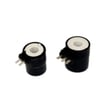
| Gas valve coils | Heats briefly, then stops heating | Dryer valve coil kit 279834 | $25 to $60 |
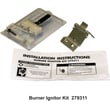
| Igniter | No flame at all | Igniter 279311 | $25 to $80 |
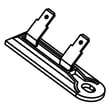
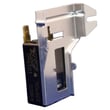
| Thermal fuse | Dryer runs but no heat (or won’t run on some designs) | Thermal fuse W10909685 | $20 to $70 |
| Thermistor | Overheats, underheats, or cycles oddly | Dryer thermistor WP8577274 | $20 to $60 |
What to check before buying parts
Restricted airflow is a top cause of “no heat” complaints and repeat failures.
- Clean the lint screen and housing
- Check the vent duct for crushing, kinks, or blockage
- Confirm strong airflow at the outside vent hood
- If the control shows a “check vent” style message, correct venting first
- If heat starts then quits, suspect coils or overheating protection
Why it matters
On a gas dryer like 11078132413, replacing the wrong “heating” part wastes money and time. Matching the symptom to the correct ignition, safety, or temperature-control component gets heat back faster and helps prevent blown fuses from poor venting.
Last updated: February 2026
Where is the part number on a Kenmore dryer?
On Kenmore gas dryer model 11078132413, the model and serial information (often called the rating label) is typically found inside the dryer door opening on the cabinet frame. That label is the fastest way to identify the correct replacement parts for your exact dryer.
What to look for on the label
Use the label to capture the exact identifiers before ordering parts or scheduling service:
- Model number (for this page: 11078132413)
- Serial number (helps confirm production details)
- Type (gas dryer) and electrical ratings
- Sometimes a manufacturing code or additional ID used for service
For label location diagrams and model identification tips, check the 11078132413 owner's manual.
Common label locations (quick checklist)
If you do not see it immediately inside the door opening, check these other common spots used on Kenmore dryers:
- Inside the door opening on the front frame (most common)
- On the rear panel of the cabinet
- Along the side panel edge near the door opening
- Behind the lower front access panel (on some designs)
Why it matters for parts ordering
Kenmore model numbers can share similar styling across different builds, but parts like a belt, idler pulley, or drum support roller must match the exact model series and configuration.
| What you have | What it helps us match | Example for this model |
|---|---|---|
| Model number | Correct parts list and diagrams | 11078132413 |
| Serial number | Version changes within a model | Confirms exact build |
| Symptom | Narrows likely parts | Squeal, thump, no heat |
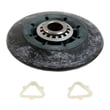
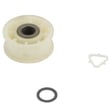
If you are chasing a noise issue after confirming the model number, common wear items include the dryer drum support roller WPW10314173 and the dryer idler pulley W10837240.
Safety note
Before checking labels behind panels, unplug the dryer (and shut off the gas supply if you are opening the cabinet).
Last updated: February 2026
What is the average lifespan of 11078132413?
The average lifespan of the Kenmore 11078132413 gas dryer is about 13 years. You can often extend service life by keeping airflow strong (lint filter and venting) and replacing common wear parts before they cause overheating or noise; see the maintenance guidance in the owner's manual.
What affects lifespan most
A dryer usually fails early from heat stress, restricted airflow, or worn drum support parts.
- Clean the lint screen before every load (airflow stays high, heat stays controlled).
- Keep the vent run short with as few elbows as possible; long venting shortens dryer life.
- Use rigid 4-inch metal venting when possible (better airflow than thin or plastic duct).
- Avoid overloading; it strains the belt, rollers, and motor.
- Address squealing, thumping, or burning smells right away.
Quick maintenance checklist for longer life
Use this as a simple routine for 11078132413:
| Task | How often | Why it matters |
|---|---|---|
| Clean lint screen | Every load | Prevents overheating and long dry times |
| Inspect vent hood flap outside | Monthly | Confirms exhaust is not blocked |
| Clean vent duct (dryer to wall and wall to outside) | Every 6 to 12 months | Reduces heat stress on thermal fuses and sensors |
| Listen for roller or idler noise | Ongoing | Catch wear before it damages the drum or belt |
Parts that commonly wear out (and why)
If your dryer is otherwise in good shape, replacing wear items can be a cost-effective way to reach or exceed the typical 13-year lifespan.
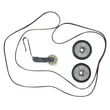
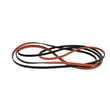
- Belt-4 rib, W10849499: a worn belt can slip, squeal, or stop the drum.
- Dryer drum support roller WPW10314173: worn rollers cause thumping or rumbling.
- Dryer idler pulley W10837240: a failing pulley can squeal and accelerate belt wear.
- Thermal fuse W10909685: can open if airflow is restricted, stopping heat or operation.
Why it matters
Good airflow is the biggest lifespan driver. The installation guidance notes that vent runs longer than specified reduce performance and can shorten dryer life; keeping venting efficient helps protect the burner system, motor, and temperature controls.
Last updated: March 2026