 Owner’s manual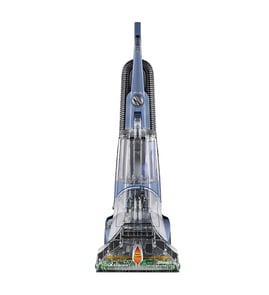

Which is the most effective carpet cleaner?
The most effective carpet cleaner is the one that matches your job size and how often you clean. For whole-room deep cleaning, a full-size upright like the Hoover FH50140 is the most effective style because it sprays solution, scrubs, and extracts dirty water in one pass when you follow the wet-stroke and dry-stroke method in the owner's manual.
Different carpet cleaners excel at different tasks; use this quick guide to pick the right type.
- Full-size upright carpet cleaner: best for deep cleaning large carpeted rooms and routine maintenance
- Portable spot cleaner: best for stairs, cars, and isolated spills
- Upholstery-capable cleaner (hose/tool): best for couches and chairs (only fabrics marked W or W/S)
- Pet-focused cleaning: best when paired with strong extraction and extra dry strokes to reduce residue
- Fast-drying priority: best results come from ending with multiple dry strokes and avoiding over-wetting
| Cleaning situation | Most effective type | What makes it effective |
|---|---|---|
| Whole-room carpet refresh | Upright carpet cleaner (like FH50140) | Wider cleaning path and strong extraction |
| Set-in stains in traffic lanes | Upright carpet cleaner | Repeat passes without saturating the carpet |
| Spills on stairs or upholstery | Hose/tool or portable spot cleaner | Better control in tight areas |
| Odor and residue concerns | Any cleaner with a rinse mode | Water-only rinse removes leftover solution |
Technique matters as much as the machine. Our best-practice approach for FH50140 cleaning is:
- Vacuum thoroughly first (do not use the carpet cleaner as a dry vacuum)
- Use straight, parallel strokes and overlap about 1 inch to prevent streaking
- Make at least 4 passes over the same area (2 with trigger, 2 without)
- End with extra dry strokes until you see little water moving through the dirty tank lid
- Rinse with water only using the Wash/Rinse selector to help remove leftover solution
- Empty the dirty water tank when suction drops or the motor sounds higher-pitched
The “most effective” carpet cleaner is the one that removes soil without leaving excess moisture or detergent behind. Using controlled wet strokes, plenty of dry strokes, and a water-only rinse improves extraction, reduces residue, and helps carpets dry faster.
Last updated: February 2026
What does code 501 mean?
On a Hoover FH50140 carpet cleaner, “501” is not a built-in error code; it is most commonly seen as an HTTP 501 message when a web page or app request is “not implemented” by the server. For the cleaner itself, use the troubleshooting steps in the FH50140 owner's manual to diagnose the symptom you are seeing.
If you saw “501” on a phone, tablet, or computer while trying to open a page, it typically means the website server could not handle the request.
If you saw “501” while working on the carpet cleaner, focus on the actual problem (no power, no suction, no spray, leaks) because this model’s troubleshooting is symptom-based.
- Confirm the unit is plugged into a properly grounded 120-volt outlet.
- Reset the on-off pedal by turning the unit off, then back on.
- Reseat both tanks; a mis-seated clean water/solution tank or dirty water tank can stop spray or suction.
- Check the nozzle area for clogs and rinse it if needed.
- Inspect the brushes for hair/thread buildup and clean them.
- If the unit will not run, try a different outlet (same room circuit) to rule out a tripped breaker.
| Where you saw “501” | What it means | What to do next |
|---|---|---|
| Browser/app page | Server feature not supported | Refresh later, try another browser/device, or try again after a short wait |
| On the cleaner (symptom only) | Not an FH50140 code | Use the manual’s troubleshooting for your symptom |
Treating “501” as a carpet-cleaner error code can send you in the wrong direction. For the FH50140, the fastest path is identifying the symptom (power, spray, suction, brush/nozzle) and following the model’s maintenance and troubleshooting steps.
Last updated: February 2026
What type of carpet cleaner do professionals use?
Professionals typically use hot water extraction (often called steam cleaning) with either truck-mounted systems or high-performance portable extractors because they deliver stronger water pressure, higher heat, and faster recovery (suction) than most consumer machines. Your Hoover FH50140 is designed for at-home extraction cleaning and routine maintenance.
- Truck-mounted hot water extraction: maximum heat, pressure, and vacuum for deep cleaning
- Commercial portable extractor: used in apartments, high-rises, or where a truck mount cannot reach
- CRB (counter-rotating brush) machine: pre-scrubs carpet fibers before extraction
- Specialty spot tools: stair/upholstery tools for edges, risers, and tight areas
- Pre-sprays and rinse agents: used to break down oils and suspend soil for better extraction
We recommend following the setup and cleaning approach in the FH50140 owner's manual, then using these best practices:
- Vacuum thoroughly first; do not use the carpet cleaner as a dry vacuum.
- Use only carpet areas that are moistened by the cleaning process (no immersion).
- Overlap passes about 1/2 inch to reduce streaking.
- Alternate wet and dry strokes; finish with extra dry strokes to speed drying.
- Avoid over-wetting; do not exceed about 4 wet strokes on one area.
- Empty the dirty water tank when suction drops or the motor pitch changes.
| Feature | Pro truck mount | Pro portable extractor | Hoover FH50140 (home) |
|---|---|---|---|
| Heat/pressure | Highest | High | Moderate |
| Suction/recovery | Highest | High | Moderate |
| Best for | Whole-home deep cleaning | Deep cleaning where access is limited | Maintenance cleaning, spots, high-traffic areas |
| Dry time | Fastest | Fast | Varies; improved with more dry strokes |
The biggest difference is soil removal and dry time. Pros remove more water and suspended soil in one visit, which helps carpets dry faster and reduces the chance of wicking or rapid re-soiling. With the FH50140, technique (vacuuming first, controlled wet strokes, and extra dry strokes) is what closes that gap.
Last updated: February 2026
What are the common problems with Hoover carpet cleaners?
Common problems with the Hoover FH50140 carpet cleaner are loss of suction (often when the dirty water tank is full or the float shuts off airflow), weak or no spray from the solution system, and streaking or over-wetting from technique or a dirty nozzle. See the FH50140 owner's manual for model-specific operating and shut-off details.
- Loss of suction or high-pitched motor sound: dirty water tank is full; automatic shut-off/float is engaged.
- Not picking up water well: nozzle not flat to the floor; too few dry strokes; tank/float not seated correctly.
- No solution dispensing or weak spray: clean water/solution tank low or not seated; air in the line (needs priming); nozzle ports clogged.
- Streaking: strokes not overlapped; nozzle not kept flat; dirty nozzle.
- Over-wetting carpet or upholstery: too many wet passes in one area; not finishing with dry strokes.
- Turn the unit off and empty the dirty water tank when suction drops or the motor pitch rises.
- Refill and reseat the clean water/solution tank; confirm it seals and sits fully in place.
- Confirm the float and float retainer are installed and seated (the cleaner should not be used without them).
- Inspect and rinse the nozzle area so it sits flat and airflow is not restricted.
- Prime the spray system: hold the trigger for 30 to 60 seconds with the unit running to push air out of the line.
| Goal | Setting/technique | What to look for |
|---|---|---|
| Better pickup and faster drying | End with more dry strokes | Little water visible moving through the dirty tank lid |
| Fewer streaks | Straight, parallel passes; overlap about 1 inch | Even wet pattern, no striping |
| Avoid over-wetting | Limit wet passes; add dry-only passes | Carpet feels damp, not soaked |
Most “Hoover carpet cleaner problems” are normal protection or airflow issues: when the dirty tank fills, suction drops and the float shut-off can activate. Correct tank seating, nozzle cleanliness, and finishing with dry strokes restores pickup and reduces drying time.
Last updated: February 2026
Why is my Hoover FH50140 carpet cleaner not picking up water?
If your Hoover FH50140 carpet cleaner isn’t picking up water, the most common cause is the Dirty Water Tank reaching the automatic shut-off point (the yellow float disk rises and stops suction) or a dirty tank lid filter screen/nozzle area restricting airflow. Use the steps below to restore suction.
- Turn the cleaner OFF and unplug it.
- Empty the Dirty Water Tank; when it’s full, suction shuts off and the motor pitch gets noticeably higher.
- Remove the Dirty Water Tank lid and clean the filter screen on the bottom of the lid (lint and debris here can kill suction).
- Rinse debris from the tank lid and the bottom of the Dirty Water Tank.
- Confirm the float and float retainer are installed correctly (do not run without them in place).
- Remove the nozzle and clean out buildup and clogs in the nozzle path and pickup area.
We follow the same process outlined in the owner's manual for FH50140:
- Unlatch the Dirty Water Tank lid latch (near the quick spout/pour cap area).
- Pivot and lift off the Dirty Water Tank lid.
- Remove lint from the filter screen on the bottom of the lid.
- Rinse the lid and tank bottom; reassemble the lid tabs and latch.
| Symptom | Most likely cause | What to do |
|---|---|---|
| Motor suddenly sounds higher-pitched and pickup stops | Automatic shut-off triggered by full tank/float up | Empty Dirty Water Tank; check float moves freely |
| Weak pickup all the time | Filter screen or nozzle area clogged | Clean tank lid filter screen; remove nozzle and clear clogs |
| Leaves lots of water behind after cleaning | Not enough dry strokes or nozzle not flat | Keep nozzle flat; finish with multiple dry strokes |
Pickup depends on steady airflow through the nozzle, hose path, and recovery tank lid screen. When the tank is full (float up) or the screen/nozzle is clogged, suction drops and the cleaner cannot recover dirty water.
Last updated: February 2026