


How to clean filters on KitchenAid vent hood?
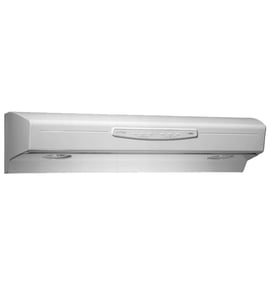
For the KitchenAid KVUB606DSS3 range hood, we clean the filters by turning power off, removing the filter(s), washing with warm water and detergent (or using the dishwasher if the filter is dishwasher-safe), then reinstalling once fully dry.
- Turn the hood off; if you can, switch off power at the breaker for extra safety.
- Let the hood cool completely (lights and surrounding metal can be hot).
- Remove the grease filter and note its orientation so it goes back the same way.
- Wash the filter in a sink with warm water and degreasing dish soap; use a soft brush for buildup.
- Rinse well and dry fully before reinstalling.
- If you run the filter in the dishwasher, place it securely and expect possible discoloration over time.
Grease filters are reusable and meant to be cleaned; charcoal filters are used for recirculating setups and are replaced, not washed.
| Filter type | Typical setup | Maintenance | Common sign it needs attention |
|---|---|---|---|
| Grease filter | Vented or recirculating | Clean regularly | Grease film, reduced airflow |
| Charcoal filter | Recirculating only | Replace periodically | Odors linger after cooking |
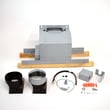
If your KVUB606DSS3 is recirculating, use the range hood charcoal filter kit W10272068 and replace it on a regular schedule based on cooking frequency.
- Light cooking: every 1 to 2 months
- Regular cooking: every 3 to 4 weeks
- Heavy frying or high-heat cooking: every 1 to 2 weeks
A clean filter helps your blower move air efficiently, reduces odors, and helps keep grease from building up inside the hood and ducting.
Last updated: February 2026
How do I know what model range hood I have?
To identify your range hood model, find the rating label on the hood and read the model number printed on it. For KitchenAid range hoods like KVUB606DSS3, the label is commonly on the top, the underside, or behind the grease filters.
Check these spots in order (most common first):
- Behind the grease filters: remove the metal filters and look on the inner frame
- Underside of the hood: along the front edge or near the light housing
- Top of the hood: sometimes visible from inside the cabinet above
- Inside the blower area: near the fan housing (power off first)
- Side wall inside the canopy: near wiring or the control area
If your filters are missing or damaged, replacing them can also make the label easier to access; see the range hood grease filter W10915369.
Most labels include several identifiers. Use this quick guide:
| Label item | What it’s used for | Example |
|---|---|---|
| Model number | Finds the correct parts list | KVUB606DSS3 |
| Serial number | Identifies production run | (varies) |
| Brand | Confirms manufacturer | KitchenAid |
- Copy the model number exactly, including all letters and numbers
- Take a clear photo of the label before you start shopping
- If the label is greasy, wipe it gently with a damp cloth and mild dish soap
- Match parts by model number first, then confirm by part name and diagram
KitchenAid range hoods can look similar across model families, but parts like the electronic control, blower assembly, damper, and charcoal filter kit can vary by revision. Using the exact model number ensures the part fits and the wiring and mounting points match.
Last updated: February 2026
What are the parts of a range hood?
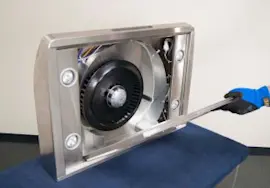
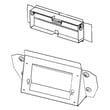
A KitchenAid range hood like model KVUB606DSS3 is built from a few core systems: airflow (blower and ducting), filtration (grease and sometimes charcoal), controls (switches or electronic control), and lighting. The chimney or canopy covers the ductwork and helps direct smoke and odors.
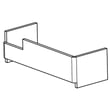
- Grease filter: traps grease before it reaches the blower and ductwork (example: range hood grease filter W10915369).
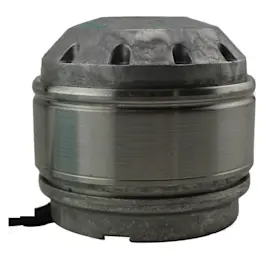
- Blower assembly or fan motor: pulls air through the filters and pushes it out (example: range hood blower assembly W11035826).
- Damper: helps prevent outside air from backdrafting into the kitchen (example: range hood damper W10847841).
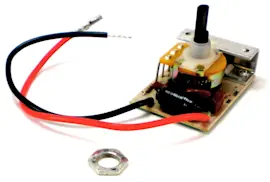
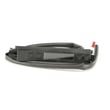
- Controls: switches or an electronic control that runs fan speeds and lights (example: electronic control W11282990).
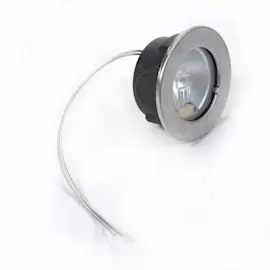
- Lights: illuminate the cooktop area (example: light W11109591).
- Chimney or duct cover: decorative cover that hides ducting on many wall-mount designs.
Some hoods vent air outside; others recirculate air back into the kitchen using charcoal filtration.
| Setup | Where the air goes | Key extra parts |
|---|---|---|
| Vented (ducted) | Outside | Damper, duct connection |
| Recirculating (ductless) | Back into kitchen | Charcoal filter kit, recirculation kit |
For recirculating setups, a common add-on is a charcoal filter (example: range hood charcoal filter kit W10272068).
- Clean or replace the grease filter regularly; clogged filters reduce airflow.
- Replace charcoal filters on schedule if you recirculate.
- If airflow is weak, check for a stuck damper or restricted ducting.
- If the fan or lights act up, inspect wiring connections and the control.
Knowing the major parts helps you troubleshoot faster: poor suction usually points to filters, ducting, damper, or the blower; dead lights usually point to the light assembly or control.
Last updated: February 2026
Why would a range hood fan stop working?
A KitchenAid KVUB606DSS3 range hood fan usually stops working because airflow is restricted (grease filter clogged), power is interrupted (cord, outlet, breaker), or an internal electrical part fails (control, power board, motor capacitor, or blower). Start with the filter and power checks first.
- Turn the fan on and try all speeds; note if any speed works.
- Verify the hood has power (reset breaker or GFCI; test the outlet).
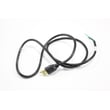
- Inspect the plug and cord for damage; replace the range hood power cord W10613691 if it is cut, overheated, or loose.
- Remove and clean the grease filter; a heavily loaded filter can choke airflow and make the fan seem weak.
- If the hood is ducted, check the damper for sticking or blockage.
| What’s happening | Most likely cause | What to do next |
|---|---|---|
| Fan is dead on all speeds | No power, failed control, failed power board | Confirm power; then test/replace control components |
| Fan runs but barely moves air | Grease filter clogged, damper stuck, duct restriction | Clean filter; inspect damper and duct |
| Fan hums but won’t start | Weak capacitor, seized blower | Check blower for binding; consider capacitor |
| Fan is noisy or vibrating | Grease buildup, loose blower, worn motor | Clean and inspect blower mounting |
These are frequent culprits on many range hoods when basic power and airflow checks pass:
- Electronic control W11282990 (buttons respond inconsistently or not at all)
- Power board W11282983 (intermittent power to fan or dead hood)
- Capacitor (25 mf) W11715950 (motor hums, struggles to start)
- Range hood blower assembly W11035826 (motor seized, loud, or won’t run)
- Range hood grease filter W10915369 (airflow restriction from grease loading)
A restricted filter or stuck damper forces the blower to work harder, which can reduce ventilation performance and shorten the life of the blower motor and capacitor. Fixing airflow issues early often prevents bigger electrical failures.
Related help: range hood fan doesn't work
Last updated: February 2026