Installation guide
 Owner’s manual
 Error Codes



What is the life expectancy of an Electrolux dryer?
Electrolux dryers, including model EIMED60LSS2, typically last 10 to 15 years with normal household use. Consistent airflow maintenance (lint screen and venting) and avoiding overheating are the biggest factors that help a dryer reach the high end of that range.
What affects dryer lifespan the most
A dryer’s life is usually determined by heat stress, airflow restriction, and wear on moving parts.
- Clean the lint screen before every load; replace a damaged screen such as the kenmore dryer lint screen 134793600.
- Keep the exhaust vent free-flowing and routed outdoors (a key installation requirement); confirm your setup in the installation guide.
- Do not overload; overloading strains the motor, belt, and drum support system.
- Listen for squealing or thumping; worn rollers, idler parts, or a stretched belt shorten life.
- Use the correct cycle and temperature; excessive heat accelerates thermostat and limiter failures.
Common wear items (and what they do)
These parts often determine whether a dryer feels “worn out” even when the cabinet and controls are fine.
| Symptom | Likely wear area | Example part on this model page |
|---|---|---|
| Squealing, chirping | Idler pulley or spring | Dryer idler assembly 134793511 |
| Thumping, rumbling | Drum support rollers | Dryer drum support roller (part ID 5304523152) |
| Drum not turning | Belt or idler system | White-westinghouse dryer drum belt (part ID 134719300) |
| Overheating or shuts off | High-limit safety devices | Kelvinator dryer high-limit thermostat (part ID 3204267) |
Why it matters
When airflow is restricted, the dryer runs hotter and longer. That extra heat shortens the life of key components like the heating element, thermal limiter, and high-limit thermostat, and it can also warp or wear drum support parts faster.
Quick “repair vs. replace” rule for lifespan decisions
- Under 8 years: repairs are usually worth it if the drum turns and the cabinet is solid.
- 10 to 15 years: expect more frequent wear-part replacements (belt, rollers, idler, thermostats).
- Over 15 years: replacement becomes more practical if multiple major parts fail close together.
Last updated: February 2026
Is it worth replacing a heating element in a dryer?
Yes, it’s usually worth replacing the heating element in an Electrolux dryer like model EIMED60LSS2 when the dryer is otherwise in good shape. A failed element is a common, single-part repair that can restore normal heat and extend the dryer’s usable life for far less than replacing the entire appliance.
When replacing the heating element makes sense
We typically recommend replacing the element when the dryer still runs normally (tumbles, controls work) but has little or no heat.
- The drum tumbles and airflow feels strong, but clothes stay damp
- The dryer heats intermittently (cycles between warm and cool too quickly)
- The unit is in good overall condition (no major noise, no control issues)
- You have already cleaned the lint screen and checked the vent path
- You want to avoid replacing the dryer due to a single heat failure
A common replacement part for this model is the frigidaire dryer heating element 134792700.
When it’s smarter to fix something else first
Many “no heat” complaints are caused by airflow restrictions or safety devices opening due to overheating.
- Lint screen is coated with residue (fabric softener sheets can clog it)
- Vent duct is crushed, too long, or packed with lint
- The dryer overheats and trips a limiter or thermostat
- The dryer has multiple symptoms (no heat plus no tumble, burning smell, repeated shutdowns)
For heat-related safety cutoffs, parts that often get checked with the element include the dryer inlet thermal limiter 137032600 and the kelvinator dryer high-limit thermostat 3204267.
Quick cost and effort comparison
| Option | What you get | Typical best for |
|---|---|---|
| Replace heating element | Restores heat when the rest of the dryer is solid | Single-symptom “no heat” |
| Replace limiter/thermostat (or test them) | Fixes heat shutdown or no-heat caused by an open safety device | Overheating or repeated no-heat |
| Address airflow (clean venting) | Prevents repeat failures and improves dry times | Long dry times, hot cabinet |
Why it matters
A heating element often fails because of restricted airflow. Fixing the venting and lint buildup at the same time helps prevent repeat element or thermostat failures and keeps dry times and energy use under control.
Safety and install notes we follow
Any time we service an electric dryer, we follow the grounding and power-safety guidance in the installation guide and keep the dryer properly grounded; we do not cut or bypass the grounding prong.
Last updated: February 2026
How to tell if your dryer heating element is bad?
A bad heating element in your Electrolux dryer model EIMED60LSS2 typically shows up as no heat, weak heat, or drying times that suddenly get much longer. Confirm it by safely disconnecting power and checking the element for continuity with a multimeter; an open circuit means the element is failed.
Common symptoms of a failed heating element
- Clothes stay damp at the end of a normal cycle
- Dryer runs but you feel little to no warm air at the exhaust
- Cycles take much longer than usual to dry
- You smell a hot, “electrical” odor (stop using the dryer and inspect)
- The dryer overheats and shuts down (often tied to airflow restrictions, not just the element)
Quick checks before you test parts
Poor airflow can mimic a bad heater and can also cause repeated thermal cutoffs.
- Clean the lint screen and lint screen housing
- Check the vent hose for kinks, crushing, or heavy lint buildup
- Make sure the outside vent hood opens freely
- Confirm the dryer is level and not pushed hard against the duct
- If you have access to a manometer, verify the vent back pressure is not over 1.0 inch of water column (installation requirement)
For venting and installation details, follow the installation guide.
How to test the heating element (basic multimeter method)
- Unplug the dryer (electric shock hazard).
- Access the heater terminals (location varies by design; use the wiring/parts views in the owner's manual).
- Remove at least one wire from the element terminal.
- Measure resistance across the element terminals.
- Check for a short to the metal heater housing (one probe on a terminal, one on the housing).
What readings mean
| Test result | What it usually indicates | What to do next |
|---|---|---|
| No continuity (open circuit) | Element coil is broken | Replace the heating element |
| Continuity to metal housing | Element is shorted | Replace the heating element |
| Continuity and normal resistance | Element may be OK | Check thermostats, thermal limiter, airflow |
Parts that commonly get replaced with “no heat” complaints
On EIMED60LSS2, these parts are often involved in heating problems:
- Frigidaire dryer heating element 134792700
- Dryer inlet thermal limiter 137032600
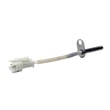
- Kelvinator dryer high-limit thermostat 3204267
Why it matters
Running an electric dryer with restricted venting or a shorted heater can cause overheating, repeated shutdowns, and damage to safety thermostats. Verifying airflow and testing with a meter helps you replace the right part the first time.
Last updated: February 2026
What are common Electrolux dryer problems?
Common problems we see with the Electrolux EIMED60LSS2 dryer are long drying times, no heat, drum not turning, stopping mid-cycle, and loud squealing or thumping. Most of these issues trace back to restricted airflow (lint or venting), worn drum-drive parts, or failed heating and temperature-sensing components.
Most common symptoms and what usually causes them
- Long dry times or clothes still damp: lint screen clogged, vent duct restricted, blower housing packed with lint
- No heat or weak heat: failed heating circuit parts such as a thermal limiter or high-limit thermostat; airflow restriction can also trigger overheating protection
- Drum not turning but motor runs or hums: worn or broken belt, idler problem, or a seized drum roller
- Stops mid-cycle: overheating from poor venting, or a temperature-sensing issue
- Squealing, scraping, or thumping: worn idler, drum support rollers, or belt wear
Quick checks we recommend before replacing parts
- Unplug the dryer; for gas models, shut off the gas supply.
- Clean the lint screen and confirm airflow is strong at the outside vent hood.
- Inspect the vent path (behind the dryer through the wall) for kinks, crushed flex duct, or lint buildup.
- If the drum will not turn easily by hand, check for a jammed roller or a belt issue.
- If you recently installed the dryer or moved it, confirm the electrical and grounding setup matches the requirements in the installation guide.
Parts that commonly fix these problems (when symptoms match)
| Symptom | Common wear item | Example part for EIMED60LSS2 |
|---|---|---|
| Drum will not tumble | Drum belt | White-westinghouse dryer drum belt 134719300 |
| Squealing or poor belt tension | Idler assembly | Dryer idler assembly 134793511 |
| Thumping or rumbling | Drum support roller | Dryer drum support roller 5304523152 |
| Overheats or no heat after overheating | High-limit thermostat | Kelvinator dryer high-limit thermostat 3204267 |
| No heat (thermal protection open) | Inlet thermal limiter | Dryer inlet thermal limiter 137032600 |
Why it matters
Airflow problems do more than slow drying; they can overheat the heater housing and repeatedly trip safety devices. Fixing venting and lint buildup first helps the dryer heat correctly and protects parts like the heating element, thermostats, and motor.
Last updated: February 2026