Owner’s manual
 Error Codes
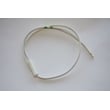




What is the average life expectancy of a GE refrigerator?
GE refrigerators typically last 12 to 16 years. For your GE GWE19JSLNFSS bottom-mount refrigerator, consistent temperatures, clean condenser airflow, and staying on top of routine items like the water filter help you reach the high end of that range (see the GWE19JSLNFSS owner's manual).
Typical lifespan and what affects it
Most refrigerators fail early due to heat stress, poor airflow, or chronic icing. These factors have the biggest impact:
- Condenser airflow: dust and pet hair make the compressor run hotter and longer
- Door sealing: warm air leaks cause longer run times and frost
- Water system upkeep: restricted filters can reduce flow and strain the inlet valve
- Temperature stability: frequent door openings and overpacking reduce cooling efficiency
- Power quality: repeated outages or surges can stress control boards
Quick reference: what “normal” looks like
| Item | Good target | Why it matters |
|---|---|---|
| Fresh food temp | 37°F to 40°F | Food safety and compressor run time |
| Freezer temp | 0°F to 5°F | Ice quality and frost control |
| Water filter replacement | Every 6 months | Prevents low flow and water system issues |
Maintenance that extends refrigerator life
We recommend these practical steps for the GWE19JSLNFSS:
- Vacuum and brush the condenser area regularly (more often with pets)
- Keep vents inside the refrigerator and freezer unblocked
- Confirm doors close fully and the gasket seals all the way around
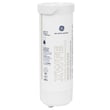
- Replace the water filter on schedule; the manual specifies every 6 months for the XWFE style filter
- If you need water without a filter temporarily, use the correct bypass plug such as the refrigerator water filter bypass WR17X33825
Why it matters
A refrigerator that runs longer to maintain temperature wears the sealed system faster and can also trigger secondary problems like frost buildup, warm spots, and dispenser or ice maker complaints.
Last updated: January 2026
Is GE Cafe considered high-end?
Yes. GE Café is considered a premium, high-end line within the GE family, positioned above standard GE models with more design-forward styling, upgraded finishes, and feature-rich options. For details that apply to your refrigerator, use the GWE19JSLNFSS owner's manual.
How GE Café compares to other GE lines
GE generally tiers its kitchen brands by styling, features, and price. Here is the typical positioning:
| GE line | Typical positioning | What you usually get |
|---|---|---|
| GE (standard) | Mainstream | Core features, value-focused designs |
| GE Profile | Premium | More advanced features and performance upgrades |
| GE Café | High-end premium | Designer styling, customization, smart features |
| GE Monogram | Luxury | Built-in options, luxury pricing and finishes |
What “high-end” usually means in real use
When customers call a line “high-end,” they usually mean a mix of design, features, and ownership experience. With GE Café, that often includes:
- More distinctive styling and coordinated finishes
- Higher-end handles and hardware options (varies by model)
- More feature depth (controls, lighting, convenience features)
- Stronger focus on matching a “designer kitchen” look
- Pricing that typically sits above standard GE and often above GE Profile
Why it matters when buying parts or troubleshooting
Brand line matters less than the exact model number when you are ordering parts or diagnosing issues. For your GE GWE19JSLNFSS refrigerator, always match parts by model and symptom, then confirm procedures in the manual.
If you are working on water and ice performance, these model-matched parts are commonly involved:
- GE refrigerator water filter XWFE for filtration and flow
- Refrigerator water filter bypass WR17X33825 for testing or operation without a filter
Quick tip for owners
If your refrigerator has a filter system, replace the filter about every 6 months or sooner if flow drops; that helps protect the water inlet valve and keeps dispenser performance consistent.
Last updated: January 2026
What is the most common problem with a GE refrigerator?
The most common problem we see with GE refrigerators like model GWE19JSLNFSS is a cooling complaint (fresh food or freezer not cold enough). The most frequent causes are airflow restrictions, dirty condenser coils, or a fan/defrost issue; ice maker and water system issues are also common.
Most common symptoms and what they usually point to
- Not cooling enough: dirty condenser coils, blocked vents, door not sealing, evaporator fan issue
- Freezer cold but fridge warm: blocked air damper/vents, frost buildup from a defrost problem
- Running all the time: dirty coils, warm room, door left ajar, gasket leak
- Ice maker not making ice: filter missing/clogged, low water pressure, inlet valve issue
- Water dispenser slow: filter due, air in the line, low supply pressure
Quick checks you can do first (no tools)
- Set temps to typical targets: 37°F fresh food and 0°F freezer.
- Make sure vents inside both compartments are not blocked by food packages.
- Clean the condenser coils and confirm the unit has proper airflow around it.
- Check door closure and gasket contact all the way around.
- If ice maker stopped, confirm a filter or bypass plug is installed (the ice maker will not run without one).
Water filter and ice maker: model-relevant details
For GWE19JSLNFSS, the manual calls out the XWFE style filter on some models and notes replacement about every 6 months, or sooner if flow drops. If you are troubleshooting ice maker or dispenser performance, start with the filter and proper installation per the GWE19JSLNFSS owner's manual.
| Issue | Most likely first fix | Related part for this model |
|---|---|---|
| No ice | Install/replace filter; verify water pressure | GE refrigerator water filter XWFE |
| Slow fill or no water | Check supply; test inlet valve | Refrigerator water inlet valve WR57X30890 |
| Temps swing | Check sensor and airflow | GE profile refrigerator temperature sensor WR55X10025 |
Why it matters
Cooling and ice maker problems often share the same root causes: restricted airflow, poor heat rejection at the condenser, or weak water flow through the filter and valve. Catching these early helps protect food quality and reduces compressor run time.
Last updated: January 2026