Installation guide
 Owner’s manual
 Error Codes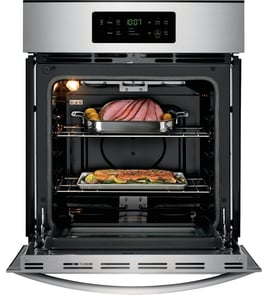




What's the best electric wall oven?
There is no single “best” electric wall oven for everyone; the best choice depends on your cutout size, whether you want single or double ovens, and which features you will actually use (convection, self-clean, probe cooking, smart controls). For KitchenAid owners, we recommend matching features and fit to your kitchen first, then comparing reliability and serviceability.
- Confirm fit first: measure your cabinet cutout (height, width, depth) and compare to the oven’s required cutout.
- Pick the configuration: single oven for simplicity; double oven for capacity and flexibility.
- Decide on convection: great for even baking and multi-rack cooking.
- Look for temperature control features: calibration/offset options help fine-tune baking results.
- Plan for long-term ownership: choose a model with readily available parts and clear documentation.
| Priority | What to look for | Who it’s best for |
|---|---|---|
| Best baking performance | Convection, strong temperature stability | Frequent bakers |
| Best convenience | Self-clean, probe cooking, easy-to-use controls | Busy households |
| Best value | Fewer “smart” features, proven design | Budget-focused buyers |
| Best capacity | Double wall oven, multiple racks | Large families, entertainers |
Use your existing oven as the benchmark: if you like how it fits and performs, prioritize a replacement with the same cutout class and similar features. For exact installation dimensions, electrical requirements, and venting clearances, follow the KEBS179BSS00 installation guide.
If you are troubleshooting performance (not shopping), start with basics that affect “best results”:
- Verify the oven is reaching set temperature (use an oven thermometer).
- Check for error codes and what they mean using KitchenAid wall oven error codes.
- If the oven will not heat, common causes include a failed bake element or a heat-related safety device such as a thermal fuse.
Wall ovens are built-in appliances; the “best” model is the one that fits your cabinet cutout, matches your cooking style, and can be serviced with available parts over time.
Last updated: February 2026
Which KitchenAid model do I have?
Your KitchenAid wall oven’s model number is printed on the appliance’s rating label; for this parts page, the model is KEBS179BSS00. On most KitchenAid wall ovens, you’ll find the label around the oven door frame (often along the side trim) or just inside the opening when you open the door.
Check these common spots first (power off is not required just to read the label):
- Left or right side of the oven door frame (most common)
- Along the front frame behind the door, near the hinge area
- On the lower oven frame for double wall ovens
- Occasionally behind the lower vent trim area
If the label is hard to read, use a flashlight and take a close-up photo; zooming in usually makes the characters clearer.
KitchenAid wall oven model numbers are typically a mix of letters and numbers. For this unit, it will read exactly:
- Model: KEBS179BSS00
Use this to confirm you are reading the right line on the tag:
- Look for the word MODEL followed by letters and numbers
- Write it down exactly, including any trailing digits (like 00)
- Record the serial number too; it helps match production variations
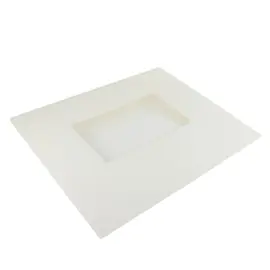
We use the exact model number to match the correct parts, wiring, and trim for your KitchenAid wall oven. Even a one-digit difference can change items like the oven bake element, door glass, or electronic control.
| What you’re looking for | Why we need it |
|---|---|
| Model number (example: KEBS179BSS00) | Ensures parts fit and mount correctly |
| Serial number | Helps match version changes by production run |
Use the KEBS179BSS00 owner’s manual to confirm the rating label location and the exact model/serial format for your oven.
Last updated: February 2026
What is the life expectancy of a KitchenAid wall oven?
Most KitchenAid electric wall ovens, including model KEBS179BSS00, typically last 10 to 15 years with normal household use. Lifespan depends most on heat exposure (especially self-clean cycles), ventilation, and how quickly you address overheating or temperature-control problems.
A wall oven’s service life is mainly driven by how hard its heating and control components work over time.
- Self-clean frequency: high heat stresses wiring, thermal protection devices, and controls
- Ventilation and installation: restricted airflow raises internal temperatures
- Cooking habits: long bakes and frequent high-temp roasting add wear
- Maintenance: keeping vents clear and door seals intact helps temperature stability
- Repair timing: fixing small issues early prevents damage to the electronic control
These are the most common signs an electric wall oven is nearing major repair territory:
| Symptom | Common cause | What to check first |
|---|---|---|
| Oven will not heat | Open heating circuit or safety device tripped | Bake element, thermal fuse, wiring connections |
| Temperature swings | Sensor or control issue | Temperature sensor, calibration settings |
| Shuts off during use | Overheating protection activating | Cooling fan operation, venting, high-limit thermostat |
| Display/control problems | User interface or control failure | Power supply, control board connections |
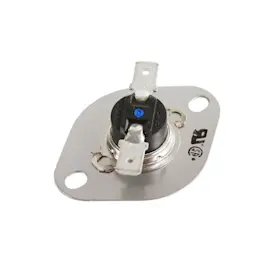
If the oven is completely dead after an overheat event, we often start by checking the thermal fuse WPW10545255 because it is designed to open and cut power when temperatures get unsafe.
We recommend these practical habits to extend life without changing how you cook.
- Use self-clean only when truly needed; wipe spills sooner instead
- Keep the lower vent area clear; do not block airflow with foil or oversized pans
- Avoid slamming the door; it protects hinges and door glass alignment
- Confirm the oven is level and installed correctly using the installation guide
- If baking seems off, correct temperature settings rather than overcooking to compensate
A wall oven is a high-heat, built-in appliance; excess heat buildup is the fastest way to shorten the life of parts like the bake element, high-limit thermostat, and electronic control. Good airflow and avoiding unnecessary extreme heat cycles typically deliver the longest service life.
Last updated: February 2026
Are KitchenAid appliances considered high end?
Yes. KitchenAid is widely considered a premium, upper-mid-range brand; for a KitchenAid wall oven like model KEBS179BSS00, you can expect pro-style design, strong cooking performance, and solid build quality, typically priced below true luxury brands.
KitchenAid generally sits between mainstream brands and luxury brands.
- Mainstream: value-focused features and finishes
- Premium (KitchenAid): upgraded styling, better feature sets, heavier-duty feel
- Luxury: highest-end materials, specialized performance, highest price tier
| Tier | What you typically get | Who it’s best for |
|---|---|---|
| Mainstream | Basic cooking modes, simpler controls | Budget-first kitchens |
| Premium (KitchenAid) | Pro-style look, more cooking modes, better fit and finish | Serious home cooks |
| Luxury | Top-tier materials, specialized systems, prestige pricing | Design and performance-first buyers |
Even within a premium brand, the experience depends on the specific wall oven series and features. For KEBS179BSS00, “high end” usually shows up as:
- More refined exterior styling and handle/trim options
- More precise temperature control than entry-level ovens
- Better insulation and door sealing for steadier baking
- More advanced control features than basic models
- Strong parts support for long-term ownership (elements, controls, door glass, racks)
For feature details and operating modes, use the KEBS179BSS00 owner’s manual.
Brand tier affects what you pay up front and what you can expect over time. Premium ovens like KitchenAid typically deliver better everyday results (baking consistency, broiling performance, and overall feel), and they are often worth repairing when a common wear part fails.
If you’re comparing performance issues or display faults, our KitchenAid wall oven error codes resource helps you quickly identify what the oven is reporting.
Last updated: February 2026
How to reset a KitchenAid wall oven?
To reset your KitchenAid wall oven model KEBS179BSS00, we recommend doing a simple power reset: turn the oven off, cut power at the breaker for about 1 minute, then restore power. This clears many control glitches and gets the display back to normal.
- Press Cancel/Off to stop any active bake, broil, or self-clean cycle.
- Turn OFF the oven circuit breaker (or remove the fuse) at your home electrical panel.
- Wait 60 seconds (we use this time to let the control fully discharge).
- Turn the breaker ON.
- Set the clock if prompted, then test Bake at 350°F for a few minutes.
A reset helps when the control is “stuck”, but it will not fix a failed safety device or heating circuit problem. Check these common causes next:
- Tripped breaker again (indicates an electrical issue that needs attention)
- Overheat protection opened, such as a thermal fuse WPW10545255
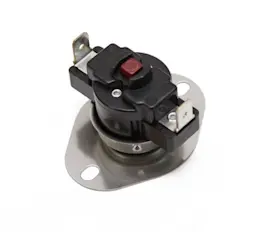
- High-limit device opened, such as a range high-limit thermostat WP4449751
- Heating problem (for example, a failed bake element)
- Control or keypad issue (intermittent response, random beeping)
| Symptom | What it usually points to | Best next step |
|---|---|---|
| Display works, no heat | Heating circuit issue | Inspect element and wiring; test components |
| Display blank | Power supply or safety device open | Check breaker, then test fuse/thermostat |
| Error code shows | Control detected a fault | Use the error code chart |
A proper reset is the fastest way to clear minor electronic control issues after a power flicker, canceled self-clean, or unresponsive keypad. If the oven immediately fails again after resetting, that pattern helps narrow the problem to power, overheating protection, or a control fault.
- Use the KEBS179BSS00 owner’s manual for the exact control panel key sequence and any model-specific reset behavior.
- If an error code appears after reset, use KitchenAid wall oven error codes to match the code to the most likely failed part or condition.
Last updated: February 2026
Why is my KitchenAid oven not working?
If your KitchenAid wall oven model KEBS179BSS00 is not working, the most common causes are a tripped breaker or loose power connection, a blown safety device (thermal fuse or high-limit thermostat), or a failed heating or control component. Start with power, then check heat and safety parts.
- Confirm the oven display is on; if it is blank, check the home breaker (wall ovens typically use a 240V circuit).
- If the display works but it will not heat, try Bake and Broil to see if either mode heats.
- Cancel any active self-clean cycle and let the oven cool fully; overheating protection can stop operation.
- Check for an error code and follow the steps in KitchenAid wall oven error codes.
- Review basic operation and settings in the KEBS179BSS00 owner's manual.
When power is present but cooking functions fail, these parts are common suspects:
- Thermal fuse: oven may be completely dead or lose key functions after overheating (see thermal fuse WPW10545255).
- High-limit thermostat: oven may stop heating or shut down when it senses excessive temperature (see range high-limit thermostat WP4449751).
- Bake element: weak or no bake heat; uneven baking (see oven bake element W11545804).
- User interface/control: beeping, unresponsive keys, or no heat commands reaching components (see electronic control WPW10751146).
| Symptom | Most common cause | What to do next |
|---|---|---|
| No display, no lights | Power supply issue, thermal fuse | Check breaker and wiring; test thermal fuse |
| Display on, no heat in Bake or Broil | High-limit thermostat, control, wiring | Check error codes; inspect safety devices and harness |
| Broil works, Bake does not | Bake element | Inspect element for damage; test/replace |
| Random shutoff during use | Overheat condition, high-limit thermostat | Verify venting and cooling; check thermostat |
Wall ovens like the KitchenAid KEBS179BSS00 use safety cutoffs to prevent overheating. If a thermal fuse or high-limit thermostat opens, the oven can appear “dead” or refuse to heat even though the display still works. Fixing the root cause helps prevent repeat failures.
Last updated: February 2026