
How much should it cost to have a new garbage disposal installed?
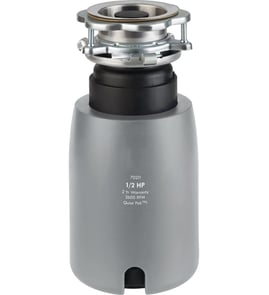
For a Kenmore 175605150 in-sink-erator garbage disposal replacement, a typical installed price is about $300 to $550 for a straightforward swap. If the job needs new wiring, a new switch/outlet, or drain modifications, total cost commonly rises to $550 to $650+.
Typical installed cost breakdown
Most installation quotes combine the disposal, labor, and small plumbing supplies.
- Disposal unit: about $100 to $400+ (horsepower, noise insulation, and features change the price)
- Labor for a simple replacement: about $100 to $250
- Extra parts/supplies: about $10 to $75 (putty, clamps, fittings, cord kit, etc.)
- Electrical or plumbing changes (if needed): often adds $150 to $400+
| Job type | What’s included | Typical total cost |
|---|---|---|
| Like-for-like replacement | Remove old unit, mount new unit, reconnect drain and power | $300 to $550 |
| Replacement plus drain updates | New trap/tailpiece, dishwasher inlet changes, leak fixes | $400 to $650 |
| New install (no prior disposal) | New electrical, switch, possible cabinet/drain changes | $550 to $650+ |
What makes the price go up
These are the most common reasons a “simple swap” turns into a longer job:
- Hardwired connection that needs a new cord setup or junction box work
- Corroded mounting ring, seized fasteners, or leaking sink flange
- Dishwasher drain hookup changes (or adding a dishwasher inlet)
- Tight cabinet space or disposal that is heavier than the old unit
- Drain alignment issues that require reworking the P-trap or discharge tube
Why it matters
A garbage disposal is both a plumbing and electrical appliance. Paying for the right scope (mounting, sealing, drain alignment, and safe power connection) helps prevent leaks, nuisance clogs, and premature motor failure.
How to keep costs predictable
- Match the new disposal’s mounting style to the old one when possible
- Confirm whether your setup is plug-in or hardwired before buying
- Ask whether the quote includes haul-away of the old disposal
- If you’re DIYing, use a safety checklist first: are diy appliance repairs safe
Last updated: February 2026
Is it cheaper to repair or replace a garbage disposal?
For a Kenmore 175605150 in-sink-erator garbage disposal, it’s usually cheaper to repair a minor issue on a newer unit, but replacement is the better value when the disposal is older (about 8 to 10 years) or has major problems like persistent leaks, repeated resets, or a failing motor.
Quick decision guide (repair vs. replace)
- Repair when the disposal:
- Hums but is jammed (often cleared with the hex key or by freeing the impellers)
- Trips the reset occasionally after a jam
- Has a loose mounting ring or minor vibration
- Has a simple electrical issue (switch, loose wire, tripped breaker)
- Replace when the disposal:
- Leaks from the housing or seams (cracked body)
- Has repeated overheating or frequent reset trips with normal use
- Has loud grinding with no jam present (internal wear)
- Has corrosion, burning smell, or visible damage to wiring
Typical cost comparison (what most homeowners see)
| Scenario | Typical out-of-pocket cost | Best value most of the time |
|---|---|---|
| DIY jam clear, reset, tighten mount | $0 to $30 | Repair |
| Basic service call or minor repair | $70 to $250 | Repair (if unit is newer) |
| Replacement installed | $250 to $600+ | Replace (if older or leaking) |
How we recommend deciding for model 175605150
- Estimate age: If it’s near or past 8 to 10 years, lean toward replacement.
- Identify the failure type:
- Leak at sink flange or dishwasher inlet: often a seal, clamp, or connection issue (repair).
- Leak from the disposal body: replacement.
- No power: check breaker, switch, and wiring first (repair).
- Compare repair cost to replacement: If a repair quote is over 50% of replacement, replacement usually wins.
Why it matters
A disposal that’s leaking internally or repeatedly overheating can turn into recurring downtime and higher labor costs. Replacing at the right time typically restores quieter operation and reduces the chance of sudden failure during daily kitchen use.
For help confirming you have the correct model before ordering, use how to find your appliance model number (and what it means for parts).
Last updated: February 2026
Which is better, 1/2 hp or 3/4 hp garbage disposal?
A 3/4 HP garbage disposal is better for frequent cooking, larger households, and tougher food scraps because it grinds faster, jams less, and typically runs quieter; a 1/2 HP disposal is the better value for lighter, everyday use with mostly soft scraps. For Kenmore model 175605150, choose based on how hard you work the disposer, not just horsepower.
Quick recommendation
- Choose 1/2 HP if you have 1 to 3 people in the home and light daily use.
- Choose 3/4 HP if you cook often, have 4+ people, or regularly grind fibrous scraps.
- If your current unit hums, stalls, or trips the reset, moving up to 3/4 HP often improves performance.
- If your sink cabinet space is tight, confirm the new disposer’s body size and discharge alignment before buying.
- If you have septic, follow your septic system guidance; horsepower does not change what should and should not go down the drain.
What you actually gain with 3/4 HP
| Feature | 1/2 HP | 3/4 HP |
|---|---|---|
| Best for | Light, typical scraps | Heavier use, tougher scraps |
| Grinding speed | Moderate | Faster |
| Jamming risk | Higher with fibrous foods | Lower (generally) |
| Noise level | Often louder | Often quieter (varies by design) |
| Cost | Lower | Higher |
Food scraps: what each handles best
- 1/2 HP (best): small plate scrapings, cooked vegetables, soft leftovers
- 3/4 HP (best): celery, onion skins, potato peels (small amounts), tougher mixed scraps
- Avoid in either: grease, pasta/rice in large amounts, coffee grounds in bulk, large bones, fruit pits, stringy husks
Why it matters
Horsepower affects how easily the disposer keeps moving under load. More power usually means fewer stalls, less need to “baby” the feed rate, and less chance of overheating and tripping the reset during heavy grinding.
Helpful related DIY reading
If you’re comparing models or trying to confirm you have the right model number before ordering, use how to find your appliance model number (and what it means for parts).
Last updated: February 2026
Why don't plumbers like garbage disposals?
Plumbers often dislike garbage disposals because they increase the chances of drain clogs, jams, and leaks when they are used like a trash can. With a Kenmore 175605150 in-sink-erator garbage disposal, the biggest problems usually come from what gets put in the unit and how the drain line is maintained.
The main reasons plumbers push back
- More clogs in the kitchen branch drain: ground food can still settle in the trap and horizontal piping.
- Grease and fats: they coat pipes and trap particles, building blockages over time.
- Starchy foods (rice, pasta, potato peels): they swell and turn paste-like, which sticks in pipes.
- Fibrous scraps (celery, corn husks, onion skins): they can wrap and jam the grinding area.
- Hard items (bones, fruit pits, shells): they can jam the unit and stress internal components.
What you can do to avoid the problems (and keep plumbers happy)
Use your Kenmore 175605150 disposal as a “final rinse” tool, not a primary food-waste system.
- Run cold water before, during, and 10 to 20 seconds after grinding.
- Feed scraps slowly; avoid dumping a full plate at once.
- Keep grease, oil, and fat out of the sink; wipe pans into the trash first.
- Put starches and fibrous peels in the trash or compost.
- If it jams, shut off power at the switch or breaker before clearing it.
Quick guide: what belongs in the disposal vs not
| Generally OK in small amounts | Best kept out | Why it matters |
|---|---|---|
| Soft leftovers, small veggie bits | Grease, oil, fat | Coats pipes and traps debris |
| Citrus peels (limited) | Rice, pasta, potato peels | Swells, turns to paste, clogs |
| Small food particles from rinsing | Celery, corn husks, onion skins | Fibers tangle and jam |
| Ice (occasional) | Bones, pits, shells | Can jam and damage components |
Why it matters
Most “garbage disposal problems” are really plumbing system problems: once ground food leaves the disposal, it still has to travel through the P-trap, branch drain, and main line. Reducing grease and problem foods lowers the risk of backups, odors, and service calls.
For help identifying the exact model before ordering replacement parts, use how to find your appliance model number (and what it means for parts).
Last updated: February 2026