Installation guide
 Owner’s manual
 Error Codes


Does my Kenmore top load washer have a filter?
Your Kenmore top load washer model 11027522600 does not use a traditional, user-cleanable lint filter like many front-load washers. Instead, it relies on proper draining and rinsing; keeping the drain path clear is the main “filter-like” maintenance for this design. See the 11027522600 owner's manual for your model’s care and operating details.
Where “filter” maintenance happens on this washer
Most top-load Kenmore washers of this style manage lint through water flow and the drain system rather than a removable filter.
- Check the drain hose for kinks, clogs, or crushing behind the washer
- Keep an air gap at the standpipe or laundry tub (do not tape-seal the drain hose)
- Avoid excessive sudsing; too much detergent can interfere with draining and rinsing
- Make sure the lid is closed during operation (the washer will not agitate or spin with the lid open)
- If water remains in the tub, inspect the pump area and drain path
Quick symptoms guide (what you’ll notice)
| What you see | Most likely area to check | Common next step |
|---|---|---|
| Water left in tub | Drain hose height or clog | Verify hose is not above 96 in. and is clear |
| Won’t drain or spin | Lid not closed or lid switch issue | Test lid closure; inspect switch |
| Slow drain, gurgling sounds | Normal pump sound or partial restriction | Check for partial blockage in hose/pump |
| Excess suds | Too much detergent | Reduce detergent; run a rinse/spin |
Parts that act like the “drain filter” system
If the washer is not draining well, these model-compatible parts are commonly involved:
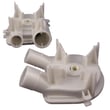
- Washer drain pump WP3363394 (moves water out of the tub)
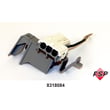
- Washer lid switch assembly WP8318084 (prevents spin/drain with lid open)
Why it matters
When a washer has no removable filter, drain performance becomes the key to preventing standing water, odors, and poor spin results. A clear drain hose and a healthy drain pump keep cycles finishing correctly and clothes coming out less wet.
Last updated: February 2026
How many cubic feet is a Kenmore Model 11027522600 washer?
The Kenmore washer model 11027522600 is typically about 3.2 cubic feet of capacity for this style of Kenmore 110-series top-load washer. For the exact rated capacity for your specific configuration, we recommend confirming it in the 11027522600 owner's manual.
How to confirm capacity for your exact washer
Capacity is sometimes listed in the specifications section, and sometimes it is implied by the tub size and model platform.
- Check the specifications or features pages in the manual
- Look for terms like “capacity,” “cu. ft.,” “basket volume,” or “tub volume”
- If your manual lists multiple variants, match the full model number 11027522600
- If you are comparing to another washer, compare tub diameter and depth as well
Why capacity matters
Washer capacity affects load sizing, cleaning performance, and spin results. Overloading a 3.2 cu. ft. top-load washer often leads to poor agitation, out-of-balance spinning, and extra wear on drive components.
Quick load-sizing guide (typical for ~3.2 cu. ft. top-load washers)
| Load type | Typical fill level (loose, not packed) | What to watch for |
|---|---|---|
| Small | About 1/3 full | Good for delicates, quick loads |
| Medium | About 1/2 full | Best everyday performance |
| Large | About 3/4 full | Leave room for clothes to move |
| Bulky items | 2-3 items max | Avoid packing; rebalance before spin |
If your washer struggles with large loads
These checks help when the basket is full but performance drops:
- Make sure the washer is level and stable (reduces vibration and “walking”)
- Avoid tightly packing items; load should circulate around the agitator
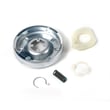
- If agitation is weak, inspect common wear items like the agitator dog 80040
- If spinning is inconsistent, a worn drive system component can contribute (for example, the clutch 285785)
Last updated: February 2026
How to do a hard reset on a Kenmore washer?
For the Kenmore 11027522600 washer, a “hard reset” usually means fully power-cycling the control to clear a stuck state. Unplug the washer (or switch the breaker off) for 1 minute, restore power, then set a cycle and pull the cycle knob to restart; use the 11027522600 owner's manual for the exact control steps for your panel.
Quick hard reset steps (power cycle)
- Turn the cycle control knob to Off.
- Unplug the washer (or turn breaker off).
- Wait 60 seconds.
- Restore power.
- Close the lid, select a cycle, then pull out the cycle control knob to start.
If it still will not start or acts “stuck”
These checks solve most no-start and mid-cycle issues on this style of Kenmore top-load washer.
- Confirm the lid is fully closed; a failed lid switch can prevent agitation, spin, or drain.
- If the washer will not spin or stops when the lid is moved, inspect the washer lid switch assembly WP8318084.
- If it fills but will not drain, check for a clog at the pump and consider the washer drain pump WP3363394.
- If it agitates weakly or the top of the agitator slips, check the agitator dog 80040.
- If the washer drains but will not spin well and smells hot, the clutch can be involved.
What “reset” does (and does not) do
| Action | What it can fix | What it will not fix |
|---|---|---|
| Power cycle (unplug 1 minute) | Frozen timer/control behavior, interrupted cycle | Broken lid switch, failed drain pump, worn drive parts |
| Restart cycle (push in, then pull out knob) | Simple stop/restart situations | Repeated no-spin/no-drain symptoms |
Why it matters
A true hard reset is fast and safe, but repeated symptoms after a reset usually point to a mechanical or safety-interlock issue (commonly the lid switch, drain pump, or agitator drive components). Following the operating steps in the manual helps prevent unnecessary part replacement.
Last updated: February 2026
How to identify a Kenmore washer model?
To identify your Kenmore washer model, find the model/serial tag on the washer cabinet and match the full model number exactly (for this page, it is 11027522600). The most common locations are under the lid, behind the control panel, or on the cabinet frame.
Where to look on Kenmore model 11027522600
Check these spots in order:
- Under the washer lid, around the tub opening
- On the back of the control console (control panel area)
- On the left or right side of the main cabinet near the bottom edge
- Along the top rim of the cabinet (visible when the lid is open)
If the tag is dirty or faded, wipe it gently with a damp cloth so the full number is readable.
What to write down (and why)
Record the information exactly as shown on the tag.
- Model number (example: 11027522600)
- Serial number (helps date the unit and match revisions)
- Type/series info (sometimes listed near the model number)
Why it matters
Kenmore washers often have multiple versions that look similar. Using the exact model number helps us match the correct parts list, diagrams, and procedures in the 11027522600 owner’s manual.
Quick check: model number vs. part number
| Item | What it identifies | Example format |
|---|---|---|
| Model number | The washer version | 11027522600 |
| Part number | The manufacturer’s part | 3366877 |
| Part ID | Sears PartsDirect catalog ID | WP3363394 |
If you are ordering a common wear part
Once you confirm the model number, you can match common items to the correct design. For example, agitation problems on this style of top-load washer are often tied to the agitator dog 80040 (used in many Kenmore direct-drive agitators).
Last updated: February 2026
What is the average lifespan of a Kenmore washer?
A Kenmore washer typically lasts 10 to 15 years with normal household use. For your Kenmore model 11027522600, routine care (proper loading, correct detergent, and preventing freeze damage) helps you stay closer to the high end of that range; see the 11027522600 owner's manual for model-specific care guidance.
Typical lifespan and what changes it
Most washers land in the 10 to 15 year range, but these factors move the number up or down:
- Load habits: frequent overloading strains the drive system and suspension
- Water quality: sediment can shorten the life of the inlet valve and pump
- Drain performance: slow draining makes the pump work harder
- Installation conditions: an unlevel floor increases vibration and wear
- Temperature exposure: storing or operating at or below 32°F can damage the washer if water remains inside
Signs your washer is nearing end of life
If you see these repeatedly, repairs can become more frequent:
- Loud grinding or burning smell during agitation or spin
- Tub not spinning out water consistently
- Leaks under the cabinet or around the tub
- Excessive shaking even after leveling
- Intermittent no-start or stop-mid-cycle behavior
Maintenance that extends life (high impact)
Use these practical steps to reduce wear on common failure points:
- Keep the washer level and on a sturdy floor; avoid installing on carpeting
- Use the right amount of detergent; too much can cause residue and odors
- Check pockets and wash small items in a mesh bag to reduce pump clogs
- Inspect fill hoses periodically and replace if bulging or cracking
- In freezing conditions, follow the manual’s winterizing guidance to prevent damage
Quick reference: what to check first
| Symptom | Common cause | What we check next |
|---|---|---|
| Won’t drain | Clog or failing pump | Hoses, then washer drain pump WP3363394 |
| Won’t spin | Lid switch or drive issue | Lid switch, coupling, clutch |
| Agitator slips | Worn agitator dogs | Agitator dog 80040 |
| Won’t fill | Inlet valve or low pressure | Faucet screens, then inlet valve |
Why it matters
A washer that is maintained and installed correctly runs with less vibration, drains faster, and avoids preventable damage. That reduces stress on parts like the drain pump, motor coupling, clutch, and lid switch, which helps your 11027522600 reach its full expected service life.
Last updated: February 2026