
How do I know what garage door opener is compatible?
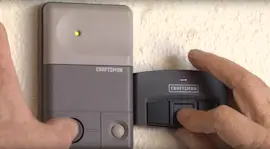
To know what’s compatible with your Craftsman garage door opener model 13953300, match the replacement (remote, keypad, wall control, or safety sensor) to the opener’s learn button color, radio frequency, and logic board type. Those identifiers determine compatibility more reliably than the door brand.
What to check on the opener (fast compatibility checklist)
- Model number on the motor head: confirm it reads 13953300.
- Learn button color (under the light lens or near the antenna wire): commonly purple, yellow, red/orange, or green.
- Remote frequency: most Craftsman openers use 315 MHz or 390 MHz (the remote or receiver label often lists it).
- Remote “series”: many Craftsman units align to Security+ families (the learn button color usually indicates the family).
- Accessory type: remotes and keypads must match the receiver; safety sensors and wall controls must match the opener’s wiring and logic board.
Compatibility by learn button color (quick guide)
Use this as a starting point, then confirm by the label on the opener or existing remote.
| Learn button color | Typical system family | Common compatible accessories |
|---|---|---|
| Purple | Security+ (newer) | Matching Security+ remotes/keypads |
| Yellow | Security+ 2.0 (newest) | Security+ 2.0 remotes/keypads |
| Red/Orange | Security+ (older) | Matching Security+ remotes/keypads |
| Green | Billion code (older) | Matching “billion code” remotes |
How we recommend confirming the exact match
- Open the light cover and note the learn button color.
- Check the back of your current remote for FCC ID, frequency (315/390), or series markings.
- If you are replacing a keypad or remote, use our programming steps in how to program garage door opener remotes video.
- If remotes will not pair or range is poor, troubleshoot first using garage door opener remotes wont work video.
Why it matters
Using the wrong remote or keypad can look “close enough” but still fail to program, have short range, or work intermittently. Matching the learn button color and frequency prevents wasted time and repeat returns.
Last updated: February 2026
How do I know what model my garage door opener is?
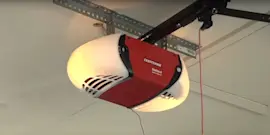
Your Craftsman garage door opener’s model number is typically printed on a label under one of the light lenses on the motor unit (the opener head) mounted to the ceiling. For model 13953300, check under the front light lens first, then check under the left lens when facing the garage door.
Where to look on the opener head
Most Craftsman openers place the model label on the motor unit near the light covers. Check these common spots:
- Under the front light lens/cover
- Under the left light lens/cover (when you’re standing in the garage facing the opener)
- On the side opposite the antenna wire (some units place the label there)
- On the back or side panel near the wiring terminals
- On the hanging bracket area near where the opener is bolted to the ceiling supports
What the label usually looks like
The label is often a white or silver sticker and may include several identifiers.
| What you might see | What it means | Example format |
|---|---|---|
| Model number | The main identifier we use for parts lookup | 13953300 |
| Part number | A component identifier, not always the opener model | Varies |
| Serial number | Unique to your unit | Letters and numbers |
| Date code | Manufacturing date info | Varies |
Tips if you can’t find it right away
These steps help you locate the label without guessing.
- Turn off the opener’s power at the outlet before removing any light lens.
- Use a flashlight and look along the inside edge of the lens area.
- Wipe dust off the housing; labels can blend in.
- Check both sides of the opener head, not just the bottom.
- If the label is missing, use the opener’s logic board label or wall control markings as clues, then confirm with troubleshooting info.
Why it matters
The exact model number (like Craftsman 13953300) ensures we match the correct parts and troubleshooting steps for your drive system, safety sensors, wall control, and remote programming.
For additional identification and troubleshooting help, use our Craftsman error codes guide.
Last updated: February 2026
Is it cheaper to repair or replace a garage door opener?
For a Craftsman garage door opener like model 13953300, it’s cheaper to repair when the problem is small (safety sensors out of alignment, a bad remote, loose wiring). Replacement is the better value when the opener is old (typically 10 to 12+ years), has repeated failures, or needs a major drive or motor repair.
Quick decision guide (repair vs replace)
Use these checkpoints to decide what makes sense for your garage door system.
- Repair when the opener runs but has a specific symptom (won’t close, intermittent remote range, lights blink, sensor issue).
- Repair when the fix is adjustment or setup (force limits, travel limits, photo-eye alignment).
- Replace when the opener is 10 to 12+ years old and problems keep returning.
- Replace when the opener struggles to lift a properly balanced door (motor strain, stalls, overheats).
- Replace when you want newer features (battery backup, quieter operation, smart controls).
Typical cost comparison
Actual pricing varies by region and door size, but these ranges are common for garage door opener service.
| Option | Typical cost range | Best when |
|---|---|---|
| Minor repair/adjustment | $100 to $250 | Sensors, remotes, wiring, force/travel settings |
| Moderate repair | $200 to $500 | Wall control issues, logic board diagnosis, intermittent operation |
| Replace opener (unit + install) | $400 to $1,000+ | Older opener, repeated breakdowns, major component failure |
What to check first on model 13953300
These steps often identify a low-cost fix before you commit to replacement.
- Safety sensors: confirm both sensor LEDs are on and the lenses are clean and aligned.
- Door balance: disconnect the opener and lift the door by hand; it should move smoothly and stay near mid-travel.
- Force and travel settings: if the door reverses or stops early, settings may need adjustment.
- Wall control and wiring: look for loose connections or staple damage to low-voltage wires.
- Diagnostic flashes/codes: use the opener’s light flashes or error indicators to narrow the failure.
For code-based troubleshooting, use our Craftsman error codes guide.
Why it matters
A garage door opener can look “bad” when the real issue is a binding door, misaligned photo-eyes, or incorrect force settings. Fixing those protects the motor, improves safety, and prevents repeat failures.
Last updated: February 2026
Will any remote work with any garage door opener?
No. A garage door opener remote must match the opener’s radio system (brand, frequency, and “learn” technology), so a random remote will not reliably work with a Craftsman 13953300. Use a compatible Craftsman remote or a properly supported universal remote.
How to tell whether a remote will work
Check these compatibility points before you buy or program anything:
- Brand family: Craftsman openers often share compatibility with certain LiftMaster/Chamberlain systems, but not all generations cross-match.
- Learn button color and logic board type: This usually determines the programming method and remote family.
- Security technology: Rolling-code systems require a compatible rolling-code remote.
- Frequency: The remote must transmit on the same frequency as the opener.
- Remote type: Standard visor remote, keychain remote, or wireless keypad all have different pairing steps.
Quick compatibility guide (what usually works)
Use this as a starting point, then confirm with your opener’s learn button and remote packaging details.
| Remote type | Typical compatibility | What you still must confirm |
|---|---|---|
| Same-brand Craftsman remote | Highest | Learn button type and remote series |
| Universal remote | Medium | Supported brands and learn button type |
| “Any” generic remote | Low | Usually fails due to frequency or coding mismatch |
If your remote will not program or stops working
These checks solve most “remote not working” problems:
- Replace the remote battery and clean the battery contacts.
- Reprogram the remote to the opener (erase and re-learn if needed).
- Verify the opener has power and the wall control works.
- Check for LED bulb interference (some LEDs reduce remote range).
- If the opener lights flash or you see diagnostic behavior, use Craftsman error codes to narrow the cause.
Why it matters
Using the wrong remote wastes time and can look like a bad logic board, bad receiver, or wiring issue. Matching the correct remote family to the Craftsman 13953300 helps you restore reliable operation and range faster.
Last updated: February 2026
What are the common problems with Craftsman garage door openers?
Common problems on the Craftsman 13953300 garage door opener fall into three buckets: safety sensor issues (door will not close), drive or gear wear (grinding, slipping, no movement), and control or power problems (no response from remote, keypad, or wall button). Use symptoms to narrow the fix fast.
Most common symptoms and what they usually mean
- Door will not close or reverses: photo eyes (safety sensors) blocked, misaligned, or wiring loose
- Opener runs but door does not move: stripped drive gear, worn sprocket, broken belt/chain connection, or trolley issue
- Grinding or loud clicking: worn drive and worm gears, loose chain/belt tension, or failing motor gear
- Remote/keypad works sometimes: weak battery, interference, or receiver/logic board issue
- Lights flash repeatedly: the opener is reporting a fault pattern; match the flashes to a code
- Door stops partway: travel/force settings out of adjustment or door binding on the track
Quick checks we recommend before replacing parts
- Clear and align the safety sensors: wipe lenses, remove obstructions, confirm both sensor LEDs are steady.
- Test the door balance (opener disconnected): a heavy or binding door overloads the motor and triggers reversals.
- Inspect the rail and trolley: look for a loose carriage, bent rail, or missing fasteners.
- Listen for gear noise: grinding at the motor head strongly points to gear wear.
- Check power and controls: verify the outlet, opener lights, and wall control wiring connections.
Flashing lights and error codes
When the opener lights blink, treat it like a diagnostic. The blink pattern often points directly to sensors, travel limits, or motor/drive problems. Use our Craftsman error codes reference to match the symptom to the most likely cause and next step.
Symptom-to-cause cheat sheet
| What you see | Most likely cause | Best next step |
|---|---|---|
| Won’t close | Safety sensors | Align/clean sensors; check wiring |
| Motor hums, no travel | Gear/drive failure | Inspect gears and sprocket; check trolley |
| Reverses at floor | Force/travel or door resistance | Adjust force/travel; check door movement |
| Remote dead | Battery/receiver | Replace battery; reprogram remote |
Why it matters
A garage door opener is designed to stop or reverse when it senses resistance. Fixing sensor alignment, door balance, and force/travel settings prevents repeat failures and reduces wear on the motor, gears, and logic board.
Last updated: February 2026