Owner’s manual
 Error Codes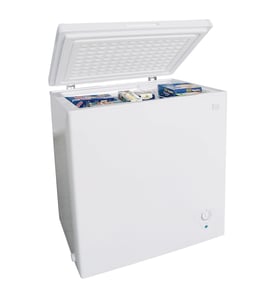


How big is a Kenmore chest freezer model 25314922101?
The Kenmore chest freezer model 25314922101 has its exact exterior dimensions and required installation clearances listed in the 25314922101 owner's manual. Use the manual’s specification section for the authoritative width, height, and depth before planning delivery or placement.
Use these steps to get the correct numbers and avoid measuring mistakes:
- Open the 25314922101 owner's manual and look for the specifications or installation section.
- Compare your model number on the serial plate to ensure you are matching the correct unit.
- Measure the freezer at the widest points (cabinet edges, hinge side, and lid overhang).
- Measure height from the floor to the highest point (include feet or rollers).
- Plan clearance space for airflow and lid opening, not just the cabinet footprint.
Use this checklist so your measurements match how specs are typically stated.
| Measurement | Measure from | Common “gotchas” |
|---|---|---|
| Width | Left to right at the widest point | Hinge side and lid overhang can add width |
| Height | Floor to top surface | Feet, rollers, or uneven flooring affect height |
| Depth | Front to back at the deepest point | Lid lip or trim can add depth |
Correct dimensions prevent delivery issues (doorways, turns, stairs) and help the freezer run efficiently. Adequate clearance lets the sealed system shed heat properly, which protects cooling performance and reduces compressor strain.
Last updated: February 2026
What are the most common issues with 25314922101?
The most common issues we see with the Kenmore 25314922101 chest freezer are temperature problems (not cold enough or too cold), excessive frost, and lid or light-related complaints. These symptoms usually trace back to airflow and sealing issues, temperature control parts, or compressor start components; use the owner's manual for model-specific operating and care steps.
- Not freezing or warm temperatures: thermostat/control issue, dirty condenser area, or compressor start problem
- Runs constantly: lid not sealing, warm room location, heavy frost buildup, or control set too cold
- Excessive frost/ice: lid left ajar, gasket sealing issue, frequent openings, humid location
- Interior light problems (if equipped): door switch or wiring/harness issue
- Won't start, clicks, then stops: start relay/overload issue or compressor problem
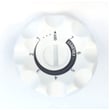
- Confirm the control is set to a normal mid-range setting and allow 24 hours to stabilize.
- Make sure the lid closes fully and nothing is preventing a tight seal.
- Reduce frost buildup; heavy ice acts like insulation and slows cooling.
- Verify the freezer has proper clearance around it for heat to dissipate.
- Listen for a repeating click every few minutes; that often points to a start device issue.
If troubleshooting points to a failed component, these model-matched parts are common fixes:
| Symptom | Common part to check | Example part for this model |
|---|---|---|
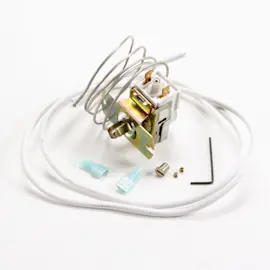
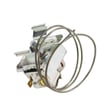
| Temperature swings or won’t regulate | Temperature control thermostat | Freezer temperature control thermostat 5304496559 |
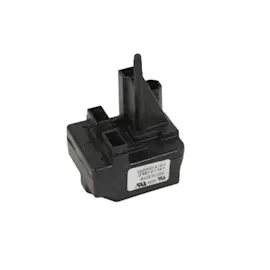
| Won’t start, clicking | Compressor start relay | Universal/multiflex (frigidaire) freezer compressor start relay 216954200 |
| Light stays on or won’t come on | Door switch | Freezer door switch 216822900 |
A chest freezer that runs warm can spoil food quickly, and a freezer that runs nonstop wastes energy and can shorten compressor life. Catching sealing, frost, and control issues early keeps temperatures stable and protects the sealed system.
Last updated: March 2026
What is the average lifespan of 25314922101?
The average lifespan of the Kenmore 25314922101 chest freezer is about 15 years with normal household use. Keeping the lid seal tight, the condenser area clean, and the temperature steady helps the compressor and thermostat last longer.
Most chest freezers reach their full service life when they run efficiently and avoid heavy frost buildup.
- Room temperature and ventilation: hot garages and tight clearances shorten life
- Frost and ice buildup: heavy frost makes the system run longer and harder
- Lid openings: frequent openings add moisture and warm air
- Cleaning: dust on the condenser area increases run time
- Power quality: repeated outages and surges stress the compressor start components
- Set the control for a steady 0°F target (typical freezer setting)
- Defrost when frost reaches about 1/4 inch
- Keep the lid closed and confirm it seals evenly all the way around
- Leave airflow space around the cabinet so heat can dissipate
- Review care and cleaning steps in the owner's manual
If cooling becomes inconsistent, these are the components we check first because they directly control starting and temperature.
| Symptom | Common suspect | Example part for this model |
|---|---|---|
| Clicking, won’t start, warm cabinet | Start device issue | Universal/multiflex (frigidaire) freezer compressor start relay 216954200 |
| Runs too warm or too cold | Temperature control issue | Freezer temperature control thermostat 5304496559 |
| No cooling and compressor failure signs | Sealed system/compressor | Freezer compressor 5304507767 |
A chest freezer that is running longer than normal uses more electricity and can struggle to hold safe food temperatures. Basic upkeep and early replacement of a failing start relay or thermostat often extends the usable life.
Last updated: March 2026