Installation guide
 Owner’s manual
 Error Codes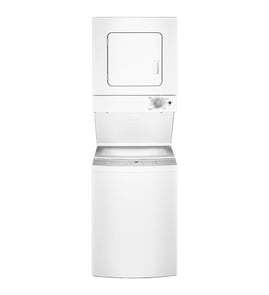






How can I tell how old my Kenmore washer is?
To estimate the age of your Kenmore stacked laundry center model 41797812700, we use the serial number from the serial plate (located inside the dryer door) and decode it to find the manufacturing date. The exact date code format depends on who built the unit for Kenmore.
Where to find the model and serial number
Our Kenmore 41797812700 laundry center lists the serial plate location clearly.
- Open the dryer door and look along the inside door opening
- Find the serial plate label (it lists both model and serial)
- Write down the full serial number exactly as shown
- Take a clear photo of the label for reference
- Keep the information with your purchase records
For the label location details, check the 41797812700 owner's manual.
How to decode the age from the serial number
Once we have the serial number, we match its prefix pattern to the correct Kenmore manufacturer date-code chart (Kenmore laundry centers are commonly built by different manufacturers).
| What you have | What it tells us | What to do next |
|---|---|---|
| Model number (41797812700) | Product family and parts match | Use it to pull the correct diagrams and parts |
| Serial number | Manufacturing date code | Decode the prefix to get month and year |
| Purchase date | When it was bought | Use it as a backup if the serial label is worn |
Why it matters
Knowing the manufacture month and year helps us choose the right replacement parts (like a washer drive belt, drain pump, or timer) and it also helps when troubleshooting symptoms or comparing normal wear items.
Related help for Kenmore 417 laundry centers
If you are diagnosing a problem and the washer is showing a code, use Kenmore 417 laundry center -washer error codes to match the code to likely causes and next steps.
Last updated: February 2026
Where to find the model number on a Kenmore laundry center?
On Kenmore stacked laundry center model 41797812700, the model number is printed on the serial plate located inside the dryer door. Open the dryer door and look along the inside door opening for the label with both the model and serial numbers; confirm placement in the 41797812700 owner's manual.
Quick places to check (most common first)
- Inside the dryer door opening (serial plate with model and serial)
- Along the inner door frame area where the door closes
- On the cabinet frame near the dryer front opening (if the label is slightly offset)
- On paperwork you kept from installation (owner's guide or installation instructions)
How to read the label correctly
The serial plate typically includes multiple fields. Use the Model No. field, not the electrical ratings.
| Label item | What it tells you | Why you need it |
|---|---|---|
| Model number | Exact configuration (options, wiring, parts fit) | Ensures correct parts and diagrams |
| Serial number | Production run details | Helps match revisions and service info |
Why it matters
We use the exact model number to match the correct Kenmore parts and troubleshooting info for your laundry center. Even small model-number differences can change fit for items like a washer drain pump, drive belt, or dryer thermal limiter.
Last updated: February 2026
What is the life expectancy of a Kenmore washer?
Most Kenmore washers typically last 10 to 15 years with normal household use and basic maintenance. For the Kenmore 41797812700 stacked laundry center, good care habits (proper loading, cleaning, and ventilation) are what most directly extend washer life; see the 41797812700 owner's manual for model-specific care and operating guidance.
What affects washer lifespan the most
- Load size and balance: frequent overloading and off-balance loads increase wear on the drive system.
- Detergent use: too much detergent can cause residue buildup and odors.
- Drain performance: slow draining strains the pump and can leave standing water.
- Water quality: hard water can accelerate mineral buildup.
- Routine cleaning: reduces odor, residue, and corrosion over time.
Maintenance checklist we recommend
- Use the correct cycle and water level for the load.
- Keep loads balanced; mix large and small items.
- Leave the lid open briefly after washing to help moisture evaporate.
- Check pockets to prevent coins and debris from damaging the tub and pump.
- Address draining issues early; a failing pump can shorten overall washer life.
Common “end-of-life” symptoms and likely causes
| Symptom | What it often points to | What to check first |
|---|---|---|
| Won’t drain or leaves water | Drain restriction or failing pump | Hoses, clogs, then the pump |
| Burning rubber smell | Belt slipping | Belt condition and pulley alignment |
| Loud banging in spin | Chronic unbalance or suspension wear | Load balance and leveling |
| No agitation/spin | Drive belt or motor issue | Belt, then motor and wiring |
If your 41797812700 is not draining reliably, the washer drain pump 137221600 is a common repair part to evaluate when hoses and clogs are ruled out.
Why it matters
A washer that is kept level, not overloaded, and draining correctly runs cooler and with less mechanical stress. That directly reduces wear on high-cost components like the drive motor, belt, and pump, helping you reach the typical 10 to 15 year lifespan.
Last updated: February 2026
Can a Kenmore washer and dryer be stacked?
Yes, some Kenmore washers and dryers can be stacked, but stacking depends on using a compatible stacking kit and matching the exact models. For Kenmore 41797812700, stacking is not a separate add-on because it is a 27-inch stacked laundry center built as one vertical unit (washer below, dryer above); see the owner's manual.
What this means for Kenmore 41797812700
This model is already designed as a single, stacked appliance, so you do not stack a separate washer and dryer on top of each other.
- The washer and electric dryer are integrated into one cabinet
- The unit is designed for a 27-inch-wide installation space
- Installation focuses on water, drain, power, and dryer venting, not a stacking bracket
- You still need correct leveling and secure hookups for safe operation
If you are trying to stack two separate Kenmore units
If you have a separate washer and a separate dryer (not a laundry center), you typically need a model-specific stacking kit.
| Setup you have | Can it be stacked? | What you need |
|---|---|---|
| Laundry center like 41797812700 | Already stacked | Follow the installation guide |
| Separate compact washer + dryer | Often yes | Correct stacking kit for those exact models |
| Separate full-size washer + dryer | Sometimes | Correct stacking kit (if offered for that pair) |
Quick checks before you buy any stacking kit
- Confirm both model numbers from the appliance ID tags
- Verify the kit lists both models as compatible
- Measure width and depth; compact and full-size kits are not interchangeable
- Plan for venting; use rigid or flexible metal duct (avoid plastic or foil)
- Make sure the drain hose is installed to prevent siphoning
Why it matters
Using the wrong stacking method can cause vibration, noise, poor dryer airflow, and installation safety issues. With Kenmore 41797812700, the key is installing the laundry center correctly (drain, exhaust, electrical), not adding a stacking accessory.
Last updated: February 2026
What is the capacity of the Kenmore 400 Series washer?
For Kenmore stacked laundry center model 41797812700, the washer’s interior capacity is 3.9 cu. ft. Use that rating to size loads correctly so clothes can circulate for better cleaning and to reduce out-of-balance spinning. Confirm details in the 41797812700 owner's manual.
How to verify the capacity on your exact unit
Use these quick checks to match the capacity to your specific Kenmore model and configuration:
- Find the model number on the unit’s model and serial tag and match it to 41797812700
- Check the specifications section in the 41797812700 owner's manual
- Use the capacity to avoid overfilling; keep items below the top of the tub
- For bulky items (blankets, comforters), wash smaller batches to maintain turnover
- If you see frequent vibration, reduce load size and redistribute items before spinning
What 3.9 cu. ft. means in real loads
A 3.9 cu. ft. top-load washer in a 27-inch laundry center handles typical family loads while still needing headspace for agitation.
| Load type | Typical fit in 3.9 cu. ft. | Best practice |
|---|---|---|
| Towels | A full towel load | Mix sizes; do not pack down |
| Everyday clothing | A standard mixed load | Load loosely for better rinse |
| Bulky items | 1 bulky item at a time | Add a few small items to balance |
Why it matters
Using the correct capacity helps prevent poor cleaning, leftover detergent, and strain on the drive system. It also reduces the chance of out-of-balance conditions that can stop or interrupt the spin cycle.
Last updated: February 2026