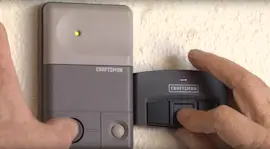
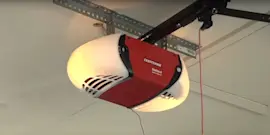
Owner’s manual
 Error Codes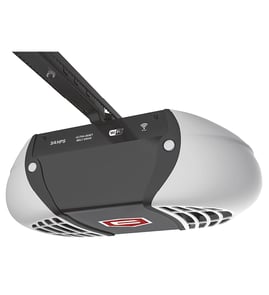



Will a universal remote work on any garage door opener?
No. A universal remote does not work on every garage door opener; it must match the opener’s radio system and programming method. For Craftsman model 13953824SRT (an “SRT” series unit), the opener is designed to learn compatible remotes using the SRT learn button procedure in the owner's manual.
What “universal” really means
Most universal remotes cover many common brands and years, but compatibility still depends on the opener’s receiver type.
Common compatibility factors:
- Learn button system vs. dip switches (older openers often use dip switches)
- Rolling code/security technology used by the receiver
- Brand and model family (Craftsman, LiftMaster, Chamberlain families often overlap, but not always)
- Remote frequency and protocol supported by the opener
- Opener series limitations (some openers only accept certain remote types)
How to tell if it should work with Craftsman 13953824SRT
Your 13953824SRT is an SRT series opener. The manual indicates it can be programmed to work with multiple “SRT” remote controls and a keyless entry, using the SRT button on the opener.
Quick check
| What you have | What it means | What to do |
|---|---|---|
| Opener has an SRT button | It uses a learn-style programming method | Use the SRT programming steps in the manual |
| Remote claims “universal” | It may or may not support SRT-style learning | Confirm it lists Craftsman SRT compatibility |
| Remote will not program | Likely incompatible protocol or wrong steps | Try erase and reprogram, then switch remote type |
Programming basics (SRT series)
We follow the same core steps the manual outlines for adding a remote:
- Choose which remote button you want to control the door
- Press and hold that remote button
- Press and release the SRT button on the opener
- Confirm the opener light flashes, then test operation
If you are changing which button on the same remote you use, erase learned codes and reprogram all remotes.
Why it matters
Using a compatible remote and the correct learn procedure prevents “won’t program” frustration and avoids wiping out working remotes unnecessarily. If you’re troubleshooting a remote that stopped working, our Craftsman error codes resource can also help you narrow down receiver and control issues.
Last updated: February 2026
How to find a compatible garage door opener?
For a compatible garage door opener setup, we match what you already have: your door type and height, the opener drive style (chain or belt), and the radio system used by your Craftsman 13953824SRT (SRT series). Start by confirming your opener’s programming type and your door’s hardware needs in the owner's manual.
What “compatible” means (opener vs. remote vs. accessories)
Compatibility depends on what you’re trying to add or replace:
- A full opener replacement: must match door weight, door type (sectional vs. one-piece), and headroom.
- A remote/keypad: must match the opener’s receiver technology (your model is an SRT series unit).
- Rails and door-height kits: must match door height (7 ft vs. 8 ft vs. 10 ft).
- Safety reversing sensors: must be installed and aligned correctly for safe closing.
Quick compatibility checklist for model 13953824SRT
Use this checklist before buying anything:
- Confirm the opener is an SRT series unit (the manual notes SRT openers work with SRT remote controls).
- Verify how many devices you need: up to four SRT remote controls plus one multi-function keyless entry are supported.
- Check door height: doors over 7 ft typically need a longer rail/extension.
- Confirm you have an access door into the garage; if not, an emergency key release is required.
- Inspect the door’s condition: a door that is out of balance or has broken springs will cause opener problems.
Common add-ons and what they’re for
| What you want to add | What to match | Why it matters |
|---|---|---|
| Extra remote | SRT-compatible remote | Prevents programming failures and intermittent operation |
| Wireless keypad | Multi-function keyless entry | Gives outside access without a remote |
| Rail extension | Door height (8 ft or 10 ft) | Prevents the door from stopping short or binding |
| Emergency key release | No access door | Lets you open the door from outside during a power outage |
Why it matters
When the radio system (SRT), rail length, and door hardware are matched correctly, your Craftsman opener runs smoother, the safety reverse system works properly, and you avoid force-setting changes that can lead to nuisance reversals.
For programming steps and supported accessories for the 13953824SRT, follow the receiver and remote instructions in the owner's manual.
Last updated: February 2026
How to find out garage door opener type?
To identify your Craftsman garage door opener type (and the right parts and programming steps), we match the opener by its drive style and by the model number label. On model 13953824SRT, the model label is located under the light lens on the front end panel; confirm that first, then identify your door and opener setup using the owner's manual.
Quick ways to identify your opener type
- Check the model label: On 13953824SRT, it’s under the light lens on the front end panel.
- Identify the drive system: Look for a chain, belt, or screw drive along the rail.
- Look for safety reversing sensors: Photo-eye sensors near the floor indicate a modern safety system.
- Note door construction and height: Steel, aluminum, fiberglass, or glass panel doors often need reinforcement; doors over 7 ft may need a longer rail.
- Confirm power requirements: This opener is designed for 120V, 60 Hz operation.
What to record before ordering parts or troubleshooting
Write these down from the opener and door so we can match the correct diagrams and settings:
| What to check | Where to find it | Why it matters |
|---|---|---|
| Model number (13953824SRT) | Under the light lens | Ensures correct parts list and instructions |
| Door type and height | Door itself and opening | Affects rail length, bracket placement, and setup |
| Special conditions | Finished ceiling, no side door, torsion spring interference | May require extra hardware or an emergency key release |
| Sensor setup | Near the bottom of the door tracks | Impacts closing issues and safety reverse behavior |
Why it matters
Your opener “type” determines the correct programming steps, rail/drive components, and safety sensor setup. It also prevents force or travel adjustments that can mask a door balance problem (a door that binds or is out of balance needs professional door service, not higher opener force).
Helpful next steps
- Use the Craftsman error codes guide if your opener is flashing lights or showing a fault pattern.
- If the door will not close, inspect and align the safety sensors and clear any obstructions.
- If the opener strains or the door feels heavy, disconnect the trolley and check whether the door stays balanced at mid-travel.
Last updated: February 2026
Where can I buy Craftsman garage door opener parts?
You can buy replacement parts for your Craftsman garage door opener model 13953824SRT through Sears PartsDirect using the model-based parts lookup, then match the part description and number before ordering. For diagrams, part lists, and identification help, use the owner's manual.
How we recommend finding the right part
- Confirm the model number 13953824SRT on the opener label (it is typically under the light lens on the front end panel).
- Use the parts list and exploded-view diagrams to identify the exact part name and part number.
- Match the part description to what you see on the opener (for example: logic board, capacitor, gear and sprocket assembly, safety reversing sensors).
- If your opener is acting up, check diagnostic indicators first so you do not replace the wrong part.
- Order using the exact part number and description shown for your model.
Common parts people replace on 13953824SRT
These are frequent wear or failure items on chain-drive openers like this Craftsman model:
| Part type | What it affects | Common symptom |
|---|---|---|
| Safety reversing sensors | Door safety and closing | Door will not close, lights blink, sensor lights off or flicker |
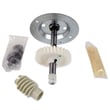
| Drive gear and worm gear | Door movement | Motor runs but door does not move, grinding noise |
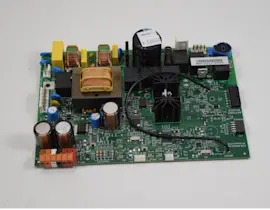
| Logic board / receiver | Remote and control logic | Remotes stop working, intermittent operation |
| Capacitor | Motor starting torque | Hums, struggles to start, stops under load |
Troubleshooting before you buy parts
- Make sure the door moves smoothly by hand (a binding door can mimic opener failure).
- Verify the safety sensor alignment and that nothing blocks the beam.
- If the door reverses unexpectedly, perform the safety reverse test and correct door or floor issues (the gap between the door and floor should not exceed about 1/4 inch).
- Use Craftsman error codes to interpret blinking lights or diagnostic patterns before ordering.
Why it matters
Ordering by model number and confirming the part description prevents returns and gets your garage door opener running safely. It also helps you avoid replacing electrical parts when the real issue is door balance, sensor alignment, or force settings.
Last updated: February 2026
What's the average cost to have a garage door opener installed?
For a typical professional install of a garage door opener like the Craftsman 13953824SRT, the average total cost usually lands around $300 to $800+, depending on the opener type, whether it’s a replacement or a first-time install, and any electrical or door-reinforcement work needed. See the owner's manual for installation requirements that can affect labor.
What drives the price up or down
Installation cost is mostly labor plus any extra materials needed to mount the opener safely and set up the safety reversing system.
Common cost factors include:
- Replacement vs. new install: replacements often cost less because mounting and wiring may already exist.
- Door type and reinforcement needs: steel, aluminum, fiberglass, or glass panel doors often need reinforcement.
- Ceiling construction: finished ceilings can require extra support brackets and fastening hardware.
- Electrical work: adding a proper grounded outlet or permanent wiring (when required by local code) increases cost.
- Door height: doors over 7 feet may need a longer rail extension.
Typical cost ranges (what most homeowners see)
These ranges reflect common U.S. pricing for opener plus professional installation.
| Scenario | Typical total cost | Notes |
|---|---|---|
| Basic chain-drive opener install | $300 to $500 | Lowest equipment cost; more noise/vibration |
| Belt-drive opener install | $400 to $800+ | Quieter; often chosen for attached garages |
| Smart opener or add-on features | $500 to $1,200+ | More setup time (controls, accessories, Wi-Fi) |
| Extra electrical or reinforcement work | +$100 to $400+ | Varies by garage and door condition |
Installation requirements that affect labor (and safety)
We recommend confirming these items before scheduling installation because they commonly add time and materials:
- The garage door is properly balanced and lubricated.
- All locks are disabled and ropes are removed.
- The opener is mounted 7 feet or more above the floor when possible.
- The emergency release handle is set about 6 feet above the floor.
- Safety reversing sensors are mounted correctly (some floor-mount setups need extra hardware).
Why it matters
A garage door opener install is not just hanging the motor. Correct mounting, wiring, force settings, and safety reversing sensor alignment help prevent nuisance reversals, door damage, and unsafe operation. For model-specific steps and clearances, use the owner's manual.
Last updated: February 2026