Owner’s manual
 Error Codes



What is the average lifespan of a Samsung refrigerator?
Most Samsung refrigerators, including the Samsung RF4287HAWP, last 10 to 15 years on average with normal household use and basic maintenance. Consistent cleaning, correct temperatures, and staying ahead of water and ice system wear typically pushes lifespan toward the high end of that range (see the RF4287HAWP owner's manual).
What affects lifespan the most
- Condenser airflow and cleanliness (dust buildup makes the compressor work harder)
- Door seal condition and door habits (warm air intrusion increases run time)
- Ice maker and water system upkeep (clogs and leaks create secondary damage)
- Stable temperatures (fresh food about 37°F, freezer about 0°F)
- Timely part replacement (fans, sensors, and controls fail more often than sealed-system parts)
Maintenance checklist that adds years
- Replace the water filter on schedule; a restricted filter can reduce dispenser flow and strain the system (example: Samsung refrigerator water filter da29-00020b).
- Vacuum dust from the condenser area and keep rear/bottom vents clear.
- Keep door gaskets clean and ensure doors close fully.
- Avoid overpacking; leave space for air circulation.
- If ice production slows or stops, troubleshoot early using why your Samsung fridge stopped making ice and how to fix it.
Typical lifespan expectations (quick guide)
| Item | Typical lifespan | What you notice when it’s wearing out |
|---|---|---|
| Refrigerator overall | 10 to 15 years | More frequent temperature swings, longer run times |
| Water filter | About 6 months | Slow water flow, odd taste/odor, filter light on |
| Temperature sensors | 5 to 10 years | Warm sections, inconsistent temps, error symptoms |
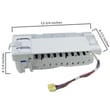
| Ice maker assembly | 5 to 10 years | No ice, small cubes, jams, leaking/frosting |
Why it matters
Knowing the expected lifespan helps you decide when a repair is worth it. If your RF4287HAWP is under about 10 years old, replacing common wear parts (like a temperature sensor or ice maker assembly) often restores reliable cooling and ice production.
Last updated: February 2026
What is the most common problem with Samsung refrigerators?
The most common problem we see with Samsung refrigerators (including the Samsung RF4287HAWP) is a cooling issue caused by frost or ice buildup around the evaporator area, which restricts airflow and makes the fresh food section warm even when the freezer still seems cold. For model-specific operating checks, use the RF4287HAWP manual.
Most common symptoms customers notice
- Refrigerator section warming up while freezer stays near normal
- Frost or a solid ice sheet on the back wall inside the refrigerator
- Fan noise, rubbing, or a “whooshing” sound that comes and goes
- Temperature swings (food freezing in some spots, spoiling in others)
- Water leaking or puddling from defrost drain overflow
What usually causes it
In many Samsung bottom-mount and French door designs, restricted airflow is the root problem. These are the most common contributors:
- Defrost heater not melting frost effectively (example part: refrigerator defrost heater DA47-00244W)
- Temperature sensor reporting incorrectly (example parts: DA32-10104N or DA32-00033C)
- Evaporator cover or air channels iced over (example part: DA97-08434A)
- Door not sealing well, letting humid air in (creates faster frost buildup)
Quick checks you can do before replacing parts
- Confirm settings: fridge about 37°F, freezer about 0°F.
- Look for blocked vents: keep packages away from air returns and outlets.
- Check door seal: close a dollar bill in the gasket; it should resist pulling out.
- Listen for the evaporator fan: if it stops when the door opens, hold the door switch and listen again.
- If the back wall is heavily frosted, a full manual defrost (unplug 24 hours, doors open, towels down) can restore cooling temporarily.
Common problem areas and what they affect
| Problem area | What you’ll notice | Typical fix direction |
|---|---|---|
| Defrost system | Frost buildup, warm fridge | Test heater, sensors, wiring |
| Airflow/evaporator cover | Weak airflow, uneven temps | Clear ice, inspect cover and ducts |
| Ice maker system | No ice, clumping, slow production | Inspect ice maker and water supply |
Why it matters
When airflow is restricted, the compressor can run longer, temperatures become unstable, and food safety suffers. Catching frost buildup early often prevents repeat warm-fridge episodes and reduces strain on major components like the compressor.
Last updated: February 2026
How do I find the model number on my RF4287HAWP?
Your Samsung refrigerator’s model number is printed on the rating label; on most Samsung bottom-mount and French door styles like RF4287HAWP, that label is typically inside the fresh food compartment along a side wall or near the ceiling. Use the full model from the label when ordering parts.
Where to look on the refrigerator
Check these common rating-label locations first:
- Inside the refrigerator section on the left or right side wall (often near the crisper drawers)
- Inside the refrigerator section near the top (ceiling area)
- On the door frame (open the right door and look along the inner frame)
- Behind the lower kick plate area (less common)
What to write down (so parts match)
Samsung labels usually include several identifiers. Record them exactly as shown:
- Model number (example: RF4287HAWP)
- Version or revision code (often shown after the model, such as a suffix)
- Serial number (helpful for service history and production range)
- Electrical ratings (volts/amps) if you are troubleshooting power or control issues
Quick check: model vs. serial
| Label item | What it’s used for | Why it matters |
|---|---|---|
| Model number | Finding diagrams and compatible parts | Ensures correct fit and connectors |
| Serial number | Identifying production run | Helps narrow down running changes |
Why it matters
Samsung refrigerators can have small design changes within the same model family; using the exact model information from the rating label helps us match components like the refrigerator electronic control board DA41-00684A or the refrigerator defrost heater DA47-00244W correctly.
For label examples and model identification details, use the owner's manual.
Last updated: March 2026