Error Codes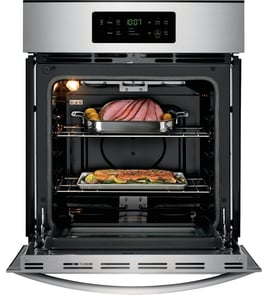


Does a wall oven need a special outlet?
Yes. A GE electric built-in oven like model JTP45BA1BB typically needs a dedicated 240-volt circuit (not a standard 120-volt receptacle). Many installations are hardwired into a junction box, or use a properly rated 240V outlet and cord set that matches your home wiring.
What you typically need for a wall oven circuit
- Dedicated 240V circuit (no other appliances on the same breaker)
- Correct breaker size for the oven’s rating (commonly 30A to 50A)
- Proper wire gauge for the breaker size (commonly 10 AWG for 30A, 8 AWG for 40A, 6 AWG for 50A)
- Correct connection type: hardwired junction box or a 240V receptacle/cord set rated for the load
- Proper grounding (and neutral only if the oven is designed to use one)
Outlet vs. hardwire: what’s the difference?
Most wall ovens are installed one of two ways. The right choice depends on the oven’s rating and how your kitchen is wired.
| Connection method | What it is | Common in | Why you’d choose it |
|---|---|---|---|
| Hardwired | Oven wires connect in a junction box | Many built-in wall ovens | Clean install; fewer plug clearance issues |
| 240V outlet + cord | Oven plugs into a 240V receptacle | Some wall ovens, some remodels | Easier to disconnect for service |
Safety and installation notes we recommend
- Turn off power at the breaker before removing any covers or touching wiring.
- Use a qualified electrician if you are changing breaker size, wire gauge, or adding a new circuit.
- If the oven is not heating correctly after installation, check for a tripped breaker or loose connection; then test key heating components.
Why it matters
Using the correct 240V supply and dedicated circuit helps your JTP45BA1BB heat properly, prevents nuisance breaker trips, and reduces the risk of overheated wiring connections.
Parts that relate to “not heating” symptoms
If the power supply is correct but baking temperatures are off, these model-compatible parts are common suspects:
- GE wall oven temperature sensor WB23X5340
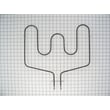
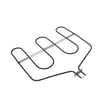
- Range bake element WB44T10005
- Range broil element WB44K5017
Last updated: February 2026
How much does it cost to replace a GE oven control panel?
For a GE JTP45BA1BB electric wall oven, replacing the oven control panel (control board and/or touch panel) typically runs $100 to $300 for the part, and about $220 to $550 total if you pay for professional service. The exact cost depends on which control component failed and how hard the oven is to access in the cabinet.
What changes the price the most
- Which part is actually bad: touch panel, main control board, or a wiring issue.
- Service vs. DIY: labor is commonly $100 to $200.
- Built-in wall oven access: pulling the oven can add time.
- Diagnosis time: intermittent failures can take longer to confirm.
- Related repairs: heat problems can be caused by other parts, not the control.
Quick cost ranges (typical)
| Scenario | Typical part cost | Typical total cost |
|---|---|---|
| DIY replacement (part only) | $100 to $300 | $100 to $300 |
| Pro replacement (part + labor) | $100 to $300 | $220 to $550 |
| Higher-end or specialty control | $300+ | $450+ |
Before you buy a control panel
A “dead” or glitchy panel is sometimes caused by a heating or sensing problem. On the JTP45BA1BB, these checks help avoid replacing the wrong part:
- If temps are wildly off, test/inspect the GE wall oven temperature sensor WB23X5340.
- If the oven will not heat or heats unevenly, inspect the range bake element WB44T10005 for visible damage.
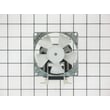
- If the oven overheats the cabinet area or shuts down after heating, check the cooling fan operation (this model lists cooling fan assemblies such as WB26K5061 and WB26X114).
- Look for loose or heat-damaged connectors at the control area; a harness issue can mimic a bad board.
Why it matters
The control panel is one of the most expensive wall oven repairs. Confirming whether the failure is the control itself, a sensor, or a heating component helps keep the repair cost predictable and gets your GE wall oven back to stable baking temperatures.
Last updated: February 2026
How to tell if a wall oven is gas or electric?
For the GE JTP45BA1BB, it’s an electric built-in wall oven. In general, you can tell by checking the power source: electric wall ovens use a heavy electrical connection (often 240V) and do not have a gas supply line or burner flame.
Quick ways to identify gas vs. electric
- Look behind/under the oven (if accessible): gas models have a gas shutoff valve and a flexible gas line.
- Check the electrical hookup: electric wall ovens typically have a thick power cable or hardwired conduit for 240V.
- No flame or pilot: electric ovens do not have a visible burner flame at the bottom.
- Heating style: electric ovens heat with hidden or exposed electric elements, not a gas burner.
- Model tag: the rating plate often lists volts/amps for electric or BTU for gas.
What you’ll typically see (comparison)
| What you notice | Electric wall oven | Gas wall oven |
|---|---|---|
| Fuel connection | 240V power cable or conduit | Gas line and shutoff valve |
| Heat source | Electric bake/broil elements | Gas burner (often bottom) |
| Smell when heating | No gas odor | Possible brief gas odor at ignition |
| Common label info | Volts/amps | BTU rating |
Why it matters
Gas and electric wall ovens use different wiring, safety components, and replacement parts. Confirming the fuel type helps you choose the right troubleshooting steps and order compatible parts for your exact model.
Related parts that apply to electric ovens
If your oven is not heating correctly or temperatures seem off, these model-related parts are commonly involved:
- GE wall oven temperature sensor WB23X5340 (temperature sensing and control)
- Range bake element WB44T10005 (bake heat source)
- Range broil element WB44K5017 (broil heat source)
Last updated: February 2026
Why is my GE JTP45BA1BB wall oven not turning on?
If your GE JTP45BA1BB electric wall oven will not turn on at all (no display, no heat), the most common causes are a power supply problem, a tripped breaker, or a failed internal electrical component such as wiring or a cooling fan circuit issue. Start with power checks, then move to safe visual and basic electrical tests.
Step 1: Confirm the oven is getting the right power
Electric built-in ovens typically require a dedicated 240V circuit; a partially tripped breaker can leave the oven “dead” or make it act erratically.
- Reset the double-pole breaker fully (OFF, then ON)
- Verify the oven is not on a GFCI that has tripped
- If the display is blank, check for loose or burned wiring at the junction box (power OFF first)
- If you have a multimeter, confirm voltage at the supply (only if you are trained to test live voltage)
Step 2: Check for common “no power” failure points inside the oven
Once power is confirmed, a failed component or connection can stop the control from powering up.
- Look for burned, loose, or broken wires and terminals (especially near heat sources)
- Inspect the cooling fan area; a seized fan or damaged wiring can cause overheating and shutdown behavior
- Check the oven temperature sensor circuit; a shorted sensor or damaged harness can prevent normal operation
- If the door lock is stuck engaged (on models with a lock motor), the control may not allow operation
Helpful DIY electrical testing resources:
Parts that commonly relate to “won’t turn on” symptoms
These parts are listed for GE JTP45BA1BB and are often involved when an oven will not start or shuts down.
| Symptom | What to check | Example part on this model |
|---|---|---|
| No display, intermittent power | Loose/burned wiring, failed fan circuit | Wall oven cooling fan assembly WB26K5061 |
| Oven acts erratic, overheats, then dies | Cooling fan not running | Wall oven cooling fan assembly WB26X114 |
| Temperature control issues that can stop operation | Sensor circuit and connector | GE wall oven temperature sensor WB23X5340 |
Why it matters
A wall oven that will not power on is usually a power delivery issue (breaker, junction box wiring) or a heat and wiring related failure inside the cabinet. Fixing the root cause prevents repeat shutdowns and protects the control and harness.
Last updated: February 2026