Owner’s manual


Where is the model number on Kenmore Elite dryer?
On the Kenmore Elite dryer model 11085876400, the model number is printed on the rating label. You’ll usually find it on the dryer cabinet opening when you open the door, or on the back of the dryer near the top.
- Open the dryer door and look along the door opening on the cabinet frame
- Check the inside edge of the door itself (near the hinge or latch side)
- Look on the back panel near the top of the dryer
- If there’s a lower access panel, check just inside that area for an additional label
The label typically includes:
- Model number (for example, 11085876400)
- Serial number (helps date the unit and match revisions)
- Electrical or gas information (voltage, amps, or BTU rating)
- Manufacturing codes used for parts lookups
We recommend copying the model number exactly as shown, including all digits.
Use this checklist so we can match parts like a heating element, door switch, or drum support roller correctly:
- Confirm the full model number is 11085876400
- Record the serial number from the same label
- Note whether your dryer is electric or gas (your manual and label both indicate this)
- Compare the part description to your symptom (no heat, noisy drum, won’t start)
| Dryer setup | Most likely label location | Second place to check |
|---|---|---|
| Front-load dryer | Door opening cabinet frame | Back panel near top |
| Stackable/compact | Door opening area | Side panel edge |
Kenmore model numbers can look similar across different series; using the exact model number ensures we match the correct wiring, heating system, and drum support parts for your specific build.
For diagrams and model identification details, use the 11085876400 owner’s manual.
Last updated: January 2026
How to reset a Kenmore Elite dryer?
To reset your Kenmore Elite dryer model 11085876400, we recommend a hard reset: unplug the dryer (or switch off the breaker) for 1 to 5 minutes, then restore power and try a normal cycle. If the dryer still will not run, the issue is usually a safety device trip or airflow problem, not a “reset” setting.
- Turn the dryer OFF.
- Unplug the power cord (or turn OFF the circuit breaker).
- Wait 1 to 5 minutes.
- Restore power.
- Select a timed cycle and press Start.
- If the controls are locked, disable Control Lock using the button sequence shown in the 11085876400 owner’s manual.
A reset will not bypass failed parts. These checks solve most “won’t start” complaints:
- Confirm the door is fully closed; a failed door switch can prevent starting.
- Check the house power; electric dryers typically need full 240V supply (a tripped breaker can leave the drum light on but stop the motor).
- Clear lint buildup and verify strong airflow; restricted venting can overheat the dryer and trip safety cutoffs.
- If the dryer runs but has heat issues, inspect heating and temperature-sensing components.
| Symptom | Most likely area | Example part for this model |
|---|---|---|
| Won’t start, door must be “just right” | Door switch circuit | Dryer door switch WP8283288 |
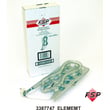
| Runs but no heat | Heating circuit | Dryer heating element WP3387747 |
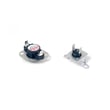
| Overheats or shuts off | High-limit/thermal protection | Dryer thermal cut-off fuse kit 279973 |
Resetting clears a temporary control glitch, but repeated shutdowns usually point to airflow restriction or a failing component. Fixing the root cause helps prevent overheating, long dry times, and repeat no-start conditions.
Last updated: January 2026
What causes dryer heating element failure?
On Kenmore Elite dryer model 11085876400, the heating element most often fails from overheating (restricted airflow), electrical damage at the terminals, or normal wear that causes the coil to break. Start by correcting venting and power issues before replacing the element.
- Clogged or crushed venting: Lint buildup makes the heater run hotter and longer than designed.
- Blower or lint path restriction: A damaged blower wheel or blocked lint duct reduces airflow through the heater housing.
- High heat cycling problems: A failing thermostat or thermistor can let temperatures climb too high.
- Loose or burned wire connections: Heat and vibration can damage element terminals and wiring.
- Repeated thermal cut-off events: If a thermal cut-off opens, the underlying airflow or temperature-control issue is still present.
- Unplug the dryer; for electric models, confirm the outlet supplies 240V (a lost leg can cause odd heating behavior).
- Clean the lint screen and inspect the entire vent run to the outside.
- Check for strong airflow at the exterior vent hood while the dryer runs.
- Inspect the heater wiring for discoloration, melted insulation, or loose spade terminals.
- Use the troubleshooting and wiring guidance in the 11085876400 owner’s manual.
| Symptom you notice | Likely issue to check | Example part for this model |
|---|---|---|
| No heat, drum tumbles | Heater coil open or wiring burned | Dryer heating element WP3387747 |
| Heats briefly then stops | Overheating protection opening | Dryer thermal cut-off fuse kit 279973 |
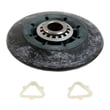
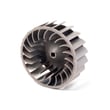
| Long dry times, very hot cabinet | Poor airflow through dryer/vent | Dryer blower wheel WP697772 |
A new heating element can fail quickly if airflow is still restricted or if a thermostat/thermistor is letting temperatures run too high. Fixing the root cause protects the heater, improves drying performance, and reduces overheating risk.
Last updated: January 2026
How much does it cost to replace a heating element in a Kenmore dryer?
For Kenmore Elite dryer model 11085876400, replacing the heating element typically costs $70 to $200 if you do it yourself (part plus basic supplies). If you hire a technician, total cost is typically $200 to $450 including labor and a diagnostic fee.
- Heating element part: commonly $50 to $120 (this model’s listed element is dryer heating element WP3387747)
- Service call/diagnostic (if used): typically $75 to $150
- Labor: typically $100 to $250 depending on access, venting setup, and local rates
- Optional related parts (often replaced together): thermal cut-off kit, high-limit thermostat, wiring kit
| Repair approach | What you pay for | Typical total cost |
|---|---|---|
| DIY replacement | Part (and possibly a thermostat/fuse) | $70 to $200 |
| Pro replacement | Diagnostic + labor + parts | $200 to $450 |
A dryer can stop heating because the element failed, but it can also fail from overheating caused by restricted airflow. When we see a burned element, we also check these common companions:
- Thermal cut-off or thermal fuse (often opens when the dryer overheats)
- High-limit thermostat (can fail or cycle incorrectly)
- Heating element wiring (terminals can overheat and loosen)
- Lint buildup or crushed/long vent run (causes high temperatures)
If you replace only the heating element but the dryer is overheating from poor venting, the new element can fail early. Cleaning the lint screen housing and confirming strong airflow at the exterior vent helps protect the new part and improves dry times.
- Confirm the dryer has 240V power (electric dryers can run but not heat on a half-tripped breaker)
- Clean the lint screen and check airflow at the outside vent hood
- Review the heating and airflow checks in the 11085876400 owner’s manual
Last updated: January 2026