 Error Codes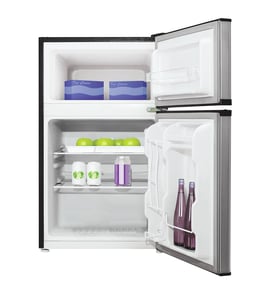

How many watts does a 10.1 cubic foot refrigerator use?
A 10.1 cubic foot compact refrigerator like the Magic Chef MCBR1010W typically draws about 200 to 400 watts while the compressor is running, with brief higher startup surges. Actual wattage varies with room temperature, thermostat setting, and how often the door is opened.
Typical wattage and what to expect
Most compact refrigerators in the 10 cubic foot range behave like this:
- Running watts: ~200 to 400 W (compressor on)
- Startup surge: often 2 to 3 times running watts for a moment
- Compressor cycling: wattage drops near zero when the compressor is off
- Hot rooms and frequent door openings: increase run time and energy use
- Frost buildup or poor airflow: can increase run time and wattage
Quick reference table
| What you measure | What it means | Typical for a 10.1 cu ft compact fridge |
|---|---|---|
| Running watts | Compressor actively cooling | 200 to 400 W |
| Startup surge watts | Split-second motor start | 400 to 1,200 W |
| Average watts over time | What you pay for | Often much lower than running watts |
How we recommend measuring your refrigerator’s real wattage
For the most accurate number on your MCBR1010W, we recommend measuring at the outlet.
- Use a plug-in power meter and let it run 24 hours
- Record kWh used and the peak watts (startup)
- Repeat after changing one variable (thermostat setting, room temp, load)
Why it matters
Knowing running watts and startup surge helps you size a generator, inverter, or battery backup correctly, and it also helps diagnose cooling issues (a fridge that runs constantly often points to airflow, door seal, or frost problems).
Related DIY help
If you are troubleshooting cooling performance (which can affect run time and power use), use how to fix your evaporator cooling fan.
Last updated: February 2026
Are Magic Chef mini fridges good?
Magic Chef mini fridges, including the Magic Chef MCBR1010W compact refrigerator, are a solid choice when you want reliable cooling in a small footprint. They typically earn good owner feedback for usable interior space, adjustable storage, and simple temperature control for dorms, offices, and extra-drink storage.
What “good” means for a compact fridge
A mini fridge is doing its job when it holds safe temperatures, runs consistently, and fits your space and habits.
Most owners consider a Magic Chef mini fridge “good” if it:
- Cools the fresh-food section to about 37°F to 40°F
- Keeps the door sealing tightly (no warm air leaks)
- Runs with normal cycling sounds (not constant loud running)
- Has shelves and door bins that match how you store items
- Fits the intended location with proper ventilation clearance
Quick pros and tradeoffs to expect
| What you’ll likely like | What to plan for |
|---|---|
| Compact size for tight spaces | Less stable temps if the room is very hot/cold |
| Simple controls and basic features | Small freezer sections can be sensitive to overloading |
| Adjustable shelving in many layouts | More noticeable compressor noise than a full-size fridge |
How to get the best performance from the MCBR1010W
- Leave airflow space around the cabinet (especially the back)
- Let it sit upright after moving before plugging in
- Start at a mid setting; adjust after 24 hours based on a thermometer reading
- Avoid blocking interior vents with tightly packed food
- Keep the door gasket clean so it seals evenly
Why it matters
Compact refrigerators are more affected by room temperature, door openings, and airflow than full-size models. Setting expectations and using good placement habits is the difference between “works great” and “never feels cold enough.”
For general refrigerator care tips that help any compact unit run better, use how to use your refrigerator efficiently.
Last updated: February 2026
What are the common problems with Magic Chef mini fridges?
Common problems on a Magic Chef mini fridge like model MCBR1010W are warm temperatures, frost buildup, unusual noises, water leaking inside, and door sealing issues. Most of these trace back to airflow restrictions, dirty condenser coils, a failing evaporator fan, or a thermostat/thermistor control problem.
Most common symptoms and what they usually mean
- Not cooling or weak cooling: dirty condenser coils, blocked vents, low airflow, failing compressor start components
- Freezer frosts up fast: door not sealing, frequent openings, defrost system issue (on models that use one)
- Buzzing, clicking, or rattling: fan blade hitting ice, loose drain pan, compressor start relay cycling
- Water pooling inside or under unit: clogged/iced drain path, unit not level, high humidity causing excess condensation
- Food freezing in fresh-food area: control set too cold, sensor/control issue, poor air circulation
Quick checks we recommend first (10 to 20 minutes)
- Confirm airflow: keep packages away from interior vents; do not overpack.
- Clean the condenser area: dust buildup makes mini fridges run hot and cool poorly.
- Check door seal contact: close a sheet of paper in the door; it should drag when you pull it out.
- Level the refrigerator: slight tilt back helps the door close and reduces leaks.
- Listen for the fan: if you hear the compressor running but no air movement, suspect the evaporator fan.
Troubleshooting guide by symptom
| Symptom | Most likely cause | What to do next |
|---|---|---|
| Warm fridge, compressor runs a lot | Dirty coils, poor ventilation | Clean coils; allow several inches of clearance around unit |
| Clicking every few minutes | Start relay/overload cycling | Unplug 5 minutes; if it repeats, test start components |
| Loud fan noise | Ice contact or worn fan motor | Defrost 24 hours; if noise returns, inspect fan |
| Water under fridge | Condensation or drain issue | Level unit; clear drain path; reduce door openings |
DIY help that matches this problem
- Use our guide on how to fix your evaporator cooling fan to diagnose fan noise, no-cool conditions, and airflow problems.
- If your Magic Chef refrigerator has a water filter or you use an inline filter with it, follow how to replace the water filter in a Magic chef refrigerator to prevent flow restrictions and water-related issues.
Why it matters
Mini fridges have compact airflow paths; a little dust on the condenser, a weak fan, or a small door-gasket gap can quickly cause temperature swings, frost, and compressor overwork.
Last updated: February 2026
Why is my Magic Chef refrigerator not cooling?
If your Magic Chef MCBR1010W compact refrigerator is not cooling, the most common causes are poor airflow (blocked vents or dirty condenser area), a temperature control issue, or a sealed-system problem involving the compressor or evaporator. Start with airflow and settings checks before assuming a major failure.
Quick checks we recommend first
- Confirm the temperature control is set colder, then wait 12 to 24 hours for stabilization.
- Make sure the door closes fully and the gasket seals all the way around.
- Do not block interior air vents with food containers.
- Clean dust from the condenser area (unplug first).
- Verify the unit has clearance around it for ventilation (especially at the back and sides).
- Listen for the compressor: a steady hum is normal; repeated clicking can indicate a start or compressor issue.
What the symptoms usually mean
| What you notice | Most likely cause | What to do next |
|---|---|---|
| Freezer section cold but fresh food warm | Airflow restriction or frost buildup | Improve airflow; check for heavy frost on the evaporator cover |
| No fan noise, warm cabinet | Evaporator fan issue (if equipped) | Inspect for ice obstruction; test fan operation |
| Clicking every few minutes, not cooling | Start device or compressor problem | Unplug 5 minutes, retry; plan for service if it returns |
| Runs constantly, weak cooling | Dirty condenser area or low refrigerant | Clean condenser area; sealed-system service if no improvement |
Step-by-step troubleshooting (safe DIY)
1) Airflow and loading
Compact refrigerators like the MCBR1010W rely on clear airflow paths. Overpacking and blocked vents can make the evaporator area freeze up while the rest stays warm.
2) Condenser cleaning
Dust buildup reduces heat release and can stop cooling performance.
- Unplug the refrigerator.
- Vacuum dust from the condenser area and nearby surfaces.
- Restore power and recheck temperatures after several hours.
3) Evaporator fan and frost pattern
If you see heavy frost behind the rear interior panel, cooling can be choked off. If the evaporator fan is not running (on models that use one), temperatures rise quickly.
For deeper fan diagnostics, use how to fix your evaporator cooling fan.
Why it matters
Running a refrigerator that is not cooling can spoil food and can also overwork the compressor. Catching airflow and cleaning issues early often restores normal temperatures without major repair.
Last updated: February 2026
What company makes Magic Chef refrigerators?
Magic Chef refrigerators, including model MCBR1010W, are produced and sold under the Magic Chef brand. For parts and service, the most reliable identifier is the full model number (MCBR1010W) and the specific component you need, not the corporate ownership name.
How to identify the right manufacturer and parts source
Use the information on the rating label inside the refrigerator to match parts correctly.
- Write down the full model number: MCBR1010W
- Record the serial number and any revision codes
- Note the part name you need (door gasket, thermostat, evaporator fan motor)
- Compare photos, mounting points, and wire connectors when applicable
- Order by model number to avoid look-alike parts that do not fit
What to look for on the rating label
| Label item | Example for this unit | Why it matters |
|---|---|---|
| Brand | Magic Chef | Confirms the product line |
| Model number | MCBR1010W | Primary key for correct part fit |
| Serial number | Varies | Helps match production run details |
Why it matters
“Magic Chef” is the brand name on the appliance, but correct fit is determined by the exact model and the component design used in that production run. Using MCBR1010W prevents ordering parts that are close in size but wrong in mounting, wiring, or sealing.
Helpful DIY resources
These guides cover common refrigerator maintenance and troubleshooting that also applies to many compact refrigerators.
- How to fix your evaporator cooling fan
- How to fix a fridge door seal
- How to use your refrigerator efficiently
Last updated: February 2026





