Owner’s manual
 Error Codes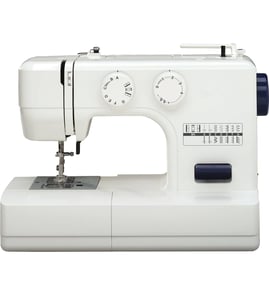

How do I know what model my sewing machine is?
For Kenmore sewing machine model 15815251, the model number is shown on the nomenclature plate on the back of the machine. Use that exact model number when looking up parts, manuals, or service information in the owner's manual.
Check these common model-number locations first:
- Back of the machine: nomenclature plate (most common on this Kenmore style)
- Side of the machine: near the handwheel area on some versions
- Front area: near the face cover plate on some machines
- Under the bed or base: sometimes on the underside for cabinet or case setups
On the plate, record the information exactly as printed:
- Model number (for this page: 15815251)
- Brand name (Kenmore)
- Any additional identifiers on the plate (often used for parts lookups)
| Item | What it’s used for | Example for this page |
|---|---|---|
| Model number | Matching the correct parts list and manual | 15815251 |
| Nomenclature plate location | Where the model is printed | Back of machine |
| Part description | Helps confirm you are ordering the right item | “Motor belt”, “light bulb”, etc. |
Kenmore sewing machines can look similar across multiple series, but parts like a motor belt, light bulb, or needle plate can vary by model. Using the exact model number from the nomenclature plate helps prevent ordering the wrong replacement part.
- Use the diagrams and identification section in the owner's manual to match the plate location and confirm you are reading the correct label.
Last updated: February 2026
How old is the Kenmore sewing machine model 15815251?
The Kenmore sewing machine model 15815251 is typically a vintage, mechanical Kenmore machine; most machines in the Kenmore 158 series were produced in the 1970s to 1980s era. For the most accurate age estimate, match the model and any date or part number printed in the owner's manual to the identification plate on the machine.
- Check the nomenclature or ID plate on the back of the machine for the full model and any stamped codes.
- Compare the features and control names (stitch width control, stitch length control, special stitch dial) to the diagrams in the owner's manual.
- Look for a manual part number and print date; many Kenmore manuals include a printed date that helps narrow the production window.
- If you have the original accessories, compare them to the manual’s accessory list (for example, zipper foot, buttonhole guide, needle threader).
- If the machine has been serviced, check for service stickers or notes inside the base.
The documentation for this Kenmore mechanical zig-zag sewing machine family shows classic mechanical controls and accessories (presser feet, needle plate options, buttonhole attachments), which aligns with older Kenmore designs.
| What you check | Where to look | What it tells you |
|---|---|---|
| Model/ID plate | Back of the machine | Confirms the exact model number used for dating |
| Manual print info | Front/back pages of the manual | Often narrows the era the machine was sold |
| Accessory list | Manual accessories section | Helps confirm the machine family and generation |
Knowing the approximate age helps us choose compatible items like needles, presser feet, and maintenance supplies, and it also sets expectations for common tune-up needs (cleaning lint, oiling points, checking belt condition).
Last updated: February 2026
Who made Kenmore 15815251 sewing machines?
Kenmore model 15815251 sewing machines were built for Sears under the Kenmore name by a contract manufacturer, not by Kenmore itself. In the Kenmore lineup, 158-series machines are widely associated with Japanese production; use the identification details in the owner's manual to match your exact machine and parts list.
We recommend checking the machine’s ID plate and the manual’s model and parts-list pages so you can tie your unit to the correct production run.
- Look for the nomenclature plate on the back of the sewing machine (model number is listed there).
- Confirm the model number is exactly 15815251 (not a close 158 variant).
- Use the manual’s parts list section to verify the correct component names.
- If you are comparing similar Kenmore machines, match controls and covers (for example: face cover plate, shuttle cover, stitch width control).
- Keep the machine’s serial information (if present) with your records for future parts ordering.
Kenmore is the brand label; the actual sewing machine was produced by an outside factory to Sears specifications. That is why you will often see Kenmore machines grouped by series (like the 158 series) rather than by a single manufacturer name.
| Item | What to use | Why it helps |
|---|---|---|
| Model identification | Nomenclature plate (back of machine) | Confirms you have the correct model |
| Parts identification | Manual parts list | Prevents ordering the wrong part |
| Feature matching | Stitch controls, needle plate, presser feet | Helps distinguish close model variants |
Knowing the correct maker and production variant helps you match the right replacement parts and setup details (needle type, presser feet, stitch settings). Even within the Kenmore 158 family, small design differences can change which parts fit.
Last updated: February 2026
When did Kenmore stop making sewing machines?
Kenmore sewing machines were discontinued years ago; Kenmore-branded machines were sold through Sears for decades, with many later machines built by outside manufacturers rather than made by Kenmore itself. For your Kenmore model 15815251, we focus on keeping it sewing with correct setup, maintenance, and compatible replacement parts.
Kenmore was a retail brand; different manufacturers produced Kenmore machines over time. In practical terms, “stopped making” means:
- New Kenmore-branded sewing machines stopped being produced for Sears retail programs
- Many model families (including vintage-style mechanical machines like the 158 series) became legacy products
- Parts and service needs shifted to model-specific part identification and standard sewing machine maintenance
For model-specific identification details (nomenclature plate location, parts ordering info, and basic operation), use the 15815251 owner's manual.
Even when a model is no longer produced, mechanical Kenmore machines are typically very serviceable because they rely on standard wear items and adjustments.
- Use the correct needle type and install it fully seated in the needle bar
- Replace needles often; dull or bent needles cause skipped stitches and thread issues
- Keep thread tails pulled to the rear (about 4 inches) before starting a seam
- Clean lint from the bobbin/shuttle area regularly
- Use sewing machine oil only where the manual indicates (avoid over-oiling)
| Item | What you notice | Typical fix |
|---|---|---|
| Needle | Skipped stitches, fabric pulls | Replace needle, confirm correct insertion |
| Drive belt | Sluggish running, poor power transfer | Inspect belt condition, replace if cracked/glazed |
| Motor/foot control | Motor will not run or runs intermittently | Test power path, repair/replace as needed |
| Feed system | Fabric not moving evenly | Clean feed dogs, check feed dog control setting |
Knowing Kenmore sewing machines are discontinued helps set expectations: you will not shop by “new model year,” you will shop by model number (15815251) and symptom. That is the fastest way to match the right repair approach and avoid buying incompatible parts.
If you are troubleshooting a specific problem (fabric not moving, lock-up, motor not running), our sewing machine symptoms landing page walks you through the most common causes and fixes.
Last updated: February 2026
Is it worth repairing an old sewing machine?
Yes, repairing an older Kenmore sewing machine like model 15815251 is usually worth it when the machine still turns smoothly by hand and the issue is routine (thread tension, needle, lint buildup, belt wear). These mechanical machines are built to be serviceable, and many problems are fixable with basic maintenance and correct setup from the owner's manual.
Repair makes sense when the machine has normal wear issues and the core mechanics are sound.
- The needle is bent, dull, or the wrong size for the fabric and thread
- Stitches are uneven due to threading or tension settings
- The machine is sluggish from lint buildup or lack of lubrication
- The fabric is not feeding because of presser foot pressure or technique (pulling fabric)
- The motor runs but power transfer is weak (often belt related)
These steps solve a large share of “needs repair” complaints on mechanical sewing machines.
- Re-thread the upper path and re-seat the bobbin; then test on doubled scrap fabric
- Replace the needle and install it correctly (flat side orientation per the manual)
- Pull both thread tails about 4 inches to the rear before starting a seam
- Sew at a slow, even speed; guide fabric gently instead of pulling
- Inspect for burrs or nicks around the needle plate or shuttle area if thread keeps breaking
| What you’re seeing | Typical cause | Usually worth repairing? |
|---|---|---|
| Skipped stitches, loose stitches, thread bunching | Needle, threading, tension, lint | Yes |
| Fabric not moving | Feed system setup, presser foot pressure | Yes |
| Motor will not run or machine will not turn | Electrical issue or seized mechanism | Depends |
| Repeated needle breakage | Burrs, incorrect needle, pulling fabric | Yes |
For step-by-step troubleshooting paths, use the sewing machine symptoms landing page.
A well-tuned mechanical machine can produce consistent stitches for everyday sewing and mending. Correct needle choice, proper threading, and good habits (like holding thread tails at the start) prevent many “repair” symptoms and protect parts like the needle plate and shuttle.
Last updated: February 2026