Error Codes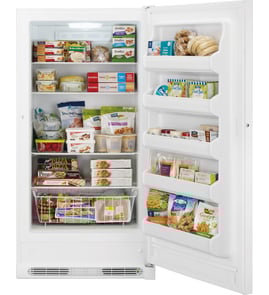




What causes an upright freezer to stop freezing?
On the Amana AFU2067AW-PAFU2067AW0 upright freezer, the most common reasons it stops freezing are airflow problems, dirty condenser coils, a defrost system failure, or a temperature control issue. Start with quick checks (settings, door seal, and airflow) before testing electrical parts.
Quick checks we recommend first
- Confirm the control is set colder and the freezer is not in a “warm” setting.
- Make sure the door closes tightly and nothing is holding it open.
- Leave space around packages so air can circulate; do not block interior vents.
- Check for heavy frost on the back wall (a strong clue of a defrost problem).
- Clean dust from the condenser area and make sure the unit has breathing room.
Likely causes and what they look like
| What you notice | Most likely cause | What to do next |
|---|---|---|
| Freezer runs a lot but stays warm | Dirty condenser, poor airflow, weak sealed system | Clean coils, improve airflow; call a technician if no change |
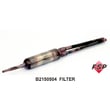
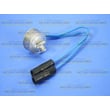
| Thick frost buildup, temps rising | Defrost system problem | Check defrost components such as the heater W11175809 |
| Temps swing warmer/colder | Control sensing or control issue | Inspect control area; consider the temperature control/timer circuit |
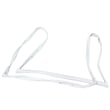
| Door edges sweating, ice near door | Door gasket leak | Inspect gasket for gaps/tears; warm and reshape if slightly warped |
Safe troubleshooting steps (in order)
- Unplug the freezer; remove the kick plate if needed and vacuum dust from the condenser area.
- Look for frost patterns: a solid “snow wall” often points to a defrost failure.
- Listen for fan operation when the compressor is running (no airflow usually means a fan or airflow obstruction).
- If you have a multimeter, test suspect components for continuity.
Why it matters
A freezer that is not freezing can be caused by something simple (airflow or dirty coils) or something that needs parts testing (defrost heater, timer/control, compressor). Fast diagnosis helps prevent food loss and avoids unnecessary part replacement.
Last updated: January 2026
What is the average lifespan of an upright freezer?
Most upright freezers, including the Amana AFU2067AW-PAFU2067AW0, typically last 12 to 15 years, with a common overall range of 10 to 20 years. Keeping airflow clear, maintaining door sealing, and preventing heavy frost buildup are the biggest factors that extend service life.
What affects lifespan the most
- Room conditions: Hot garages and high humidity make the compressor run longer.
- Door seal quality: A leaking gasket forces constant run time and creates frost.
- Frost control health: Defrost problems lead to ice buildup and poor cooling.
- Airflow and loading: Overpacking blocks vents and stresses the system.
- Basic upkeep: Dust and pet hair around the base reduce heat rejection.
Quick upkeep checklist (best ROI)
- Keep the freezer 2 to 3 inches from walls for airflow.
- Set temperature near 0°F (typical target for food safety and efficiency).
- Clean the door sealing surface; check for gaps with the “paper pull” test.
- Defrost and clear ice if you see thick frost or the door won’t close easily.
- Listen for long run times or clicking; those are early signs to troubleshoot.
Parts that commonly impact longevity
If cooling performance drops or frost builds quickly, these are frequent culprits on upright freezers:
| Symptom | Common cause | What it leads to |
|---|---|---|
| Heavy frost on back wall | Defrost system issue | Warm temps, longer run time |
| Warm freezer but compressor runs | Airflow restriction or sealed-system strain | Food thawing, higher energy use |
| Door won’t seal, moisture inside | Worn gasket | Frost, sweating, constant running |
For defrost-related issues on this model, the heater W11175809 is one of the components that can be involved.
Why it matters
A freezer that runs longer than normal to hold temperature uses more electricity and wears the compressor faster. Catching gasket leaks or defrost problems early is the simplest way to keep an upright freezer in the 12 to 15 year “typical” lifespan range.
Last updated: January 2026
What are the disadvantages of an upright freezer?
Upright freezers like the Amana AFU2067AW-PAFU2067AW0 are convenient to organize, but the tradeoffs are typically less usable space for bulky items, higher energy use than many chest freezers, and more frequent frost issues if the door seal is weak or the door is opened often.
Common disadvantages (upright vs. chest)
- Less room for bulky items: shelves and door bins can limit tall or wide packages.
- More temperature swings: frequent door openings let cold air spill out faster than a chest design.
- Often higher operating cost: many uprights use more electricity than comparable chest freezers.
- More frost risk: moisture entering the cabinet can create frost buildup, especially with heavy use.
- Typically higher purchase price: uprights often cost more than chest freezers with similar capacity.
What to check if performance seems worse than expected
If your upright freezer is struggling (warm temps, heavy frost, long run times), these are the first things we look at:
- Door not sealing flat all the way around
- Door left ajar or frequent openings
- Cabinet not level, causing the door to swing open
- Condenser area blocked by dust or poor airflow
- Defrost system issues (frost coating the back wall or evaporator area)
Parts that commonly affect “upright freezer drawbacks”
Some disadvantages get worse when key parts are worn or failing. Here are examples for this model:
| Symptom | Likely area | Example part for this model |
|---|---|---|
| Frost buildup, warmer temps | Defrost system | Heater W11175809 |
| Long run times, warm cabinet | Sealed system cooling | Compressor W10309994 |
| Temperature hard to control | Sensing/airflow around control | Temperature sleeve WP2196003 |
Why it matters
Most upright-freezer complaints come down to airflow and moisture management. Keeping the door sealing tightly, maintaining good ventilation around the cabinet, and addressing defrost problems early helps your Amana AFU2067AW-PAFU2067AW0 stay colder, waste less energy, and avoid heavy frost.
Last updated: January 2026