Installation guide
 Owner’s manual
 Error Codes


What is the life span of a KitchenAid dishwasher?
A KitchenAid dishwasher typically lasts 10 years with normal household use and routine care. For your KitchenAid KUDT03FTPA3, following the cleaning and operating steps in the KUDT03FTPA3 owner's manual helps reduce wear on key components like the pump, controls, and racks.
Typical lifespan and what affects it
Most dishwashers reach end-of-life because of leaks, poor washing performance, or electrical failures, not because the tub wears out.
- Hard water and heavy daily use shorten lifespan
- Clogged filters and poor maintenance strain the wash motor and drain pump
- Overloading racks increases rack and track wear
- Heat-dry use and high-temp cycles add stress to seals and electronics
- Small leaks (door seal, vent gasket) can lead to bigger failures
Maintenance that extends service life
The KUDT03FTPA3 care guidance includes running a cleaning cycle with white vinegar periodically; that simple routine helps prevent odor and buildup.
- Run an empty cleaning cycle with white vinegar as described in the manual
- Keep the filter area clear of debris after heavy loads
- Use the right detergent amount to reduce residue
- Load dishes so they do not strike each other (prevents chipping and rack damage)
- If storing seasonally, shut off water and power; winterize in freezing conditions
Common “wear-out” parts vs. what they do
| Part type | What you notice | Example part for KUDT03FTPA3 |
|---|---|---|
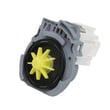
| Drain system | Water left in tub, gurgling, slow drain | Dishwasher drain pump WPW10348269 |
| Fill system | Not filling, weak wash, long cycle | Dishwasher water inlet valve |
| Door sealing | Drips at bottom or corners of door | Dishwasher door seal |
| Controls | Dead panel, stops mid-cycle | Dishwasher electronic control board |
Why it matters
Knowing the typical 10-year lifespan helps you decide whether to repair (often worth it for a single failed part) or replace (more common when multiple issues stack up, like leaks plus poor cleaning).
Last updated: February 2026
Where are KitchenAid dishwasher parts made?
KitchenAid dishwasher parts for model KUDT03FTPA3 are sourced from multiple manufacturing locations, and the exact country of origin varies by the specific part. For the most accurate origin details, we use the part packaging label and the model documentation as the reference point (not the dishwasher brand alone).
What you can rely on for the correct answer
Country of origin is a part-by-part detail. Here are the most dependable ways to confirm it:
- Check the label on the part box (often lists “Made in …” or “Assembled in …”).
- Look for a stamp or molded marking on the part itself (common on plastic housings and metal brackets).
- Match the part to the correct model diagram and description in the KUDT03FTPA3 owner’s manual.
- If you are replacing a pump, valve, or control, keep the old part until the replacement arrives so you can compare markings.
- For installation-related components, confirm fit and routing requirements in the KUDT03FTPA3 installation guide.
Examples of parts where origin commonly varies
Even within the same dishwasher model, these categories are frequently sourced from different suppliers:
| Part category | Common examples on KUDT03FTPA3 | Why origin varies |
|---|---|---|
| Pumps and motors | Drain pump, circulation pump motor | Supplier changes, production runs |
| Electrical | Control board, wire harness, fuse | Component sourcing and sub-assemblies |
| Plumbing | Drain hose, water inlet valve | Material and compliance differences |
| Seals and gaskets | Door seal, vent gasket | Material formulations and tooling |
If you are shopping for a replacement tied to a specific issue, these model-matched parts are good examples to start with: dishwasher drain pump WPW10348269 and dishwasher electronic control board WPW10084141.
Why it matters
Knowing where a part is made is most useful for traceability and matching. What matters most for performance is ordering the correct part ID for KUDT03FTPA3, then installing it using the proper electrical, drain, and mounting requirements.
Last updated: February 2026
How much to replace control panel on KitchenAid dishwasher?
For the KitchenAid KUDT03FTPA3 dishwasher, replacing the control panel typically costs $150 to $400 total (part plus labor). The final price depends on whether you replace just the console/panel trim or an electronic control, and whether you hire a technician.
What makes up the “control panel” cost
Dishwashers often use “control panel” to mean different parts. On KUDT03FTPA3, the door panel and console area are assembled with multiple screws and a panel assembly, so the repair can range from cosmetic to electrical. See the KUDT03FTPA3 installation guide for how the panel assembly is fastened and aligned.
- Cosmetic panel/console pieces: usually lower parts cost, less diagnostic time
- Electronic control: higher parts cost, may require troubleshooting wiring and keypad
- Labor: service call plus install time (often 1 to 2 hours)
- Extra parts: clips, harness repairs, or door hardware if worn
Typical price ranges (parts and labor)
| Repair scenario | Typical parts cost | Typical labor cost | Typical total |
|---|---|---|---|
| Cosmetic console/panel swap | $80 to $200 | $100 to $200 | $180 to $400 |
| Electronic control replacement | $150 to $250 | $120 to $250 | $270 to $500 |
A common electronic part that can be involved is the dishwasher electronic control board WPW10084141.
Before you buy parts (quick checks)
These steps help avoid replacing the wrong component:
- Confirm the dishwasher is not in a locked or non-start condition (door not fully latched, cycle paused).
- Check for error codes and follow the recommended reset or diagnostic steps.
- Inspect the console for stuck keys, moisture intrusion, or cracked overlays.
- Verify wiring connections at the control area are fully seated.
- If the unit has power but will not run, rule out a control issue versus a door switch issue.
For code-related troubleshooting, use KitchenAid he dishwasher error codes.
Why it matters
The “control panel” is both the user interface and, in many cases, the command center for wash functions. Correctly identifying whether you need a panel/console piece or an electronic control prevents repeat repairs and unnecessary labor.
Last updated: February 2026
What is the most common problem with KitchenAid dishwashers?
The most common issues we see on KitchenAid dishwashers like model KUDT03FTPA3 are poor cleaning (from blocked spray paths or a dirty filter area), not draining (standing water), and not starting or stopping mid-cycle (often power, door latch, or control-related). Use the KUDT03FTPA3 owner's manual troubleshooting checks first.
Most common symptoms and what usually causes them
- Dirty dishes after a cycle: clogged spray arms, overloaded racks, or heavy soil that needs a stronger cycle option (loading and spray coverage matter).
- Standing water in the bottom: a restriction in the drain path, a kinked drain line, or a failing drain pump.
- Won’t start or stops during a cycle: door not fully latched, wrong cycle selection, or a household power issue (breaker or fuse).
- Fills slowly or not at all: water shutoff valve not fully open or the overfill float stuck.
- Leaks: worn door seal or a sealing surface that is dirty or warped.
Quick checks we recommend (in order)
- Confirm the door is fully closed and latched (a slightly open door can stop the cycle).
- Verify power: check the breaker or household fuse; reset if tripped.
- Check water supply: make sure the shutoff valve is on.
- Inspect the overfill float: it should move freely; press down to release if stuck.
- If it won’t drain: look for kinks or clogs in the drain hose and listen for the drain pump running.
Parts that commonly relate to these problems (for KUDT03FTPA3)
| Symptom | Common suspect part | What it affects |
|---|---|---|
| Not draining, water left in tub | Dishwasher drain pump WPW10348269 | Pushes water out during drain |
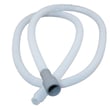
| Not draining, slow drain | Dishwasher drain hose 8269144A | Drain path to disposer or drain line |
| Not filling | Dishwasher water inlet valve WPW10158389 | Lets water into the dishwasher |
| Dead/no power symptoms | Fuse W10258275 | Protects the dishwasher’s electrical circuit |
| Random behavior or no response | Dishwasher electronic control board WPW10084141 | Controls cycle logic and power distribution |
Why it matters
Catching the symptom early prevents repeat wash cycles, reduces standing water odors, and helps you avoid secondary damage (like leaks or motor overload). The manual also notes that some cycles can pause briefly during the main wash, which is normal.
Last updated: February 2026