Error Codes


What does a GE model number tell me?
A GE model number (like GSE25HBLKHTS) identifies the appliance platform and key configuration details so we can match the correct parts and diagrams for your exact refrigerator. It typically encodes the product type/series, size or capacity family, and design variations (such as finish or feature package).
What you can learn from the model number
For a GE side-by-side refrigerator, the model number is most useful for parts lookup and compatibility.
- Confirms the exact product family (side-by-side refrigerator vs. other styles)
- Narrows down the correct parts list and exploded-view diagrams
- Helps match feature variations (dispenser, ice maker style, filter type)
- Reduces ordering mistakes when parts look similar across GE models
- Speeds up troubleshooting because symptoms often map to model families
Model number vs. serial number (quick comparison)
Use the model number for parts compatibility; use the serial number for the unit’s production details.
| Identifier | What it’s used for | Where it helps most |
|---|---|---|
| Model number (GSE25HBLKHTS) | Identifies the design and configuration | Choosing correct replacement parts |
| Serial number | Identifies the specific unit built | Confirming manufacturing timeframe and revisions |
Why it matters when ordering parts
Many GE refrigerator parts are model-family specific. For example, water system and dispenser parts can vary by model even when the doors and shelves look the same.
Common examples on this model include:
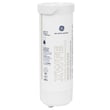
- Water filtration: GE refrigerator water filter XWFE
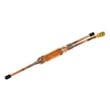
- Water supply control: refrigerator water inlet valve WR57X30890
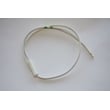
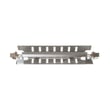
- Cooling/defrost components: refrigerator defrost heater WR51X10055
Best practice for accurate parts matching
Use this checklist before you order:
- Match the model number exactly: GSE25HBLKHTS (letters and numbers matter)
- Pull the serial number from the same tag and keep it handy
- Compare the part name and part ID to your symptom (water, ice, cooling, defrost)
- If you are shopping beyond the parts shown here, search by model number on Sears PartsDirect
Last updated: February 2026
How wide is a 25.6 cubic foot refrigerator?
Most 25.6 cubic foot side-by-side refrigerators are about 35 to 36 inches wide. For your GE GSE25HBLKHTS specifically, the exact width depends on the cabinet and door design, so we recommend confirming the listed product dimensions before ordering parts or planning a tight installation space.
Typical width you can plan around
For a 25.6 cu. ft. side-by-side refrigerator, these are the most common real-world ranges:
- Cabinet width: ~35 to 36 inches
- Overall width with doors: usually similar, but can vary by handle style
- Clearance needed: add space for airflow and door swing (especially near walls)
Quick sizing guide (what to measure)
Use a tape measure and check these three points at home:
- Opening width (between cabinets or walls)
- Refrigerator width (widest point, often at the doors)
- Door swing clearance (space needed to fully open doors and pull out bins)
| What you are sizing | What it affects | What to allow |
|---|---|---|
| Width of opening | Whether the fridge fits at all | Fridge width plus a little wiggle room |
| Door swing | Access to shelves and drawers | Extra space on hinge side |
| Ventilation | Cooling performance and noise | A small gap around the unit |
Why it matters
Width is not just about “will it slide in.” Tight installs can reduce airflow, make doors hard to open, and complicate repairs like replacing a water inlet valve or evaporator fan motor.
Parts that often come up when space and door use are issues
If you are troubleshooting door, dispenser, or airflow symptoms after a move or tight install, these model-matched parts are common:
- Refrigerator evaporator fan motor WR60X10307 (air circulation and cooling)
- Refrigerator dispenser ice chute door kit WR17X11653 (ice door sealing)
- Refrigerator water inlet valve WR57X30890 (water to dispenser and ice maker)
For more parts for GE GSE25HBLKHTS, use the parts list for this model or search by model number on Sears PartsDirect.
Last updated: February 2026
What is the average lifespan of a GE refrigerator?
Most GE refrigerators, including the GE GSE25HBLKHTS side-by-side, typically last 10 to 15 years with normal household use. Regular maintenance (clean airflow, good door sealing, and stable temperatures) is what most often determines whether you land closer to 10 years or closer to 15.
Typical lifespan ranges (what we see most often)
- Average range: 10 to 15 years
- Common “early failure” window: 5 to 9 years (usually cooling or defrost-related issues)
- Often reaches: 15+ years when the condenser area stays clean and doors seal tightly
| What you’re judging | What it usually means | What to do next |
|---|---|---|
| Not cooling well | Airflow, fan, defrost, or control issue | Check airflow and listen for fan operation |
| Frost buildup on back wall | Defrost system problem | Inspect defrost heater and defrost thermostat |
| Warm fridge, freezer OK (or vice versa) | Air circulation or sensor issue | Check evaporator fan and temperature sensing |
| Water/ice problems | Filter restriction or valve issue | Replace filter, then test inlet valve |
Maintenance that extends life (high impact)
- Vacuum dust from the condenser area (keeps the compressor running cooler).
- Keep door gaskets clean and sealing; a poor seal forces longer run times.
- Avoid overpacking; blocked vents reduce airflow between compartments.
- Replace the water filter on schedule to protect the dispenser and ice maker.
- Keep temperatures steady (freezer around 0°F, fresh food around 37°F).
Parts that commonly affect “how long it lasts”
These are not “routine replacement” items, but they are frequent causes of performance decline over time:
- Refrigerator evaporator fan motor WR60X10307 (moves cold air through the compartments)
- Refrigerator defrost heater WR51X10055 (prevents heavy frost that chokes airflow)
- GE profile refrigerator temperature sensor WR55X10025 (helps regulate temperatures accurately)
- GE refrigerator water filter XWFE (protects water flow and ice maker fill)
Why it matters
A refrigerator that is running hot, frosting up, or leaking water often still has years of potential life left; fixing airflow, defrost, or water-supply issues early helps prevent compressor overwork and food-temperature swings.
For model-specific replacement options, use the parts list for GE GSE25HBLKHTS, or search by model on Sears PartsDirect.
Last updated: February 2026
What is the most common problem with a GE refrigerator?
The most common problem we see with GE refrigerators like model GSE25HBLKHTS is a cooling complaint (fresh food too warm, freezer not holding temperature, or wide temperature swings). The usual causes are restricted airflow, dirty condenser coils, or a weak evaporator fan motor.
Quick checks that fix many “not cooling” complaints
- Make sure air vents inside both compartments are not blocked by food packages.
- Set temperatures to normal targets: 0°F in the freezer and 37°F in the fresh food section.
- Clean dust from the condenser area (unplug the refrigerator first).
- Confirm the doors close and seal fully; a poor seal causes warm air leaks and frost.
- Listen for the evaporator fan: it should run when the compressor is running (door switch held closed).
Common symptoms and the most likely causes
| Symptom | Most likely cause | What to check next |
|---|---|---|
| Fresh food warm, freezer cold | Airflow problem between sections | Blocked vents, frost buildup, fan operation |
| Both sections warm | Heat not being removed | Dirty condenser, fan issues, control or compressor problems |
| Noisy or no airflow sound | Evaporator fan issue | Inspect and test the refrigerator evaporator fan motor WR60X10307 |
| Frost/ice buildup and warming | Defrost system issue | Consider the refrigerator defrost heater WR51X10055 and refrigerator defrost bi-metal thermostat WR50X10065 |
Why it matters
Cooling problems can look “random,” but they usually come down to airflow and heat transfer. Catching a weak fan, a defrost failure, or a dirty condenser early helps prevent food spoilage and reduces strain on the compressor.
When parts are commonly involved
If basic airflow and cleaning checks do not restore normal temperatures, these parts are frequent suspects on side-by-side refrigerators:
- Refrigerator evaporator fan motor WR60X10307 (poor airflow, warm fresh food)
- GE profile refrigerator temperature sensor WR55X10025 (temperature swings, inaccurate sensing)
- Refrigerator defrost heater WR51X10055 (heavy frost, warming after a few days)
- Refrigerator defrost bi-metal thermostat WR50X10065 (defrost not cycling correctly)
For more DIY troubleshooting and repair options, we recommend starting with how to fix your evaporator cooling fan. You can also order replacement parts for GSE25HBLKHTS from the parts list for this model, or search by model number on Sears PartsDirect.
Last updated: February 2026
Are GE side-by-side refrigerators good?
Yes. GE side-by-side refrigerators like model GSE25HBLKHTS are a solid choice for everyday use because they typically offer dependable cooling, easy access to both fresh food and freezer sections, and convenient dispenser features. Overall performance depends most on proper temperatures, clean airflow, and keeping the ice and water system maintained.
What “good” usually means for a side-by-side refrigerator
A good side-by-side refrigerator keeps stable temperatures, circulates air evenly, and dispenses ice and water reliably.
- Cooling consistency: steady fresh food and freezer temps with minimal swings
- Organization: adjustable shelves and door bins for flexible storage
- Convenience: in-door ice and water (when equipped)
- Serviceability: common wear parts (filters, valves, fans) are replaceable
- Noise level: normal compressor and fan sounds; dispenser and ice maker can be louder during cycles
Common strengths and common complaints (what we see most)
| Area | Typical strength | Typical complaint | What to check first |
|---|---|---|---|
| Cooling | Even temps when airflow is clear | Warm sections or frost buildup | Door seal, vents, defrost system |
| Ice maker | Convenient automatic ice | Slow production or clumping | Filter, inlet valve, freezer temp |
| Water dispenser | Easy filtered water | Slow flow or bad taste | Filter age, air in line |
| Noise | Normal fan/compressor hum | Clicking, buzzing, rattling | Fan blade ice, valve buzz |
Parts that most often affect “how good it works” on GSE25HBLKHTS
If performance is slipping, these model-matched parts are common fixes:
- Water quality and flow: GE refrigerator water filter XWFE
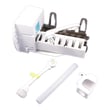
- Ice production issues: GE refrigerator ice maker kit WR30X10093
- No water to dispenser or ice maker: refrigerator water inlet valve WR57X30890
- Warm fridge or poor airflow: refrigerator evaporator fan motor WR60X10307
- Frost buildup and warming: refrigerator defrost heater WR51X10055 and refrigerator defrost bi-metal thermostat WR50X10065
Why it matters
Most “bad refrigerator” complaints come from a few fixable causes: restricted airflow, a clogged water filter, a weak inlet valve, or a defrost problem. Keeping those systems in shape helps a GE side-by-side run colder, quieter, and more efficiently.
Helpful DIY guidance
- For dispenser and ice system upkeep: how to prevent water dispenser and ice maker problems
- For filter selection and replacement basics: how to replace the water filter in a GE refrigerator
You can order replacement parts for GE GSE25HBLKHTS from the parts list for this model, or search by model number on Sears PartsDirect.
Last updated: February 2026