Owner’s manual
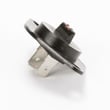


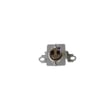

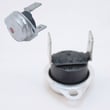
How to tell if Samsung dryer thermal fuse is bad?
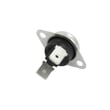
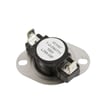
On a Samsung DVE52A5500W dryer, a “bad” thermal fuse is typically open (no continuity), which can stop the dryer from heating or keep it from running at all. The most reliable way to tell is to unplug the dryer and test the fuse with a multimeter as outlined in the DVE52A5500W user manual.
Common signs a thermal fuse may be blown
A blown thermal fuse is often the result of overheating from restricted airflow. You may notice:
- Dryer runs but no heat (clothes stay damp)
- Dryer won’t start or stops shortly after starting (varies by design)
- Cycle ends early and laundry is still wet
- Burning smell or unusually hot cabinet (stop using the dryer and check venting)
How we test the thermal fuse (basic continuity check)
- Unplug the dryer (and shut off gas if you have a gas model).
- Access the thermal fuse (commonly on the blower housing or heater duct, depending on configuration).
- Pull off the two wire connectors from the fuse terminals.
- Set a multimeter to continuity or lowest ohms.
- Touch one probe to each terminal.
- Good fuse: continuity (often near 0 ohms)
- Bad fuse: no continuity (open, OL, or infinite resistance)
What to do if the fuse is open
A thermal fuse is a one-time safety device; if it’s open, we replace it and correct the overheating cause.
- Clean the lint screen and housing
- Inspect and clean the exhaust duct to the outside
- Check for crushed, kinked, or overly long vent runs
- Verify strong airflow at the exterior vent hood
Quick decision table
| Test result | What it means | Next step |
|---|---|---|
| Continuity present | Fuse likely OK | Check heating circuit, sensors, airflow |
| No continuity (open) | Fuse is blown | Replace fuse; fix vent restriction |
Why it matters
The thermal fuse helps prevent overheating. If you replace the fuse without fixing airflow (lint buildup, clogged vent, crushed duct), the new fuse can blow again and drying performance will stay poor. For airflow-related symptoms, our dryer takes a long time to dry guide is a good next step.
Last updated: January 2026
How do I reset my Samsung dryer?
To reset your Samsung dryer model DVE52A5500W, we recommend doing a power reset: turn the dryer off, cut power (unplug or switch the breaker off) for 1 to 5 minutes, then restore power and try the cycle again. This clears many temporary control glitches.
Quick reset steps (power reset)
- Press Power to turn the dryer off.
- Unplug the dryer, or switch OFF the dryer’s circuit breaker.
- Wait 1 to 5 minutes.
- Restore power.
- Press Power, select a cycle, then press Start/Pause (Hold to Start).
If the dryer still shows an error code
A reset will not fix a problem that the control is detecting again (like airflow restriction, door not closed, or voltage issues). Use these checks next:
- Clean the lint filter and make sure it is fully seated.
- Check the exhaust vent for kinks, crushing, or heavy lint buildup.
- Make sure the door closes firmly and nothing is caught in the opening.
- If the display shows a code again, look up the meaning and the recommended fix in Samsung dryer error codes.
What a reset can and cannot do
| Situation | Reset helps? | What to do next |
|---|---|---|
| Display frozen, buttons not responding | Yes | Power reset, then retry cycle |
| Random beeping or odd behavior after outage | Yes | Power reset |
| Error code returns immediately | Usually no | Troubleshoot the specific code |
| Dryer will not start at all | Sometimes | Check power supply, door switch, control lock |
Why it matters
Resetting the DVE52A5500W is a fast first step that can clear a temporary electronic fault without replacing parts. If the same information code returns, it points to an underlying issue (often venting/airflow or power) that needs correction.
For model-specific operating details and control panel behavior, follow the guidance in the DVE52A5500W user manual.
Last updated: January 2026
What is the most common problem with Samsung dryers?
The most common Samsung dryer complaint (including Samsung model DVE52A5500W) is poor or no heat, which shows up as clothes taking too long to dry. In many cases, the root cause is restricted airflow (lint screen or venting) or a failed heating component such as a heating element, thermal fuse, or temperature sensor.
Quick checks we recommend first (fast, no tools)
- Clean the lint screen and confirm it is seated correctly.
- Run the dryer on a timed heat cycle and verify you feel strong airflow at the outside vent hood.
- Check the vent path for kinks, crushed duct, or a stuck vent flap.
- Avoid overloading; heavy loads can mimic a heating problem.
- If your dryer has it, run the vent blockage test steps in the DVE52A5500W user manual.
Most common causes when a Samsung dryer will not heat
These are the usual suspects across Samsung electric and gas dryers; the exact failed part varies by configuration.
- Restricted exhaust ducting (long runs, too many elbows, lint buildup)
- Blown thermal fuse or thermal cut-off (often triggered by overheating from poor venting)
- Failed heating element (electric models)
- Failed igniter, flame sensor, or gas valve coils (gas models)
- Failed thermistor or other temperature sensing issue
Symptom-to-cause guide
| What you notice | Most likely cause | What to do next |
|---|---|---|
| Runs but no heat | Heating circuit or gas ignition issue | Check venting first; then test heat components |
| Heat is weak, long dry times | Airflow restriction | Inspect and clean venting; confirm strong exhaust |
| Stops mid-cycle, clothes still damp | Overheating or sensor issue | Clean venting; check thermal safety devices |
| Error code appears | Control detected a fault | Use Samsung dryer error codes to interpret the code |
Why it matters
A dryer that is not heating correctly is often also a dryer that is not moving air correctly. Fixing airflow issues first can restore normal drying, prevent repeat thermal fuse failures, and reduce energy use.
Last updated: January 2026