Installation guide
 Owner’s manual
 Error Codes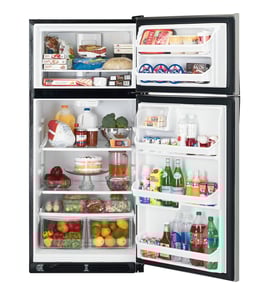



What is the most common problem with a Frigidaire refrigerator?
Cooling problems are the most common issue we see on Frigidaire refrigerators like model FRT18L4JW2, usually showing up as warm temperatures, uneven cooling, or excessive frost. In many cases, the fix is basic maintenance (airflow and seals) before replacing parts; start with the checks in the FRT18L4JW2 owner's manual.
Most common causes to check first
- Condenser area airflow is restricted (dust, pet hair, blocked vents)
- Door not sealing well (gasket gaps, door not closing fully)
- Freezer is overpacked, blocking air circulation to the fresh food section
- Refrigerator is in a normal defrost cycle (wait about 20 minutes and recheck)
- Power supply issue (loose plug, tripped breaker, blown fuse)
Quick troubleshooting steps (in order)
- Confirm power and controls: Make sure the plug is fully seated and the temperature control is not set to “0” (off).
- Give temperatures time: After any control change, allow 24 hours for temperatures to stabilize.
- Check door sealing: Close a dollar bill in the door; if it slips out easily, the seal may be weak.
- Improve airflow: Keep items from blocking vents; leave space around packages.
- Listen for normal operation sounds: A hum/pulse from the compressor and airflow from the condenser fan can be normal.
When a part is likely involved
If the refrigerator is running but not cooling well, these parts are common suspects:
| Symptom | Common suspect | Example part for this model |
|---|---|---|
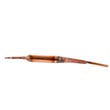
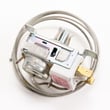
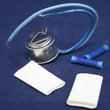
| Warm fridge, freezer OK or frosty | Defrost system issue | Refrigerator defrost bi-metal thermostat 5303918202 |
| Warm temps, weak airflow | Evaporator fan issue | Refrigerator evaporator fan motor 241854301 |
| Door sweating, warm spots near door | Door seal leak | Frigidaire refrigerator door gasket (black) 241872512 |
Why it matters
Cooling issues can lead to food spoilage and can also force the compressor to run longer than normal. The manual notes that low or unstable voltage can affect performance and potentially damage the compressor, so it is worth confirming a solid power supply early.
Last updated: January 2026
What is the upper part of a fridge called?
In a Frigidaire top-mount refrigerator like model FRT18L4JW2, the upper section is the freezer compartment. It is designed to keep foods frozen and also houses key airflow and temperature-control components that help the refrigerator maintain safe temperatures.
What the freezer compartment does
- Freezes and stores food at sub-zero temperatures
- Helps circulate cold air to the fresh food section (in most top-mount designs)
- Often contains the ice maker area (if your unit is equipped)
- Includes the freezer door and door gasket that must seal tightly
For model-specific layout and control details, use the FRT18L4JW2 owner's manual.
Common parts you will find in the upper (freezer) area
Depending on the exact configuration, the freezer section commonly includes:
- Freezer shelves or bins
- Evaporator cover and air passages (behind the rear panel)
- Evaporator fan area (moves cold air)
- Freezer door gasket (prevents warm air leaks)
If you are troubleshooting cooling issues tied to airflow, the evaporator fan system is a common place to start; the how to fix your evaporator cooling fan guide walks through typical symptoms and checks.
Quick terminology guide
| Term | What it means | Where you will see it |
|---|---|---|
| Freezer compartment | The “upper part” on a top-mount refrigerator | Top section behind the freezer door |
| Fresh food compartment | The refrigerator section for everyday items | Bottom section behind the refrigerator door |
| Door gasket | The rubber seal around the door | Around freezer and fresh food doors |
Why it matters
Using the right name helps when ordering parts, reading wiring diagrams, or following troubleshooting steps. For example, “freezer not cold” points you toward freezer airflow, frost buildup, and door sealing checks, while “fresh food warm” can indicate an airflow restriction from the freezer.
Last updated: January 2026
What are the advantages of a top mount fridge?
A top-mount refrigerator like the Frigidaire FRT18L4JW2 puts the freezer on top and the fresh-food section below; it is a practical layout that typically costs less than many other styles and keeps everyday refrigerator items at a comfortable reach. For setup and door-swing options, use the FRT18L4JW2 owner's manual.
Key advantages of a top-mount refrigerator
- Easy access to fresh food: The refrigerator compartment is at about waist-to-chest height for most users.
- Simple, proven design: Fewer complex door mechanisms than many French door models.
- Often lower purchase and repair costs: Common parts and straightforward access for service.
- Good freezer visibility: The top freezer keeps frozen items closer to eye level.
- Flexible placement: Doors can often be reversed to fit your kitchen layout (see the manual for your model).
Practical setup benefits (what we see most often)
Top-mount models are usually straightforward to install and keep running efficiently when they are leveled and have proper airflow.
| Setup item | Typical recommendation | Why it helps |
|---|---|---|
| Clearance at sides/top | About 3/8 inch | Improves air circulation |
| Clearance at back | About 1 inch | Helps cooling performance |
| Leveling | Slight tilt back (about 1/4 inch) | Helps doors close and seal |
Why it matters
A top-mount layout can make daily use easier (especially for fresh-food access) and can reduce long-term hassle because the design is simple, parts are common, and door sealing and leveling are usually easy to correct using the installation steps in the FRT18L4JW2 installation guide.
Last updated: January 2026
Why is my Frigidaire top mount freezer not freezing?
If your Frigidaire FRT18L4JW2 top-mount freezer isn’t freezing, the most common causes are control settings that need small adjustments, poor airflow from blocked vents, or a fan issue that prevents cold air from circulating. Start by adjusting temperatures gradually and allowing time to stabilize. See the FRT18L4JW2 owner's manual for the exact control locations and adjustment guidance.
Quick checks that fix many “not freezing” complaints
- Confirm the refrigerator is running and the temperature control is not set to 0 (Off).
- Adjust the controls in small increments; then wait for temperatures to stabilize.
- Keep food packages from blocking cold air vents; airflow is required for both compartments.
- Allow a full cool-down period after changes or after plugging in; keep doors closed.
- Make sure the freezer door closes fully and isn’t held open by overpacked items.
What to do in the first 30 minutes
- Set the freezer control slightly toward Colder (if your model has a separate freezer control).
- Set the refrigerator control slightly toward Colder if the freezer is controlled through the refrigerator knob.
- Check for strong airflow inside the freezer (you should typically feel air movement near vents when the unit is running).
Timing expectations (normal vs. not normal)
| Situation | What’s normal | What to do |
|---|---|---|
| Just plugged in or after a power outage | Needs 8 to 12 hours to cool down | Keep doors closed; recheck later |
| After changing control settings | Can take up to 24 hours to stabilize | Avoid repeated adjustments |
| Ice maker not making ice (some models) | No ice in first 24 hours; bin fills in 1 to 2 days | Focus on freezer temp first |
When a part problem is likely
If the freezer is warm and you also notice weak or no airflow, frost buildup, or unusual fan noise, a failed defrost component or evaporator fan system is a common cause.
- If you suspect a defrost issue (ice buildup on the back freezer panel), check the refrigerator defrost bi-metal thermostat 5303918202.
- If you suspect a circulation issue (no airflow), inspect the evaporator fan area; a damaged blade can be addressed with the refrigerator evaporator fan blade 5308000010.
Why it matters
A freezer that is not freezing can quickly push food into unsafe temperatures. Correct control settings and unobstructed airflow are the fastest fixes; if airflow or defrost is failing, addressing it early helps prevent heavier frost buildup and longer run times.
Last updated: January 2026