



Is a 16 or 18 inch chainsaw better?
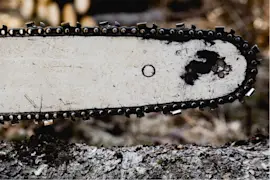
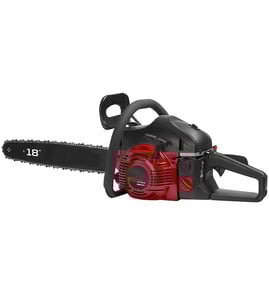
For a Craftsman 358353661 gas chainsaw, a 16-inch setup is usually better for lighter weight and easier control, while an 18-inch setup is better when you regularly cut thicker wood and want more reach. The “better” choice depends on what you cut most often and how long you run the saw.
Quick comparison (16-inch vs 18-inch)
| Feature | 16-inch bar and chain | 18-inch bar and chain |
|---|---|---|
| Handling | Lighter, less fatigue | Heavier, more fatigue over time |
| Best for | Limbing, pruning, small firewood | Larger rounds, more reach per cut |
| Cutting speed (same saw) | Often feels quicker in smaller wood | Helps reduce repositioning in bigger wood |
| Kickback risk | Lower when used correctly | Higher if the nose contacts wood |
How we recommend choosing
- Choose 16-inch if most cuts are under about 12 to 14 inches diameter and you want easier maneuvering.
- Choose 18-inch if you often cut 14 to 18 inches diameter and want extra reach.
- Match the bar length to your comfort level; control matters more than maximum length.
- Use the correct chain pitch and gauge for the bar you install.
- Keep the chain sharp and properly tensioned; a dull chain makes any length feel “too small.”
Model-specific parts to check for your setup
For model 358353661, we list compatible cutting components on this model’s parts list. Common items customers replace include:
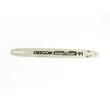
- Guide bar 140SDEA041 (14-inch bar option)
- Bar 160SDEA041 (bar option)
- Chain 91PX052G (14-inch chain option)
- Chain 91PX056G (16-inch chain option)
Why it matters
Bar length affects leverage, balance, and how often the bar tip gets near the wood (a major kickback factor). Picking the right length for your typical job improves safety, reduces fatigue, and helps your Craftsman saw cut more efficiently.
Last updated: February 2026
Should I use 40 1 or 50 1 fuel for a chainsaw?
For a Craftsman chainsaw model 358353661, use the fuel mix ratio specified for the engine; most modern 2-cycle chainsaws run 50:1, while some older designs require 40:1. Using too little oil (50:1 in a 40:1 engine) can score the cylinder and damage the piston.
Quick rule to choose the right mix
Use this decision path:
- If your saw is labeled 50:1, mix 50:1 every time.
- If your saw is labeled 40:1, mix 40:1 every time.
- If the label is missing, start with 50:1 using high-quality 2-cycle oil, then correct it once you confirm the spec for your exact engine.
- Never “split the difference” unless the engine documentation explicitly allows it.
Why 40:1 vs 50:1 matters
The ratio controls lubrication and combustion characteristics.
- 40:1 has more oil per gallon; it increases lubrication but can smoke more and leave more carbon deposits.
- 50:1 has less oil per gallon; it burns cleaner and is the most common spec on newer saws.
- The risky direction is running lean on oil (too little oil for what the engine needs).
Mixing guide (common U.S. measurements)
| Mix ratio | Oil per 1 gallon gas | Oil per 2 gallons gas |
|---|---|---|
| 50:1 | 2.6 fl oz | 5.1 fl oz |
| 40:1 | 3.2 fl oz | 6.4 fl oz |
Symptoms that point to a fuel-system issue (not just mix ratio)
If the saw won’t start, surges, or dies at idle, check common fuel delivery problems:
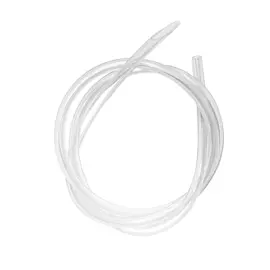
- Cracked or hardened fuel line
- Loose fuel line connection at the tank or carburetor
- Air leak at a fitting
- Restricted screen or filter
For model 358353661, common fuel-system parts we stock include the fuel line 530069216 and fitting 530023877.
Why it matters
The correct oil ratio protects the crank bearings, piston, and cylinder while keeping the carburetor tune stable. A slightly “oil-rich” mix is usually safer than an “oil-lean” mix, but the best performance and engine life come from using the specified ratio.
Last updated: February 2026
What model is my Craftsman chainsaw?
Your Craftsman chainsaw’s model number is printed on a factory ID label on the saw. For this parts list, the model is 358353661; match the number on your label to confirm you have the same Craftsman chainsaw before ordering parts.
Where to look for the model number label
On most Craftsman gas chainsaws, the model/serial label is on the saw body, not on the bar or chain. Check these common spots:
- On the starter housing (recoil starter side)
- On the rear handle area near the trigger
- On the crankcase or chassis near the muffler side
- On the underside of the saw body near the oil and fuel tank area
- Near the bar mount studs (behind the clutch cover)
How to confirm you have model 358353661
Use the label to match the model number exactly. If the label is dirty or worn, clean the area first so the digits are readable.
| What you see on the label | What it means | What to do next |
|---|---|---|
| 358353661 | Exact match | Use this model’s parts list to choose replacements |
| 358.353661 (with a dot) | Same model format | Treat it as 358353661 when searching parts |
| Different number | Different model | Use the correct model number to find the right parts |
Why it matters
Chainsaws that look similar can use different fuel lines, caps, bars, and chains. Matching the model number helps you avoid fit issues and repeat repairs.
Parts that commonly depend on the exact model
Once you confirm the model, these are examples of parts where the correct match matters:
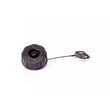
- Fuel system parts like the fuel line 530069216 and gas cap 530014347
- Cutting system parts like the guide bar 140SDEA041 and chain 91PX052G
- Drive components like the drum sprocket 530069166
Last updated: February 2026
Why does my Craftsman chainsaw die when I give it gas?
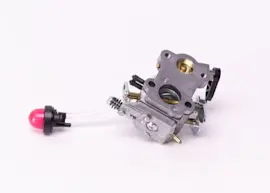
When your Craftsman chainsaw model 358353661 dies as soon as you squeeze the throttle, it usually means the engine is going lean under load because fuel flow is restricted or there is an air leak in the fuel system. Start by checking the fuel lines, tank venting, and carburetor metering parts.
Most common causes (and what to check first)
- Old fuel or wrong mix: Drain the tank and refill with fresh, properly mixed fuel.
- Cracked, soft, or loose fuel line: Inspect for splits, kinks, or loose connections; replace if damaged.
- Fuel tank not venting: If loosening the gas cap briefly improves running, the cap vent is likely restricted.
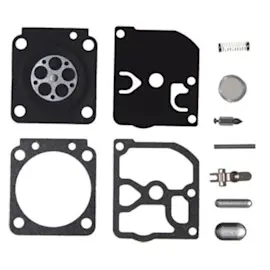
- Carburetor diaphragm or gasket issue: A stiff diaphragm or leaking gasket can’t keep up with throttle demand.
- Clogged screen: A plugged screen can restrict fuel or airflow depending on location.
Parts we recommend inspecting for this symptom
If you find damage or blockage, these are common fixes for stalling-on-throttle on model 358353661:
- Replace the fuel line 530069216 if it is brittle, swollen, or leaking.
- Check the gas cap 530014347 if the saw runs better with the cap loosened.
- If fuel delivery is inconsistent, install the gasket kit 530069844 (carburetor diaphragm and gasket kit).
- Inspect and clean or replace the screen 530035178 if it is plugged.
Quick symptom-to-fix guide
| What you notice | Likely issue | What to do |
|---|---|---|
| Idles OK, dies when throttled | Fuel restriction or carb metering problem | Replace fuel line; service carb with gasket/diaphragm kit |
| Dies after a few seconds, restarts after sitting | Tank not venting | Check/replace gas cap |
| Needs choke to keep running | Lean condition (air leak or fuel starvation) | Inspect fuel line and carb gaskets |
| Surges at high speed | Fuel delivery inconsistent | Check fuel line routing; service carb |
Why it matters
A chainsaw that stalls when you give it gas is typically running too lean. That can make cutting unsafe and can also overheat the engine. Restoring steady fuel delivery helps the saw accelerate cleanly and hold power in the cut.
Last updated: February 2026