Owner’s manual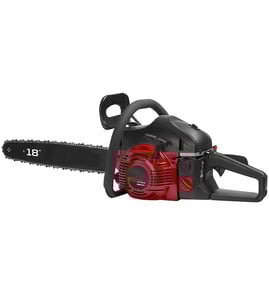




Should I use 40 1 or 50 1 fuel for a chainsaw?
For the Poulan P3416 chainsaw, use a 40:1 fuel mix (40 parts unleaded gasoline to 1 part synthetic 2-cycle, air-cooled engine oil). Our manual also gives the exact measure: 3.2 oz of oil per 1 gallon of gas. See the owner's manual.
A “ratio” is how much gasoline you mix with 2-cycle oil.
- 40:1 equals more oil in the mix (richer lubrication)
- 50:1 equals less oil in the mix (leaner lubrication)
- Using too little oil can accelerate wear and damage internal engine parts
- Using too much oil can increase smoke and carbon buildup and may foul the spark plug
| Mix ratio | Oil per 1 gallon gas | Typical use case |
|---|---|---|
| 40:1 | 3.2 oz | Poulan P3416 requirement |
| 50:1 | 2.6 oz | Common on many newer 2-stroke tools |
Use fresh, unleaded gasoline and a good-quality synthetic 2-cycle oil labeled for air-cooled engines.
- Add about half the gas to an approved fuel container
- Add the correct oil amount (3.2 oz per gallon)
- Cap and shake to blend
- Add the remaining gas and shake again
- Mix only what you will use soon; don’t store mixed fuel for long periods
The P3416 manual warns against using automotive or marine oil because it can damage the engine.
- Use synthetic 2-cycle oil designed for air-cooled engines
- Avoid old fuel; stale fuel is a common cause of hard starting
- Alcohol-blended fuel can cause storage issues; for storage, follow the fuel-system steps in the manual
Correct 2-stroke mix ratio is the difference between reliable lubrication and premature engine wear. On the P3416, 40:1 is part of the engine’s design, so matching that ratio protects the piston, rings, and cylinder.
Last updated: February 2026
Why does my chainsaw have fuel and spark but won't start?
If your Poulan P3416 chainsaw has fuel and spark but will not start, the most common causes are a flooded engine (too much fuel after repeated pulls), incorrect 40:1 fuel mix, or fuel not reaching the carburetor due to a clogged filter or damaged fuel line. Use the owner's manual starting and “difficult starting” steps first.
- Confirm the ON/STOP switch is set to ON.
- Set the choke/fast idle lever correctly for a cold start; use the primer bulb to circulate fuel.
- If it did not start after about 10 pulls, treat it as flooded and clear it using the warm-start procedure with the choke pushed fully in (OFF CHOKE).
- Verify fresh fuel mixed at 40:1 (3.2 oz 2-cycle oil per 1 gallon unleaded gas); do not use automotive or marine oil.
- Check that fuel is actually reaching the carburetor; inspect for kinked, split, or hardened fuel lines.
Fuel can be in the tank but not making it to the carburetor. On the P3416, the troubleshooting table points to dirty fuel filtration and damaged fuel lines as common causes.
Common parts to inspect or replace:
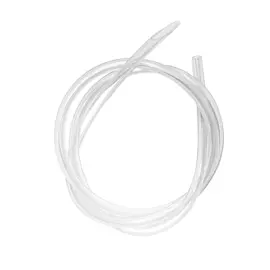
- Poulan lawn & garden equipment fuel line, small 530069247
- Ayp lawn & garden equipment fuel line, large 530069216
- Ayp chainsaw fuel line fitting 530023877
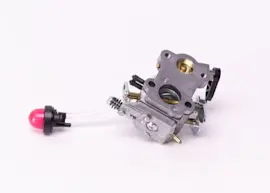
- Ayp lawn & garden equipment engine carburetor primer bulb 530047721
| What you see | Likely cause | What we do |
|---|---|---|
| Strong fuel smell, wet plug | Flooded engine | Choke OFF, follow warm-start steps, pull until it clears |
| Starts briefly then dies | Fuel not reaching carburetor | Inspect/replace fuel lines, fitting, primer bulb |
| No “pop” at all after priming | Incorrect start setup or stale mix | Reset choke/fast idle, use fresh 40:1 mix |
| Runs rough once started | Carburetion or air restriction | Clean air filter, then follow carb adjustment guidance in the manual |
A 2-stroke chainsaw can show spark and still not start if the air-fuel mix is wrong (too rich from flooding, too lean from a fuel restriction). Fixing the starting procedure and fuel delivery prevents repeated pull-starting that can foul the spark plug and waste fuel.
For step-by-step troubleshooting, we use the symptom guide chainsaw won't start.
Last updated: February 2026
How do I find the model number on my P3416?
Your Poulan chainsaw’s model number is printed on the product identification label on the saw body. For the P3416, check the label first before ordering parts so you match the correct bar, chain, and engine components listed in the owner's manual.
On most Poulan gas chainsaws like the P3416, the ID label is placed where it stays readable but protected from heat and debris. Check these common spots:
- On the rear handle area near the trigger
- On the starter housing (recoil starter side)
- Near the fuel tank or oil tank area
- Under or near the top cover (air filter cover area)
- On the crankcase area near where the bar mounts
Record the full model number exactly as shown, plus any extra codes on the label.
- Model number (example: P3416)
- Product number or type code (if shown)
- Serial number (helps confirm production run)
- Any bar and chain info listed on the label
| Label item | What it’s used for |
|---|---|
| Model number | Ensures diagrams and parts match your saw |
| Serial number | Helps confirm the correct version of a part |
| Bar length info | Confirms the correct guide bar and chain fit |
Poulan manuals often cover multiple models in one book, and parts can vary by version. Using the exact model and label information prevents ordering the wrong fuel line, primer bulb, ignition coil, or guide bar.
Last updated: March 2026