Installation guide
 Owner’s manual
 Error Codes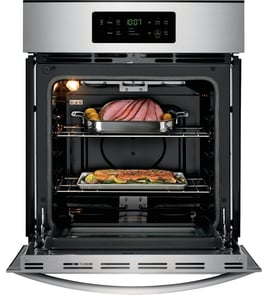


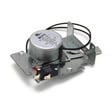
Are Kenmore appliance parts still available?
Yes. Replacement parts are still available for many Kenmore appliances, including the Kenmore Elite wall oven model 79048093000. The key is matching the exact model number to the correct replacement part, then confirming fit and safe installation details in the 79048093000 installation guide.
Because Kenmore appliances were built by multiple manufacturers over the years, model-number matching matters more than the Kenmore name on the door.
- Use the full model number 79048093000 when searching parts
- Match by part description and the exact part ID, not just “looks similar”
- Compare wiring terminals, mounting holes, and connector style
- For electrical parts, shut off power at the breaker before servicing
- Follow grounding and junction box connection rules during installation
For the 79048093000 electric wall oven, these are examples of parts that are commonly replaced and are listed for this model.
| What it affects | Example part for this model | Typical symptom |
|---|---|---|
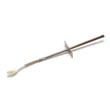
| Oven temperature accuracy | Range oven temperature sensor 5304504897 | Oven too hot, too cool, long preheat |
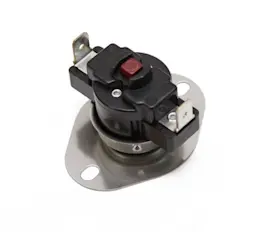
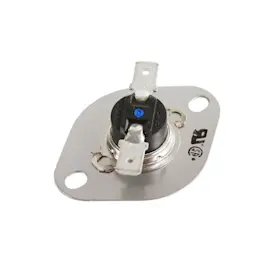
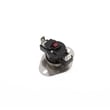
| Overheat protection | Range high-limit thermostat | Oven shuts off, won’t heat after overheating |
| Cooling airflow | Range oven cooling fan assembly | Control area gets too hot, fan noise |
| Power connection point | Terminal block 5304409888 | Burnt wires, intermittent power |
Using the correct Kenmore Elite 79048093000 part helps prevent repeat failures and avoids wiring or fit issues. The installation instructions also call out critical safety steps like disconnecting power at the junction box and using proper grounding methods.
Last updated: March 2026
How to read Kenmore model numbers?
Kenmore model numbers are read as a prefix plus a series of digits that identify who built the appliance and which design family it belongs to. For your Kenmore Elite wall oven model 79048093000, the 790 prefix is the key identifier to use when matching the correct parts and installation specs in the 79048093000 installation guide.
Most Kenmore model numbers follow this pattern:
- Prefix (first 3 digits): identifies the original manufacturer (the most important part for parts lookup)
- Middle digits: identify the base design series
- Trailing digits: identify feature and production variations (finish, revisions, etc.)
- Full model number: should be used exactly as printed when ordering parts or checking fit
When you are shopping for parts or troubleshooting, we recommend using the full model number, then confirming the prefix:
- Use the full model number first (example: 79048093000)
- Confirm the prefix matches (example: 790)
- Match parts by model, then by part ID
- If you are diagnosing heating issues, check common related components such as the range oven temperature sensor 5304504897
| Example model number | Prefix | What you use it for | Best next step |
|---|---|---|---|
| 79048093000 | 790 | Identifies the builder family and parts system | Use the model to select exact Kenmore Elite wall oven parts |
Kenmore used multiple manufacturers across different product lines. The prefix helps prevent ordering a look-alike part that does not mount correctly, connect correctly, or match the wiring and temperature calibration for your specific wall oven.
Last updated: February 2026
How to unlock the Kenmore Elite oven?
To unlock the control lock on your Kenmore Elite wall oven model 79048093000, press and hold the Control Lock (or Lock) key for about 3 seconds until the lock indicator turns off; the oven will beep and the door can be opened normally. For the exact key name and display message, follow the steps in the 79048093000 owner’s manual.
- Make sure the oven is not in Self-Clean; the door stays locked until it cools.
- Press and hold Control Lock/Lock for 3 seconds.
- Watch for the lock icon to disappear or a display message to clear.
- Try opening the door after you hear a click from the latch.
- If the keypad is unresponsive, reset power at the breaker for 1 minute, then retry.
During or after a clean cycle, the latch stays engaged until the oven temperature drops.
| What you see | What it usually means | What to do |
|---|---|---|
| Lock icon stays on | Oven is still hot | Wait 30 to 90 minutes, then try unlock again |
| Fan running | Normal cool-down | Let it run; do not force the door |
| “Door” or lock message | Latch still engaged | Cancel cycle (if possible) and allow cool-down |
If the lock will not release even when the oven is cool and Control Lock is off, the door latch system can be sticking or failing.
- Door lock motor can stall or bind: range oven door lock motor 318261229
- Temperature sensing issues can keep the oven “thinking” it is hot: range oven temperature sensor 5304504897
Forcing a locked wall oven door can bend hinges, damage the latch, or crack door glass. Using the correct unlock method protects the door hardware and helps you pinpoint whether the issue is a control setting or a door-lock component.
Last updated: February 2026
Is Kenmore Elite high end?
Yes. Kenmore Elite is Kenmore’s premium line, so it’s generally considered “high end” within the Kenmore brand. For the Kenmore Elite wall oven model 79048093000, that typically means upgraded styling and features compared to standard Kenmore models, with performance depending on the exact configuration and installation.
Kenmore Elite products are positioned above standard Kenmore appliances in features and finish. In wall ovens, that often shows up as better cooking modes (like convection), more robust controls, and a more premium look.
Common “Elite” traits include:
- More cooking options (convection, multi-mode baking/roasting)
- More precise temperature management (sensor-driven control)
- Higher-end exterior finishes and trim
- Quieter, more refined fan and airflow design
- More complex electronics (more features, more boards and sensors)
The most reliable way to confirm what your oven includes is to match the feature list and specs to your exact model documentation.
Use these references:
| Item to verify | What you’re looking for | Why it signals “high end” |
|---|---|---|
| Convection | Convection fan operation and modes | More even baking and faster roasting |
| Controls | Advanced keypad/display features | More cooking programs and precision |
| Fit and finish | Trim, door design, handle style | Higher-end appearance and materials |
| Installation requirements | Specific cutout and electrical needs | Built-in designs are typically premium |
“High end” affects more than appearance. It impacts installation requirements (cabinet cutout sizing, junction box wiring, grounding) and the types of parts used, such as sensors, thermostats, and control components.
Last updated: February 2026
What are the parts of an electric oven?
An electric wall oven like Kenmore Elite 79048093000 is built around heating, airflow, sensing, and safety components: bake and broil heat sources, temperature sensing, controls, door hardware, and cooling/venting parts. For your exact configuration and diagrams, use the 79048093000 owner's manual and the 79048093000 installation guide.
- Bake system: the bake element provides most cooking heat (often hidden under the oven floor on some designs).
- Broil system: the broil element provides high, top-down heat for browning.
- Temperature sensing: the oven temperature sensor tells the control how hot the oven is.
- Controls and wiring: the control panel, wire harness, and terminal block distribute power and manage functions.
- Air movement and cooling: convection fan parts circulate hot air; a cooling fan can keep electronics cooler after high-heat use.
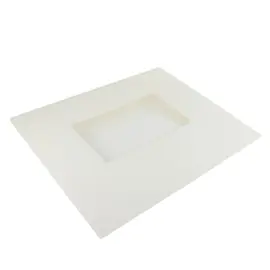
- Door system: hinges, glass supports, handle, and trim keep the door aligned and sealed.
- Safety devices: high-limit thermostat helps protect against overheating.
These are common service parts listed for Kenmore Elite 79048093000:
| Part type | Example part for this model | What you might notice when it fails |
|---|---|---|
| Temperature sensing | Range oven temperature sensor 5304504897 | Oven temp swings, undercooks, overcooks |
| Overheat protection | Range high-limit thermostat 318004902 | Oven shuts down, won’t heat after overheating |
| Cooling | Range oven cooling fan assembly 318073028 | Control area gets very hot, fan noise, fan not running |
| Air circulation | Range convection fan blade 318398302 | Uneven baking, weak convection airflow |
| Power connection | Terminal block 5304409888 | Burnt wire smell, intermittent power, visible heat damage |
Knowing which system is involved helps you troubleshoot faster. For example, a bad sensor can mimic a heating problem, and a failed cooling fan can cause heat-related shutdowns even when the elements are fine.
- Turn off power at the breaker before removing panels.
- Do not use an extension cord with a wall oven; it is designed for a dedicated 120/240V or 120/208V supply.
- If you see melted wiring at the terminal block, stop and repair the connection before operating the oven.
Last updated: February 2026
Where can I find my Kenmore Elite oven model number?
For Kenmore Elite wall oven model 79048093000, the model number is printed on the appliance’s rating label. On built-in wall ovens, it’s most often visible when you open the oven door and look along the door frame (door jamb) or just inside the oven opening.
- Open the oven door and check the left or right door jamb
- Look along the front frame around the oven opening
- Check the side trim area near the frame (sometimes visible with the door open)
- If the oven has been pulled out before, check the side panel label
- For some installations, the label can be near the rear of the unit (harder to see when installed)
- Use a flashlight and look for a silver or white sticker/plate
- Wipe grease or dust off the frame so the print is readable
- Write down the full number exactly as shown (all digits matter)
| Label item | What it’s used for |
|---|---|
| Model number | Matching the correct parts and diagrams |
| Serial number | Identifying production run and date |
| Electrical ratings | Confirming voltage and wiring requirements |
We use the model number to match the correct Kenmore Elite wall oven parts list, diagrams, and documentation. Even small model-number differences can change parts like the oven temperature sensor, control panel, or door components.
For additional identification details and installation-related information, check the 79048093000 installation guide and keep the model number handy when ordering parts.
Last updated: February 2026
Which is the best electric wall oven?
The “best” electric wall oven depends on your priorities (size, features, reliability, and budget). If you already own a Kenmore Elite 79048093000, the best choice is the oven that fits your existing cabinet cutout and electrical setup, and that you can support with the right parts and service information in the 79048093000 installation guide.
Focus on the factors that affect day-to-day results and installation success:
- Fit first: match the oven width (commonly 27-inch or 30-inch) to your cabinet cutout
- Electrical compatibility: confirm junction box location, grounding, and strain relief needs
- Cooking performance: convection features, temperature stability, and preheat speed
- Serviceability: parts availability (sensor, thermostat, fan, control) and clear documentation
- Cleaning and heat management: self-clean features and cooling airflow design
A wall oven can be top-rated and still be the wrong choice if it does not match your cabinet opening. For Kenmore wall ovens like model 79048093000, the installation instructions emphasize measuring your existing cutout and comparing it to the cutout chart before you buy or replace an oven.
| What to check | 27-inch class ovens | 30-inch class ovens |
|---|---|---|
| Cabinet cutout width | Smaller opening | Larger opening |
| Replacement flexibility | More limited | More common options |
| Best for | Tight cabinetry | Standard cabinetry |
Use the exact cutout and product dimensions listed in the 79048093000 installation guide to confirm your opening before selecting any replacement.
Even premium ovens need maintenance. If your current oven heats unevenly or throws temperature-related symptoms, a common first check is the oven temperature sensor. For this model, we stock the range oven temperature sensor 5304504897, which is a frequent fix for inaccurate temperature readings.
- Confirm your cabinet cutout matches the oven class (27-inch vs 30-inch)
- Verify proper grounding and junction box connection requirements
- Choose the feature set you will actually use (convection, self-clean, etc.)
- Prioritize models with readily available core parts (sensor, thermostat, fan)
Last updated: February 2026
Why is my Kenmore Elite oven not heating up?
If your Kenmore Elite wall oven model 79048093000 is not heating, the most common causes are a failed bake element, a bad oven temperature sensor, or a power supply issue (loss of one leg of 240V). Start with safe power checks, then test the heating circuit components.
- Confirm the oven is set to Bake (not Delay Start or Sabbath mode, if equipped).
- Verify the display is on and the oven is not showing an error code.
- Check your home breaker: many wall ovens use a 2-pole breaker; a half-tripped breaker can leave the oven with lights but no heat.
- Try Broil: if broil heats but bake does not, the bake element is the top suspect.
- If neither bake nor broil heats, suspect power supply, wiring, or control.
A broken or shorted bake element can prevent heating even if the control appears normal.
If the sensor reads out of range, the control may limit or stop heating. For this model, the listed sensor is the range oven temperature sensor 5304504897.
If the oven overheats or airflow is restricted, the high-limit thermostat can open and stop heat. A common related part is the range high-limit thermostat 318004902.
Loose or burned connections can drop voltage to the elements. If you find heat damage where the power connects, the terminal block 5304409888 is a common repair item.
Use a multimeter to check continuity.
| What to test | What you’re looking for | What it usually means |
|---|---|---|
| Bake element | Continuity through the element | No continuity often means replace element |
| Temperature sensor | Stable resistance (not open/short) | Open/short sensor can stop heating |
| High-limit thermostat | Continuity when cool | Open thermostat can cut heat |
For safe access, grounding, and electrical connection guidance, follow the 79048093000 installation guide.
A no-heat condition is often electrical. Correctly identifying whether you lost 240V, an element failed, or a safety thermostat opened prevents repeat failures and avoids unnecessary control replacement.
Last updated: February 2026