Owner’s manual
 Error Codes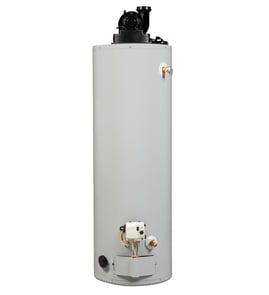



What brand of gas water heater is the most reliable?
Reliability depends more on correct sizing, venting, water quality, and maintenance than the name on the tank. For a gas water heater like the American FG1J4040T3NOV, the most reliable “brand choice” is the one you can install to code and keep maintained using the procedures in the owner's manual.
What “most reliable” usually means for gas water heaters
When we compare brands, reliability typically comes down to these real-world factors:
- Stable pilot and burner operation (proper combustion air and venting)
- A durable gas control/thermostat and safety system
- Corrosion protection inside the tank (anode rod condition)
- Leak prevention at common service points (T&P valve, drain valve)
- Correct gas type and safe gas piping practices
How to choose a reliable replacement brand (practical checklist)
Use this checklist when shopping for a new gas tank water heater:
- Match the fuel: natural gas vs LP; the manual stresses using only the gas type listed on the data plate.
- Match capacity and recovery: choose a tank size and BTU input that fits your household demand.
- Confirm venting category and layout: Category I, non-direct venting setups must have correct draft and combustion air.
- Plan for serviceability: easy access to the burner/manifold area and common wear parts.
- Commit to maintenance: periodic draining/flush and anode inspection extends tank life.
Parts and maintenance that impact reliability on FG1J4040T3NOV
Even a top brand fails early if these items are ignored:
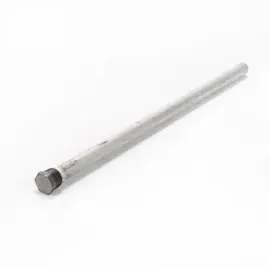
- Water heater anode rod 100109594 (corrosion protection)
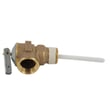
- T&p valve 100108279 (safety relief; must discharge to an open drain and be protected from freezing)
- Drain valve 100109106 (routine draining and sediment removal)
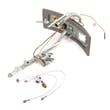
- Water heater pilot igniter 100110936 (ignition reliability)
Quick comparison: “brand reliability” vs “installation reliability”
| What you control | What it affects | Typical outcome |
|---|---|---|
| Correct gas type and leak checks | Safe, consistent burner operation | Fewer nuisance shutdowns |
| Proper venting and combustion air | Draft stability, soot/CO risk reduction | Longer component life |
| Regular maintenance (sediment, anode) | Tank corrosion and efficiency | Longer tank life |
| Quality replacement parts | Fit, sealing, safe operation | Fewer repeat repairs |
Why it matters
A gas water heater is a fuel-burning appliance; the FG1J4040T3NOV manual emphasizes code-compliant installation, correct gas type, and qualified service for safety-system work. Those factors usually determine reliability more than brand alone.
Last updated: February 2026
Why are gas water heaters being phased out?
Gas water heaters are being phased out in some areas because local and state clean-air rules target nitrogen oxides (NOx) and other combustion emissions from gas appliances. Your American FG1J4040T3NOV is still a standard gas water heater; what changes is what new equipment can be installed in certain regions and dates (check local requirements). See the safety and installation details in the owner's manual.
What is driving the phase-outs
Most phase-out proposals focus on reducing air pollution from gas combustion, especially in densely populated regions.
Common policy goals include:
- Lowering NOx emissions that contribute to smog
- Reducing indoor and outdoor combustion byproducts
- Shifting new installations toward electric or heat pump water heaters
- Cutting overall building emissions over time
What it means for owners of FG1J4040T3NOV
In most cases, phase-outs affect new installations and replacements, not day-to-day operation of an existing heater.
Practical impacts you may see:
- Different rules for replacement when the tank fails
- Permit requirements that specify low-NOx or electric options
- Contractor recommendations changing based on local code
- More emphasis on correct venting and safe placement
Safety and installation reminders that still matter
Your manual highlights conditions that can create serious hazards with any gas water heater:
- Install indoors, vertical, on a level surface
- Keep clearances per the data plate and keep controls accessible
- Avoid locating near air-moving devices (exhaust fans, dryers, fireplaces) that can reverse flue flow
- Never store or use flammable liquids/vapors near the heater
- If the heater has been under water, the manual calls for replacement of the entire water heater
Parts that support safe operation
If you are maintaining the unit, these model-listed parts are commonly tied to safety and serviceability:
| Part | What it helps with | When it is relevant |
|---|---|---|
| T&p valve 100108279 | Overpressure/overtemperature relief | Dripping, leaking, or during safety service |
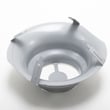
| Draft hood 100111362 | Proper venting/draft at the flue | Venting changes, corrosion, poor draft symptoms |
| Drain valve 100109106 | Draining/flush service | Sediment flushing, valve leaking or stuck |
Why it matters
Even where gas water heaters remain allowed, correct venting, clearances, and combustion safety reduce the risk of carbon monoxide problems and fire hazards. Policy changes are about emissions; safe installation and maintenance protect your home.
Last updated: February 2026
What is the typical lifespan of a gas hot water heater?
A typical gas water heater lasts 8 to 12 years. For your American FG1J4040T3NOV gas water heater, regular maintenance (especially flushing and anode rod inspections) helps you reach the upper end of that range; check the maintenance schedule in the FG1J4040T3NOV owner's manual.
What affects lifespan the most
- Water quality and corrosion: aggressive or softened water can speed up tank corrosion.
- Anode rod condition: the manual recommends inspecting the anode rod about every 3 years and replacing it if it is more than 50% depleted.
- Sediment buildup: sediment reduces efficiency and can overheat the tank bottom.
- Temperature setting: higher settings increase stress on the tank and components.
- Installation and venting: proper combustion air and venting reduce burner and flue problems.
Maintenance checklist we recommend
Use these as practical intervals for most homes:
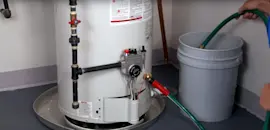
- Flush the tank at least yearly (more often with hard water).
- Inspect the anode rod about every 3 years; replace when heavily depleted (a common replacement is the water heater anode rod 100109594).
- Check the T&P relief valve for leakage or mineral buildup; replace if it will not operate correctly (see t&p valve 100108279).
- Watch for pilot/ignition issues and address them early (related parts include water heater pilot igniter 100110936).
- Inspect for water leaks around fittings, the drain valve, and the tank base.
Quick guide: when to repair vs replace
| What you notice | Most likely meaning | Typical next step |
|---|---|---|
| Small leak at a valve or fitting | Serviceable component leaking | Replace the leaking part (valve, gasket, drain valve) |
| Pilot will not stay lit | Ignition or gas control issue | Troubleshoot and replace the failed ignition/control part |
| Rusty water, odor, or faster corrosion | Anode rod depleted or water chemistry issue | Inspect/replace anode rod; consider filtration |
| Water leaking from the tank body | Tank failure | Replace the water heater |
Why it matters
A water heater usually fails from internal tank corrosion. Staying on top of anode rod inspections and basic flushing helps protect the tank, improves efficiency, and reduces the chance of sudden leaks.
Last updated: February 2026
What is the average cost to install a 40 gallon gas water heater?
Installing a 40-gallon gas water heater like the American FG1J4040T3NOV typically runs about $900 to $3,000+ total (heater, labor, and common materials). The biggest cost drivers are gas venting, gas piping changes, code-required safety upgrades, and permit or inspection fees.
Typical cost breakdown (what you are paying for)
- Water heater unit: commonly $400 to $1,000
- Labor: commonly $500 to $2,000+ (higher when venting or gas piping must be modified)
- Materials (connectors, shutoff valve, vent parts, fittings): commonly $100 to $500+
- Permit/inspection (where required): commonly $50 to $300+
| Cost item | Typical range | What makes it go up |
|---|---|---|
| Unit | $400 to $1,000 | Higher-efficiency models, specialty venting |
| Labor | $500 to $2,000+ | Tight access, long vent runs, gas line reroute |
| Materials | $100 to $500+ | New vent pipe, sediment trap, extra fittings |
| Permit | $50 to $300+ | Local requirements and inspection scheduling |
What most often increases the price on gas installs
Gas water heater replacements cost more than electric in many homes because the installer may need to address combustion air, venting, and gas supply sizing.
- Venting changes: longer vent run, more elbows, or a new draft hood connection
- Gas line work: resizing pipe, adding a shutoff, or correcting an unsafe connection
- Combustion air and ventilation: changes needed for a safe Category I installation
- Water piping updates: new shutoff, dielectric connections, or rework for leaks
- Thermal expansion control: adding an expansion tank when the home has a closed water system
Why it matters (safety and long-term reliability)
Your FG1J4040T3NOV is a Category I, non-direct vented gas water heater; correct venting, combustion air supply, and gas piping are essential for safe operation and consistent hot water. We also see nuisance dripping at the relief valve when thermal expansion is not controlled in closed systems.
Parts that can affect installation scope
If your installer identifies worn or leaking safety or service valves during replacement, these are common items that may be replaced at the same time:
- T&p valve 100108279 (temperature and pressure relief valve)
- Drain valve 100109106
- Draft hood 100111362
For model-specific installation requirements and checklists, use the owner's manual.
Last updated: February 2026
What is the most common problem with gas water heaters?
The most common gas water heater problems are pilot or ignition failures, sediment buildup in the tank, and venting or combustion-air issues. On the American FG1J4040T3NOV, safety shutoffs can also stop operation after a flammable vapor event, which permanently disables the heater (see the owner's manual).
Most common issues we see (and what they look like)
- Pilot will not light or will not stay lit: no hot water, burner never starts
- Sediment buildup: popping or rumbling sounds, reduced hot water output
- Water too hot or temperature swings: short hot-water draws can cause “stacking” and hotter outlet water
- Water odor (rotten egg smell): often tied to an anode rod reaction with certain water conditions
- Safety shutdowns: overheating protection (ECO) or flammable vapor safety system can shut the unit down
Quick checks you can do safely
- Smell for gas at floor level before lighting (especially on LP models); stop if you smell gas.
- Check the viewport glass; replace it if missing or damaged.
- Set temperature thoughtfully; 120°F is the preferred starting point in the manual.
- If the system has been unused for 2+ weeks, run hot water at a kitchen faucet for several minutes before using electrical appliances connected to hot water.
- If overheating occurs or gas will not shut off, turn off the manual gas control valve and use a qualified technician.
Common symptoms and likely causes
| Symptom | Likely cause | What usually fixes it |
|---|---|---|
| Pilot will not stay lit | Pilot/ignition issue, combustion-air issue | Inspect/replace ignition parts; verify air and venting |
| Water smells like sulfur | Anode rod reaction | Replace anode rod (do not remove permanently) |
| Water too hot at taps | Thermostat set too high; stacking | Lower setting; consider anti-scald device |
| No heat after safety trip | ECO or safety shutdown | Thermostat replacement or service evaluation |
Parts that commonly come up in repairs
If troubleshooting points to a failed component, these are common replacements for this model:
- Water heater pilot igniter 100110936
- Water heater anode rod 100109594
- Drain valve 100109106
- T&p valve 100108279
Why it matters
Gas water heater problems are not just comfort issues; they can involve scald risk, combustion safety, and gas safety. Following the model-specific lighting, temperature, and safety guidance helps prevent repeat failures and unsafe conditions.
Last updated: February 2026