Owner’s manual
 Error Codes



What are the disadvantages of a bottom freezer refrigerator?
A bottom-freezer refrigerator like the GE PWE23KSDHSS keeps fresh food at eye level, but the tradeoffs are mostly about freezer access and cost: you bend more for frozen items, the freezer drawer can feel less “grab-and-go,” and repairs can be pricier when drawer hardware or airflow components wear.
- More bending for frozen food: you access the freezer from a lower pull-out drawer.
- Heavier freezer drawer: a fully loaded drawer can feel heavy and can stress slides, bins, and door alignment over time.
- Freezer organization can be trickier: stacked items in a deep drawer can hide food and lead to “lost” packages.
- Often higher purchase price: bottom-freezer designs commonly cost more than basic top-freezer models.
- Airflow issues show up fast when blocked: overpacked drawers or blocked vents can reduce cooling performance.
Bottom-freezer designs rely on consistent airflow between compartments. If you notice warm spots, frost buildup, or noisy operation, these areas commonly matter:
- Evaporator fan performance (moves cold air)
- Defrost system health (prevents ice from choking airflow)
- Door sealing (prevents moisture intrusion and frost)
| Feature | Bottom freezer | Top freezer |
|---|---|---|
| Fresh food access | Best (eye level) | Requires bending more |
| Freezer access | Requires bending | Easier reach |
| Freezer storage | Deep drawer, can bury items | Shelves, easier visibility |
| Typical cost | Higher | Lower |
If your household uses frozen foods daily, the bending and drawer organization can feel like a real inconvenience. If you use fresh foods more often, the eye-level refrigerator section is usually worth the tradeoff.
- For operating tips, storage guidance, and alarm settings, use the PWE23KSDHSS owner's manual.
Last updated: February 2026
What are the most commonly replaced parts in a refrigerator?
For the GE PWE23KSDHSS bottom-mount refrigerator, the most commonly replaced parts are the ones tied to cooling airflow, defrosting, water dispensing, lighting, and door sealing. These parts wear over time or show symptoms like warm temperatures, frost buildup, leaks, noise, or doors not closing tightly.
These are the parts we see replaced most frequently on refrigerators like the PWE23KSDHSS:
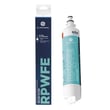
- Water filter: slow water flow, bad taste, dispenser issues (example: GE refrigerator water filter RPWFE)
- Door gasket (seal): moisture, frost, warm spots, condensation (example: refrigerator freezer door gasket WR14X36194)
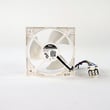
- Evaporator fan motor: warm fresh food section, noisy fan, weak airflow (example: refrigerator evaporator fan motor WR60X26866)
- Defrost parts: heavy frost on the evaporator, warming, poor airflow (examples: refrigerator defrost bi-metal thermostat WR50X10108, refrigerator defrost heater WR51X10132)
- Sensors (thermistors/temperature sensors): temperature swings, error codes, inconsistent cooling (example: refrigerator temperature sensor WR55X10025)
- Water inlet valve: no ice, no water, slow fill, leaking (example: refrigerator water inlet valve assembly WR57X20873)
- LED light assembly: interior lights out or flickering (example: refrigerator led light assembly WR55X11132)
| Symptom | Most likely part category | Example part for PWE23KSDHSS |
|---|---|---|
| Warm fridge but freezer cold | Airflow (evaporator fan) | WR60X26866 |
| Frost buildup, weak airflow | Defrost system | WR50X10108, WR51X10132 |
| Water tastes bad or flow is slow | Filtration | RPWFE |
| Water dispenser or ice maker not filling | Water valve | WR57X20873 |
| Condensation or frost at door edge | Door gasket | WR14X36194 |
Replacing the right part early protects food temperatures, reduces compressor run time, and prevents secondary issues like ice buildup, leaks, and excessive noise.
- Confirm the symptom (cooling, noise, leaking, lighting, door sealing)
- Check for simple causes first (blocked vents, overpacked shelves, dirty gasket)
- Note any display messages and compare them to GE refrigerator error codes
- Use the exploded-view diagrams and part list for the GE PWE23KSDHSS to match the exact part
- Follow safety steps and access instructions in the owner's manual
Last updated: February 2026
What is the most common problem with a GE refrigerator?
The most common GE refrigerator complaint (including the GE PWE23KSDHSS bottom-mount) is not cooling properly. In most cases, the root cause is airflow or temperature-control related, such as a failed evaporator fan, a bad temperature sensor, or a defrost system issue; check the PWE23KSDHSS owner's manual for model-specific checks.
- Not cooling or warm fridge/freezer: food soft, temps drift, compressor runs a lot
- Strange noises: buzzing, rattling, or a loud fan sound
- Ice maker or dispenser problems: no ice, slow ice, weak water flow
- Water leaks: puddles under the unit or inside fresh-food section
- Door not sealing: condensation, frost, or door pops open
- Lights out: interior LEDs not working
- Confirm settings: fridge about 37°F, freezer about 0°F
- Make sure vents are not blocked by food packages
- Clean condenser area and verify the condenser fan runs when the compressor runs
- Check door closure: look for gaps, torn gasket, or misalignment
- If you have a display code, use GE refrigerator error codes to narrow the failure
If your PWE23KSDHSS is warm, these parts are frequent culprits:
| Symptom | Most likely system | Example part for this model |
|---|---|---|
| Warm fresh-food, freezer OK | Airflow in fresh-food section | Refrigerator evaporator fan motor WR60X26866 |
| Temps swing up and down | Temperature sensing/control | Refrigerator temperature sensor WR55X10025 |
| Frost buildup, weak airflow | Defrost system | Refrigerator defrost heater WR51X10132 or refrigerator defrost bi-metal thermostat WR50X10108 |
Cooling problems can spoil food quickly and force the compressor to run longer than normal, which increases wear. Catching airflow, sensor, or defrost issues early is usually the fastest path back to stable temperatures.
Last updated: February 2026
Which is better, top mount or bottom mount refrigerator?
A bottom-mount refrigerator like the GE PWE23KSDHSS is better if you want fresh-food items at eye level and a wider refrigerator section; a top-mount is better if you want the lowest upfront cost and simpler access to the freezer. The “better” choice depends on how you use your fridge day to day.
| Feature | Top-mount (freezer on top) | Bottom-mount (freezer on bottom) |
|---|---|---|
| Fresh-food access | You bend more often | Most-used shelves are at eye level |
| Freezer access | Easiest access | You bend or pull out a drawer |
| Organization | Usually simpler layout | Often more bins, drawers, and zones |
| Typical price | Usually lower | Usually higher |
| Energy use | Often slightly lower | Varies by model and features |
- You use the refrigerator section far more than the freezer.
- You want less bending for milk, produce, leftovers, and condiments.
- You prefer drawer-style freezer storage for bags and boxes.
- You want more “zone” organization (deli drawer, humidity drawers, etc.).
- You use the freezer frequently and want it at chest or eye level.
- You want a straightforward layout with fewer moving bins and rails.
- You are prioritizing value and simplicity over premium features.
The layout affects comfort and food quality. If you are in the fresh-food section multiple times a day, a bottom-mount reduces bending and makes it easier to keep temperatures stable by minimizing door-open time. For model-specific features and storage guidance, use the PWE23KSDHSS owner's manual.
Last updated: February 2026