
How to program IC250 garage door opener?
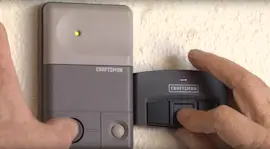
To program a Genie IC250 garage door opener, we use the opener’s LEARN/PROGRAM button to pair a remote or vehicle button, then confirm operation with a full open-close test. The exact button names and timing vary by remote style, but the pairing flow is consistent.
Program a Genie remote to the IC250 (most common)
- Make sure the door is closed and the opener has power.
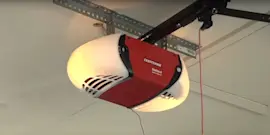
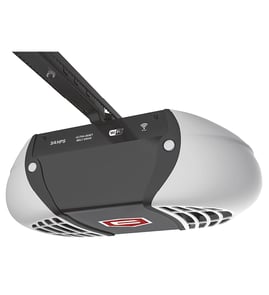
- On the IC250 motor head, locate the LEARN/PROGRAM button (often near the light lens).
- Press and release LEARN/PROGRAM; an indicator light typically turns on or starts blinking.
- Within about 30 seconds, press the remote button you want to use.
- Press the same remote button again if the opener light blinks but the door does not move.
- Test the remote from inside the garage first, then from the driveway.
Program a vehicle’s built-in button (HomeLink style)
HomeLink setups vary by vehicle, but the opener side is usually the same: you put the IC250 into learn mode, then press the trained vehicle button to complete pairing.
- Train the vehicle button to the handheld remote first (vehicle steps).
- Press and release the IC250 LEARN/PROGRAM button.
- Within about 30 seconds, press and hold the vehicle’s programmed button for 2 to 3 seconds, release, then repeat up to 3 times.
- Confirm the door runs smoothly through a full cycle.
Quick troubleshooting if it won’t pair
- Replace the remote battery and retry programming.
- Stand 3 to 10 feet from the opener when pairing.
- Clear interference: unplug nearby LED bulbs or chargers temporarily.
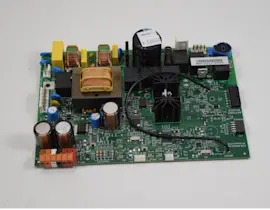
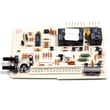
- Verify the wall control works; if not, troubleshoot power, wiring, or the logic board.
- If the opener clicks but won’t move, check the door for binding and confirm the trolley is engaged.
What to expect (normal signals)
| What you see | What it usually means | What to do |
|---|---|---|
| Learn light turns on/blinks | Opener is in pairing mode | Press remote/vehicle button within 30 seconds |
| Light blinks then goes off | Code accepted | Test operation |
| No light response | Not in learn mode or no power | Check outlet, breaker, and opener power |
Why it matters
Correct programming ensures your Genie IC250 responds reliably to your remote or vehicle button and helps avoid “partial pairing” issues that can look like a failing receiver, wiring problem, or weak battery.
For electrical checks during troubleshooting, we use the steps in how to use a multimeter to test electrical parts video.
Last updated: February 2026
Is it worth repairing a 20 year old garage door opener?
A 20-year-old garage door opener is typically past its expected service life, so replacement is usually the better value than putting money into major repairs. For a Genie IC250, we recommend repairing only if the problem is minor (like a sensor alignment or a loose wire) and the door itself is in good shape.
Typical lifespan and what that means
Most residential garage door openers last 10 to 15 years with normal use. At 20 years, age-related wear shows up in the motor, drive system (chain or belt), and control electronics, so a “successful repair” often turns into repeated fixes.
Quick rule of thumb
- Repair if the opener runs smoothly and the issue is simple and low-cost
- Replace if the opener is unreliable, noisy, or has intermittent electrical problems
When repair still makes sense (common minor fixes)
These issues are often worth addressing first because they are fast to diagnose and do not require major teardown:
- Safety sensors are misaligned, dirty, or blocked
- Wall control or remote needs a battery, reprogram, or has a stuck button
- Loose wiring at the sensor terminals or wall control terminals
- Travel limits or force settings are out of adjustment
- Door is binding (rollers, hinges, or track issues) and the opener is reacting to excess resistance
For safe electrical troubleshooting steps, use how to use a multimeter to test electrical parts video.
Signs replacement is the better investment
If you see any of the following, replacement is the practical choice because the repair cost and downtime add up quickly:
- Motor hums but the door does not move
- Opener runs intermittently (works sometimes, dead other times)
- Burnt smell, visible heat damage, or repeated blown fuses/breakers
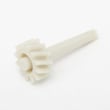
- Stripped drive gear symptoms (motor runs, chain/belt does not move consistently)
- Excessive vibration or grinding noise that returns after adjustments
Repair vs replace: cost and outcome comparison
| Situation | Repair outcome | Best choice |
|---|---|---|
| Sensor or wiring issue | High success rate | Repair |
| Limit/force adjustment | High success rate | Repair |
| Motor or control board failure | Expensive, age-related | Replace |
| Drive gear wear plus noise | Often becomes recurring | Replace |
Why it matters
A garage door opener is a safety device as much as a convenience item. When an older opener starts failing, it can struggle to reverse properly, stall under load, or behave unpredictably, which increases the risk of door damage and nuisance breakdowns.
Last updated: February 2026
What's the average lifespan of a Genie garage door opener?
A Genie garage door opener like model IC250 typically lasts 10 to 15 years. With lighter daily use and basic upkeep (tight hardware, lubricated door, balanced door), many units run 15 to 20 years before major parts like the motor, drive system, or circuit board wear out.
Typical lifespan ranges (what to expect)
- Average: 10 to 15 years
- Often achievable with good conditions: 15 to 20 years
- Shortened lifespan is common when: the door is heavy, unbalanced, or used many times per day
| Usage pattern | What it usually means for lifespan | What to do |
|---|---|---|
| Light (1 to 4 cycles/day) | Longer life | Keep door balanced and hardware tight |
| Moderate (5 to 10 cycles/day) | Typical life | Lubricate door rollers/hinges and check force settings |
| Heavy (10+ cycles/day) | Faster wear | Reduce door drag and address binding/noise quickly |
What shortens an opener’s life
- An unbalanced garage door (opener strains every cycle)
- Dry or binding rollers/hinges that increase load
- Loose track or hardware causing vibration and shock
- Heat, humidity, or dust in the garage affecting electronics
- Power surges that damage the logic board
Signs it’s nearing end of life
- Motor runs but the door moves slowly or stalls
- New, louder grinding/rattling from the chain/belt drive
- Intermittent operation (works sometimes, then stops)
- Reverses unexpectedly or needs frequent force-limit adjustments
- Remote range suddenly drops (after you replace batteries)
Why it matters
A garage door opener is designed to move a properly working door, not to compensate for a door that is heavy or binding. Keeping the door running smoothly reduces strain on the IC250’s motor and drive components, which is the biggest factor in getting the full 10 to 15 year lifespan.
For safe DIY electrical checks that can help you diagnose power and control issues, use our guide: how to use a multimeter to test electrical parts video.
Last updated: February 2026