Installation guide
 Owner’s manual
 Error Codes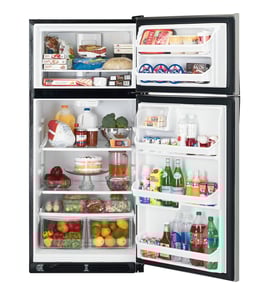



What is the most common problem with a Frigidaire refrigerator?
Cooling problems are the most common issue we see with Frigidaire refrigerators like model FRT18IL6JM0; symptoms include warm fresh-food temps, soft ice cream, or long run times. The usual causes are restricted airflow (dirty coils or blocked vents), a weak fan, or a door seal that is not sealing.
Most common symptoms to watch for
- Refrigerator section is warm but freezer seems OK
- Freezer is warm and ice production slows or stops
- Frost buildup on the back wall of the freezer
- Compressor runs a lot, or you hear more fan noise than usual
- Water in the drain pan during defrost (normal), but temps do not recover
Quick checks we recommend first
Start with these basics before replacing parts; they solve a large share of “not cooling” calls.
- Confirm the temperature control is not set to “0” (off) and allow 24 hours for temps to stabilize after changes
- Make sure the power plug is fully seated; check the breaker or a 15-amp time-delay fuse
- Keep air vents clear inside both compartments; avoid packing food tightly against the back wall
- Clean dust from the condenser area if your unit does not have a “Never Clean” condenser (dusty or greasy homes may need periodic cleaning)
- Inspect door gaskets for gaps, tears, or areas that do not grip paper when the door is closed
Parts that commonly affect cooling on this model
If the checks above do not help, these parts are frequent contributors to cooling complaints.
| Problem you notice | Common cause | Example part for FRT18IL6JM0 |
|---|---|---|
| Warm temps, weak airflow | Evaporator fan not moving air | Refrigerator evaporator fan motor 241854301 |
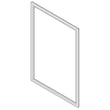
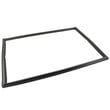
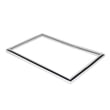
| Door not sealing, moisture/frost | Worn or warped gasket | Refrigerator gasket 242193213 or Frigidaire refrigerator door gasket (black) 241872512 |
Why it matters
A refrigerator that cannot move air efficiently or seal tightly runs longer, struggles to hold safe food temperatures, and can stress the compressor over time. Fixing airflow and sealing issues early is usually the fastest path back to normal cooling.
Helpful DIY guidance
- Use the troubleshooting steps and safety notes in the FRT18IL6JM0 owner's manual.
- If your issue includes beeping, flashing, or a displayed code, use Frigidaire refrigerator error codes to narrow the cause.
Last updated: January 2026
What is the upper part of a fridge called?
On the Frigidaire FRT18IL6JM0 top-mount refrigerator, the upper section is the freezer compartment. It’s the coldest area of the appliance and is designed to keep foods frozen; on some setups it can also support an automatic ice maker.
What the freezer compartment does
The freezer compartment is built to maintain temperatures low enough for long-term frozen storage. It also helps the refrigerator section stay cold by supporting the overall cooling cycle.
Common freezer features you may have:
- Freezer shelves or a freezer panel for organizing frozen foods
- A freezer door gasket that seals in cold air
- An evaporator area behind the rear panel that produces the cold air
- Optional automatic ice maker components (if equipped)
Quick terminology guide
| Term | What it means | Where you’ll see it |
|---|---|---|
| Freezer compartment | Upper frozen-food section on a top-mount | Everyday use and manuals |
| Freezer door | The top door that opens to the freezer | Parts diagrams and repairs |
| Evaporator area | Cold-producing coil and airflow area | Behind the freezer’s rear panel |
Why it matters
Using the right name helps when you’re ordering parts (like a door gasket), following troubleshooting steps, or reading setup instructions such as leveling and door reversal.
Helpful next steps
- Use the correct term when searching parts: “freezer door,” “freezer panel,” or “freezer gasket”
- If you’re reversing the door swing or leveling the unit, follow the steps in the FRT18IL6JM0 owner’s manual
- If you’re installing or moving the refrigerator, confirm clearances and leveling guidance in the FRT18IL6JM0 installation guide
Last updated: January 2026
How to get rack out of frigidaire freezer?
On the Frigidaire FRT18IL6JM0 top-mount refrigerator, the freezer rack (shelf) typically lifts slightly to clear the side supports, then slides out toward you. If it feels stuck, remove food first and pull straight out to avoid twisting the shelf or cracking the liner; see the FRT18IL6JM0 owner's manual for the exact shelf style used in your freezer.
Quick steps to remove the freezer rack
- Unplug the refrigerator or switch it off at the control for safety.
- Remove items from the shelf and from the shelf area below it.
- Lift the front edge of the rack slightly to disengage it from the side rails or support tabs.
- Keep the rack level and slide it straight forward until it clears the supports.
- If the rack hits the door gasket, open the freezer door fully and pull the rack out at a slight angle.
If the rack will not budge
Ice buildup or a shifted liner can lock a shelf in place. Use these checks before forcing it:
- Look for frost or ice around the shelf supports; defrost the freezer if needed.
- Check that the shelf is not hooked behind a rear stop or caught under a side rail.
- Warm the shelf supports with a towel soaked in warm water (do not use open flame).
- Inspect the door seal for interference; a warped gasket can snag shelves during removal.
Common causes and what to do
| What you notice | Likely cause | What we do next |
|---|---|---|
| Shelf feels glued in | Ice around supports | Defrost, then retry removal |
| Shelf moves but jams | Shelf tilted or caught | Re-level and pull straight out |
| Shelf scrapes door area | Door not fully open or gasket interference | Open fully; check gasket seating |
Why it matters
Removing the rack the right way prevents cracked glass/plastic, bent shelf supports, and air leaks that can lead to temperature swings and frost.
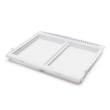
If your shelf is damaged, match the replacement by model and shelf position; a common shelf option for this model is the refrigerator shelf 240358008.
Last updated: January 2026
How to fix a Frigidaire refrigerator door alignment?
On Frigidaire model FRT18IL6JM0, door alignment is corrected by leveling the cabinet first, then tightening and positioning the hinges so the doors sit square and seal evenly. Most “crooked door” complaints are caused by an unlevel refrigerator or a shifted center hinge.
Step 1: Level the refrigerator (most important)
A top-mount refrigerator will not align correctly unless all corners sit firmly on the floor.
- Remove the toe grille.
- Use a flat-blade screwdriver or a 3/8-inch socket to adjust the front rollers (some models).
- If your unit has front leveling screws, use an adjustable wrench to turn them.
- Recheck that the cabinet is stable (no rocking).
- Confirm clearances are maintained (typical guidance is 3/8 inch at sides/top and 1 inch at the back).
For the exact leveling method and hardware shown for this model, follow the FRT18IL6JM0 owner's manual.
Step 2: Align the doors at the hinges
If leveling does not fix it, the hinge positions usually need to be reset.
- Remove the toe grille and top hinge cover.
- Trace around the top hinge with a pencil before loosening it (this helps you reposition it).
- Lift the freezer door off the center hinge pin.
- Close the refrigerator door to help align the hinge hole, then tighten the center hinge pin.
- When reinstalling the top hinge, have an assistant lift slightly on the opposite side of the freezer door while you tighten the screws.
If you need the full hinge sequence (including door removal and reversal steps), use the FRT18IL6JM0 installation guide.
Quick checks that prevent repeat misalignment
- Make sure the door gaskets are fully seated and not folded.
- Avoid overloading door bins; heavy loads can pull the door out of square.
- Verify the doors close by themselves from a small open angle (a sign the cabinet is pitched correctly).
What to adjust (fast reference)
| Symptom | Most likely fix | Where to start |
|---|---|---|
| Doors look uneven at the top | Cabinet not level | Front rollers/leveling screws |
| Door rubs or won’t close smoothly | Hinge shifted | Top hinge and center hinge |
| Warm spots, moisture, or poor sealing | Door not square or gasket not sealing | Level first, then hinge alignment |
Why it matters
Proper door alignment protects food temperatures, reduces frost buildup, and prevents the compressor from running longer than necessary due to air leaks.
Last updated: January 2026