Installation guide
 Owner’s manual


What is the average lifespan of a Maytag Centennial washer?
A Maytag Centennial top-load washer like model MVWC400VW1 typically lasts 10 to 13 years with normal household use. Consistent maintenance, correct loading, and fixing small issues early (leaks, draining problems, out-of-balance loads) helps you reach the high end of that range.
What affects lifespan the most
- Load size and balance: Overloading and chronic off-balance spinning wears the suspension, drive system, and basket support faster.
- Water quality and detergent use: Too much detergent can cause residue and extra strain during agitation and draining.
- Drain performance: Slow draining makes the pump work harder and can lead to repeated cycle interruptions.
- Leveling and installation: A washer that is not level vibrates more and stresses the tub and drive components.
- Preventive care: Periodic cleaning and inspection reduces corrosion, odors, and part wear.
Maintenance habits that extend washer life
Use these habits for MVWC400VW1 to reduce wear on the motor, gearcase, and suspension:
- Keep loads evenly distributed around the agitator.
- Avoid washing heavy single items alone; add a few towels to balance.
- Turn off water supply valves during long non-use periods (vacation storage guidance is covered in the owner's manual).
- Address leaks quickly; even small drips can damage bearings and the drive system over time.
- If the washer becomes noisy or shakes, re-check leveling and load balance before continuing regular use.
Common wear parts and what they usually mean
| Symptom | Common cause | Example part for MVWC400VW1 |
|---|---|---|
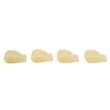
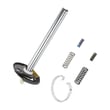
| Agitator “clicks” or won’t move clothes well | Worn agitator dogs | Agitator dog 80040 |
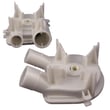
| Won’t drain or leaves water in tub | Weak or jammed drain pump | Washer drain pump WP3363394 |
| Stops when lid is opened or won’t run/spin with lid closed | Lid switch issue | Washer lid switch assembly WP8318084 |
Why it matters
Knowing the typical 10 to 13 year lifespan helps you decide whether to repair or replace. If your MVWC400VW1 is within that window, replacing a targeted part (like a lid switch or drain pump) often restores reliable washing without replacing the whole machine.
Last updated: February 2026
What is the most common problem with a Maytag washer?
On the Maytag MVWC400VW1 washer, the most common problems we see are draining or spinning issues, leaking at the fill hoses, and noisy or out-of-balance operation. Many of these start with simple causes like a clogged drain hose, an open lid, loose hose connections, or the washer not being level (all covered in the troubleshooting steps in the MVWC400VW1 owner's manual).
Most common issues (and what to check first)
- Won't drain or won't spin: confirm the lid is fully closed; check for a clogged or kinked drain hose.
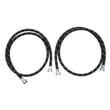
- Leaking: verify fill hoses are tight and the hose washers are seated correctly.
- Noisy or shaking: balance the load, avoid overloading, and level the washer.
- Won't fill or fills slowly: make sure both hot and cold faucets are on; straighten kinked inlet hoses.
- Stops or pauses mid-cycle: some cycles pause for about 2 minutes; let the cycle continue.
Quick troubleshooting for MVWC400VW1
Before replacing parts, we recommend these fast checks:
| Symptom | Most likely quick fix | What it points to if it persists |
|---|---|---|
| Won't spin | Close lid; redistribute load | Lid switch or drive system issue |
| Won't drain | Clear drain hose; verify proper drain height | Drain pump or blockage |
| Leaks at back | Tighten hoses; reseat hose washers | Hose/valve connection problem |
| Loud clicking during wash | Normal gear/agitator sounds in some moments | If constant, inspect agitator/drive parts |
Parts that commonly solve these problems
If your checks confirm a failed component, these are common replacements for this model:
- For no-spin/no-agitate with lid closed: washer lid switch assembly WP8318084
- For drain problems after clearing the hose: washer drain pump WP3363394
- For weak agitation or slipping agitator: agitator dog 80040
Why it matters
Catching the simple causes first (lid not closed, hose kink, unbalanced load, loose fill hoses) prevents repeat cycle failures, reduces leaks, and helps you avoid replacing parts that are still good.
Last updated: February 2026
What size is a Maytag MVWC400VW1?
The Maytag MVWC400VW1 is a standard full-size top-load washer. Most washers in this Maytag platform measure about 27 inches wide, 29 to 31 inches deep, and 38 to 39 inches high. For the exact cabinet dimensions and clearance requirements, use the installation guide.
Typical dimensions and what to plan for
When you are measuring a laundry space, we recommend checking both the washer cabinet size and the space needed for hoses, lid opening, and airflow.
- Width: typically 27 in.
- Depth: typically 29 to 31 in. (add space for hoses)
- Height: typically 38 to 39 in.
- Lid clearance: allow extra room above the washer for full lid opening
- Rear clearance: allow space for inlet hoses and the drain hose
Quick measuring checklist
Use a tape measure and record three numbers for your MVWC400VW1 installation:
- Wall-to-wall width of the alcove
- Front-to-back depth to the shutoff valves and drain standpipe
- Floor-to-shelf (or cabinet) height above the washer
Space planning table
| What you are measuring | What to include | Why it matters |
|---|---|---|
| Width | Cabinet width plus wiggle room | Prevents vibration rub and makes leveling easier |
| Depth | Cabinet depth plus hoses | Avoids kinked hoses and drain issues |
| Height | Cabinet height plus lid swing | Ensures you can load/unload comfortably |
Why it matters
Correct sizing prevents common install problems like kinked inlet hoses, a pinched drain hose, and excessive vibration. It also helps you avoid leaks and out-of-balance spinning caused by a washer that cannot sit level.
Last updated: February 2026
How do I reset the lid lock on a Maytag washer?
On the Maytag MVWC400VW1, a lid lock issue is usually cleared by resetting power and then running the washer’s calibration or a fresh cycle start. Start with a simple power reset, then follow the reset and cycle-start steps in the MVWC400VW1 owner's manual.
Quick reset steps (most effective first)
- Push in the timer knob to stop the washer.
- Unplug the washer (or switch the breaker off) for 1 minute.
- Restore power.
- Close the lid fully; the washer will not agitate or spin with the lid open.
- Select a cycle and pull the timer knob out to start.
If the lid still will not lock
A lid lock problem is often caused by the lid not closing cleanly, a power interruption, or a failing lid switch/lock circuit.
- Make sure the lid is not being held up by an overfilled load.
- Press down on the lid at the lock area and try starting again.
- If the washer pauses, allow it to continue; some cycles pause for about 2 minutes.
- If the washer will not start or stops when the lid is closed, inspect and replace the washer lid switch assembly WP8318084 if it is worn or intermittent.
What to check (fast troubleshooting list)
- Power: breaker not tripped; outlet working
- Lid closure: lid fully closed and aligned
- Cycle control: timer knob pulled out to run; pushed in to stop
- Load: not overloaded; redistribute items
- Pause behavior: normal 2-minute pauses on some cycles
Symptoms and the most likely fix
| What you see | What it usually means | What we do next |
|---|---|---|
| Won’t agitate or spin with lid open | Normal safety behavior | Close lid and restart cycle |
| Stops and won’t restart | Timer/cycle not engaged or lid switch issue | Push in then pull out timer; check lid switch |
| Intermittent start, needs lid “wiggle” | Lid switch/lock is failing | Replace lid switch assembly |
Why it matters
The lid lock and lid switch are safety devices. If the washer cannot confirm the lid is closed, it prevents agitation and spin to reduce the risk of injury and water splash.
Last updated: February 2026