 Error Codes


Where is the model number on a Kenmore side by side refrigerator?
On a Kenmore side-by-side refrigerator like model 3639532780, the model number is printed on the appliance identification label, most often inside the fresh food (refrigerator) compartment along the side wall or near the ceiling. Check the label for both the model and serial information.
Look for a white or silver sticker or plate in these spots:
- Inside the refrigerator section on the left or right interior wall
- On the ceiling of the fresh food compartment near the light housing
- Behind the crisper drawers on the side wall
- On the door frame (the vertical face that’s visible when the door is open)
- Less commonly, inside the freezer compartment on a side wall
The ID label usually includes multiple fields. We recommend recording these exactly as shown:
- Model number (for example, 3639532780)
- Serial number
- Electrical ratings (volts/amps)
- Sometimes a manufacturing date code
| Item | Why it matters | Example |
|---|---|---|
| Model number | Ensures parts fit your exact refrigerator | 3639532780 |
| Serial number | Helps match production variations | Varies |
| Brand | Confirms the correct parts family | Kenmore |
Kenmore refrigerators can have similar-looking doors, shelves, and dispenser parts across multiple models. Using the exact model number helps us match the correct diagrams and parts, especially for ice and water dispenser components.
If you’re already working on the dispenser area, our guide on how to disassemble a Kenmore refrigerator dispenser can help you access components safely and avoid breaking trim pieces.
Last updated: February 2026
How many cubic feet is my Kenmore refrigerator by model number?
Your Kenmore refrigerator model 3639532780 has a specific cubic-foot capacity, but the most reliable way to get the exact number is to read it from the refrigerator’s rating plate (model and serial tag) inside the fresh food section or freezer. That tag lists the official capacity for your exact build.
Look for a paper or metal tag in one of these common spots:
- On the side wall near the top shelf in the fresh food compartment
- On the ceiling of the fresh food compartment near the light
- On the side wall inside the freezer compartment
- Behind the crisper drawers or on the lower liner wall
If the tag is hard to read, take a clear photo and zoom in; the capacity is usually listed as “cu. ft.” or “total volume.”
You can still estimate capacity, but use it only as a planning number (for shelving, bins, or replacement decisions):
- Side-by-side refrigerators commonly range from 20 to 26 cu. ft.
- The exact capacity depends on cabinet width, liner design, and ice maker/dispenser features
- If you are troubleshooting cooling or ice issues, capacity is less important than airflow and defrost performance
For dispenser or ice maker-related repairs that affect usable space and performance, we often see customers replacing dispenser components such as the refrigerator dispenser lever WR17X3089 or the ice chute door kit.
Cubic feet helps when you are:
- Comparing refrigerator sizes before a replacement
- Checking whether your kitchen opening and storage needs match the unit
- Choosing organization accessories sized for your compartment layout
It matters less when you are diagnosing problems like warm temperatures, frost buildup, or no ice; those issues usually point to defrost, fan, or water supply components.
| What you’re doing | Cubic feet needed? | What to focus on instead |
|---|---|---|
| Replacing the refrigerator | Yes | Exact capacity from rating plate |
| Fixing warm fridge/freezer | No | Airflow, condenser cleanliness, defrost system |
| Fixing ice maker/dispenser | No | Water supply, dispenser door sealing, ice path |
If your question came up while working on the dispenser area, our step-by-step guide on how to disassemble a Kenmore refrigerator dispenser is the fastest way to access common dispenser parts safely.
Last updated: February 2026
What causes a side-by-side refrigerator to stop cooling?
A Kenmore side-by-side refrigerator like model 3639532780 usually stops cooling because airflow is blocked, the defrost system is iced up, a fan is not running, or a start component is failing. We recommend checking the simple airflow and power items first, then moving to fan and defrost diagnostics.
- Confirm the refrigerator has power and the interior lights come on.
- Make sure temperature controls were not turned warmer by accident.
- Verify doors close fully and nothing is holding them open.
- Clear blocked air vents inside both compartments (overpacked shelves can stop airflow).
- Listen for fans: you should typically hear a fan running when the unit is cooling.
| What’s wrong | Typical symptom | What to check next |
|---|---|---|
| Airflow blocked | Warm fridge and freezer, little to no air movement | Clear vents; reorganize food for air circulation |
| Evaporator fan issue | Freezer may be cold but fridge warms up | Use our how to fix your evaporator cooling fan guide to diagnose |
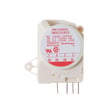
| Defrost system problem (frost buildup) | Freezer back wall frosts over; airflow drops | Consider defrost parts like refrigerator defrost thermostat WR50X122 or refrigerator defrost control WR9X489 |
| Condenser fan not running | Poor cooling, hot cabinet sides, compressor area very warm | Inspect and test the fan motor WR60X187 |
| Compressor not starting | Clicking near compressor, then silence; no cooling | Check the refrigerator relay WR07X10055 first |
Cooling depends on steady airflow across the evaporator coil and the ability to remove heat at the condenser. When a fan stops, vents are blocked, or frost takes over the evaporator, temperatures rise even though the refrigerator may still have power.
- Unplug the refrigerator before removing panels or testing parts.
- If you see heavy frost buildup, avoid chipping ice with sharp tools; it can puncture coils.
- After any airflow or defrost-related repair, allow 24 hours for temperatures to fully stabilize.
Last updated: February 2026
What are the most common problems with Kenmore refrigerators?
The most common problems we see on Kenmore refrigerators like model 3639532780 are poor cooling, water leaks, ice maker or dispenser failures, and unusual noises. These issues usually trace back to airflow restrictions, defrost system trouble, worn door sealing, or a failing fan, valve, or control.
- Not cooling or warm fridge section: dirty condenser coils, failed condenser fan, or defrost failure causing frost buildup
- Freezer cold but fridge warm: evaporator airflow problem (often frost-packed evaporator or a fan issue)
- Water under the fridge or inside the fresh food section: clogged defrost drain, cracked drain pan, or a leaking water line/valve
- Ice maker not making ice: water supply issue, frozen fill tube, or inlet valve problem
- Dispenser not dispensing ice: jammed ice bucket, failed auger motor, or dispenser door/solenoid issue
- Buzzing/clicking: start relay or compressor start components struggling
- Confirm temperatures: freezer near 0°F, fresh food near 37°F.
- Clean condenser coils (unplug first); restricted coils are a top cause of warm temps.
- Listen for fans: you should typically hear a fan running when the compressor is on.
- Check door sealing: look for gaps, torn gasket, or doors not closing fully.
- Inspect for frost buildup on the freezer back panel; heavy frost points to a defrost problem.
| Problem area | Common suspect part | What it affects |
|---|---|---|
| Defrost system | Refrigerator defrost thermostat WR50X122 | Prevents ice buildup that blocks airflow |
| Defrost timing/control | Refrigerator defrost control WR9X489 | Controls defrost cycles |
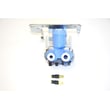
| Water and ice supply | Refrigerator water valve WR57X10051 | Feeds ice maker and dispenser water |
| Ice dispensing | Refrigerator auger motor WR60X10262 | Turns auger to push ice out |
Most “big” refrigerator complaints (warm temps, leaks, no ice) start as small maintenance or airflow issues. Catching them early helps prevent food spoilage, repeated icing, and strain on the compressor and start relay.
For dispenser-related problems (sticking lever, chute door not closing, ice jams), we use the steps in how to disassemble a Kenmore refrigerator dispenser to safely access the lever, chute door, and solenoid area.
Last updated: February 2026
How to tell if a Kenmore refrigerator compressor is bad?
A bad compressor on your Kenmore 3639532780 side-by-side refrigerator usually shows up as poor or no cooling even though the unit has power; you may hear repeated clicking (start attempts) or notice the compressor runs but the refrigerator and freezer temperatures do not drop.
- Refrigerator and freezer both warm (not just one section)
- Compressor is very hot to the touch after running (use caution)
- Repeated clicking every few minutes (start relay trying to engage)
- Condenser fan runs but cooling does not improve
- Lights and controls work, but there is little or no compressor run sound
- Breaker does not trip, yet temperatures keep rising
Many “bad compressor” complaints are actually a start or airflow problem. We recommend these checks in order:
- Confirm airflow at the back/bottom: if the condenser fan is not running when the compressor should be on, cooling will suffer.
- Listen for the click-then-silence pattern: that often points to a failed start device rather than a seized compressor.
- Check for heavy frost on the evaporator cover: a defrost failure can block airflow and mimic compressor trouble.
- Verify doors are sealing: warm air leaks can make the system run constantly and still not keep up.
| What you observe | More likely cause | Example part for this model |
|---|---|---|
| Clicks every few minutes, compressor does not stay running | Start device issue | Refrigerator relay WR07X10055 |
| Warm temps plus frost buildup, airflow weak | Defrost system problem | Refrigerator defrost thermostat WR50X122 or refrigerator defrost control WR9X489 |
| Poor cooling and hot cabinet area near compressor | Condenser fan not moving air | Fan motor WR60X187 |
A compressor is confirmed bad when electrical and performance tests show it cannot start, cannot pump, or is drawing abnormal current. Typical checks include:
- Measuring compressor amperage draw during start and run
- Testing start components and compressor windings for continuity
- Verifying sealed-system pressures and temperature change across the condenser
Replacing a compressor is a major sealed-system repair. Ruling out simpler issues first (start relay, condenser fan, defrost failure) can save time and avoid replacing expensive parts unnecessarily.
Last updated: February 2026





