 Owner’s manual
 Error Codes




What's the average lifespan of a Samsung fridge?
Most Samsung refrigerators, including the Samsung RT21M6213SR top-mount style, last 10 to 15 years with normal household use. Consistent maintenance (clean airflow, stable temperatures, and good door sealing) is what most often determines whether you land closer to 10 years or closer to 15.
Here’s a practical way to think about service life for a modern refrigerator:
| Item | Typical expectation | What shortens it fastest |
|---|---|---|
| Overall refrigerator lifespan | 10 to 15 years | Poor ventilation, dirty condenser area, frequent warm door openings |
| Sealed system (compressor and refrigerant circuit) | Often the longest-lasting system | Overheating, low refrigerant, restricted airflow |
| Wear items (lights, bins, sensors) | Replaced as needed | Normal use, impacts, power surges |
We recommend these habits because they reduce compressor run time and prevent icing and airflow problems:
- Keep the refrigerator and freezer set to stable, food-safe temps (avoid frequent adjustments).
- Make sure the doors close fully every time; don’t overload door bins.
- Leave proper clearance around the cabinet so heat can escape.
- Keep the condenser area clean so the unit can reject heat efficiently.
- Address frost buildup or warm temps quickly to avoid sealed-system strain.
Model-specific operating and care guidance is in the RT21M6213SR owner's manual.
When cooling performance drops, these are common contributors on many Samsung refrigerators:
- Temperature sensing issues: erratic temps, food freezing in fresh food section (example part: refrigerator temperature sensor DA32-00070A).
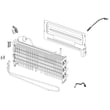
- Defrost problems: heavy frost on the evaporator cover, weak airflow, warming fridge section.
- Airflow and heat rejection issues: hot cabinet sides, long run times, inconsistent cooling.
A refrigerator that runs longer and hotter than it should wears the compressor and sealed system faster. Simple airflow and temperature habits usually add years of reliable service and reduce the chance of expensive cooling repairs.
Last updated: February 2026
What is the most common problem with Samsung refrigerators?
The most common Samsung refrigerator problem is a cooling issue caused by frost or ice buildup that restricts airflow, so the fresh food section warms up even though the freezer still seems cold. On the Samsung RT21M6213SR, the most frequent culprits are the defrost system and temperature-sensing components; confirm your model’s diagnostic steps in the RT21M6213SR owner's manual.
- Refrigerator section too warm, freezer closer to normal
- Frost on the back wall or heavy ice around the evaporator cover
- Fan noise changes (rattling, buzzing) or no airflow from vents
- Temperature swings, food freezing in the refrigerator section
- Water leaking inside (often after defrost drain icing)
If you’re troubleshooting cooling complaints on RT21M6213SR, these parts are often involved:
| Symptom | Common system | Example part to check on this model |
|---|---|---|
| Warm refrigerator, frost buildup | Defrost system | Defrost heater (DA47-00460G), defrost thermal fuse (DA47-00301F) |
| Temps fluctuate or display seems off | Temperature sensing | Refrigerator temperature sensor (DA32-00070A) |
| Poor cooling, compressor runs differently | Sealed system / drive | Refrigerator compressor MSV4A1AL1RTT3 |
| No cooling after power events | Controls | Electronic control board (DA92-00979C) |
- Make sure vents are not blocked by food packages.
- Verify doors seal fully and close on their own.
- Set temperatures to typical targets (about 37°F refrigerator, 0°F freezer) and allow 24 hours to stabilize.
- Clean condenser area and confirm the condenser fan runs when the compressor runs.
- If you see heavy frost, plan a defrost-system diagnosis (heater, fuse, sensor) rather than adjusting settings repeatedly.
Cooling problems are usually airflow and defrost related; fixing the root cause prevents repeat icing, protects food safety, and avoids unnecessary replacement of high-cost components like the control board or compressor.
Last updated: February 2026
What are the most commonly replaced parts in a refrigerator?
In a refrigerator like the Samsung RT21M6213SR, the most commonly replaced parts are the ones that handle cooling airflow, defrosting, and water supply. These parts wear over time, get blocked by ice or debris, or fail electrically; replacing them often restores normal temperatures and prevents leaks.
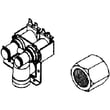
- Water inlet valve (fixes no water to dispenser or ice maker, or slow fill)
- Temperature sensor/thermistor (fixes erratic temps and short cycling)
- Defrost heater and defrost thermal fuse (fixes frost buildup and warm fridge)
- Electronic control board (fixes intermittent cooling, dead display, odd behavior)
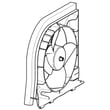
- Fan-related assemblies (fixes warm sections and poor airflow)
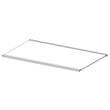
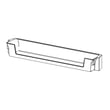
- Shelves, bins, and drawer covers (fixes cracked or broken storage components)
These are parts we frequently see replaced on this model family:
| Symptom | Likely part type | Example part for RT21M6213SR |
|---|---|---|
| Frost buildup, warm fresh food section | Defrost components | Refrigerator defrost heater DA47-00460G or refrigerator defrost thermal fuse DA47-00301F |
| No water or ice, leaking at back | Water supply component | Refrigerator water inlet valve DA62-01477A |
| Temps swing too warm or too cold | Sensor/control | Refrigerator temperature sensor DA32-00070A |
| Clicking, not cooling, sealed system issue | Major cooling component | Refrigerator compressor MSV4A1AL1RTT3 |
Replacing the right part first prevents repeat failures and food spoilage. For example, a frosted evaporator can look like a “cooling problem,” but it is often a defrost heater or thermal fuse issue, not the compressor.
- Check for visible frost/ice on the freezer back panel (points to defrost/airflow)
- Listen for fans running (evaporator and condenser airflow problems are common)
- Look for water leaks at the supply line and valve area
- Note any temperature alarms or unusual cycling
- Use the troubleshooting and component locations in the RT21M6213SR manual
Last updated: February 2026





