Owner’s manual
 Error Codes


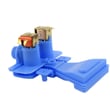
Where is the filter on my GE GTW460ASJ1WW washing machine?
On the GE GTW460ASJ1WW top-load washer, there is not a typical front-access “pump filter” like you see on many front-load models. Most filtering happens through the drain system and inlet valve screens; use the owner's manual for the exact cleaning and access steps for your washer.
What you can check (common “filter” locations)
- Inlet valve screens: tiny mesh screens where the hot and cold hoses connect to the washer.
- Drain path: the drain pump and hoses can trap debris (coins, lint, small items) even without a removable filter.
- Tub ring and basket area: items can lodge around the top of the tub or under the wash plate/agitator area.
Quick steps to clean the inlet screens
- Unplug the washer.
- Turn off both water supply valves.
- Remove the fill hoses from the back of the washer.
- Gently pull out and rinse the small screens (do not puncture them).
- Reinstall hoses, turn water back on, and check for leaks.
Symptoms and the most likely area to inspect
| Symptom | Most likely “filter” area | Related part you may need |
|---|---|---|
| Slow fill or no fill | Inlet valve screens / inlet valve | Washer water inlet valve assembly WH13X26535 |
| Won’t drain or drains slowly | Drain pump / drain hose | Washer drain pump assembly WH23X28418 |
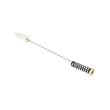
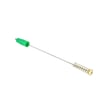
| Off-balance, banging, walking | Suspension system (not a filter, but often confused with drainage issues) | Washer suspension rod and spring assembly WH16X26911 |
Why it matters
A clogged inlet screen can cause long fill times and poor rinsing, while debris in the drain pump can cause slow draining and standing water. Checking these areas first prevents unnecessary control board or motor troubleshooting.
Last updated: February 2026
What is the capacity of GTW460ASJ1WW?
The GE GTW460ASJ1WW top-load washer is typically listed as a 4.2 cu. ft. capacity model. For the exact capacity specification tied to your unit’s configuration, we recommend confirming it in the owner's manual.
How to confirm capacity on your exact washer
Capacity is usually shown in the specifications section of the manual and sometimes on the model rating label.
- Check the Specifications or Features page in the manual
- Look for wording such as “capacity” or “cu. ft.”
- Verify the model number on the washer matches GTW460ASJ1WW
- If you’re comparing models, confirm the full model suffix (letters after GTW460)
- Use capacity as a guide for load size; do not pack clothes tightly
Why capacity matters
Capacity helps you choose the right load size and cycle settings. Overloading can lead to poor cleaning, out-of-balance spinning, and extra wear on key drive and suspension components.
Quick guide: what 4.2 cu. ft. means in everyday use
| Load type | Typical examples | Practical tip |
|---|---|---|
| Small | A few shirts, light items | Use lower water level if selectable |
| Medium | Mixed everyday laundry | Load loosely to the top of the basket |
| Large | Towels, jeans, heavier items | Balance items evenly around the basket |
Related parts that can be affected by chronic overloading
If the washer frequently goes out of balance or struggles to spin, these model-matched parts are commonly involved:
- Washer suspension rod and spring assembly WH16X26911
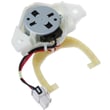
- Mode shifter WH03X30517
- Washer drive belt WH01X24697
Last updated: February 2026
Why won't my GE washer complete the spin cycle?
If your GE GTW460ASJ1WW washer won’t complete the spin cycle, the most common causes are a lid lock that isn’t engaging, an out-of-balance condition, or a drain problem that leaves water in the tub. We recommend checking the lid lock, draining, and load balance first, then moving to belt and drive components.
Quick checks that fix most “won’t spin” problems
- Make sure the lid is fully closed and clicks into the lock; the washer will not spin if it thinks the lid is open.
- Redistribute the load (especially bulky items); run a Drain/Spin cycle with 3 to 5 similar items.
- Confirm the washer drains completely; standing water usually stops or limits spin.
- Power reset: unplug for 2 minutes, then plug back in and retry the cycle.
- Review cycle and option selections (some cycles use a lower final spin by design); see the owner's manual.
Drain-related causes (very common)
If the tub is still full or draining slowly, the washer may pause or end the cycle before a full-speed spin.
- Check the drain hose for kinks, clogs, or an overly deep standpipe insertion.
- Listen for the drain pump during the drain portion; a loud hum with little water movement points to a restriction or failing pump.
- If the pump is leaking, noisy, or not moving water, replace the washer drain pump assembly WH23X28418.
Drain symptoms and likely fixes
| What you notice | Most likely issue | What to check/replace |
|---|---|---|
| Water left in tub | Drain restriction or weak pump | Hose path; washer drain pump assembly WH23X28418 |
| Spins briefly then stops | Water not fully drained or load imbalance | Drain performance; redistribute load |
| No drain sound | Control, wiring, or pump failure | Pump connection; pump assembly |
Spin/drive causes to check next
If draining is good and the lid lock is working, focus on the drive system.
- Worn or slipping belt: inspect and replace the washer drive belt WH01X24697 if glazed, stretched, or cracked.
- Excessive shaking or banging: worn suspension can prevent stable high-speed spin; inspect the washer suspension rod and spring assembly WH16X26911.
- Shifting issues (won’t transition into spin): a failing shifter can stop the spin portion; consider the mode shifter WH03X30517.
Why it matters
A washer that cannot drain, lock the lid, or stay balanced will protect itself by limiting or canceling spin. Fixing the root cause prevents repeat out-of-balance errors, wet loads, and extra wear on the gear case, clutch, and motor.
Last updated: February 2026