Owner’s manual
 View engine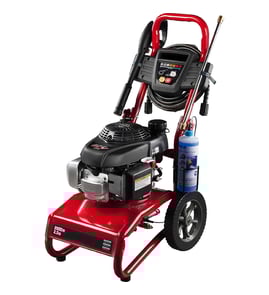



Can you put 87 gas in a pressure washer?
Yes. For the Craftsman pressure washer model 580752420, we recommend using clean, fresh, regular unleaded gasoline; 87 octane is fine and meets the manual’s minimum octane requirement (85 or higher). Do not mix oil with the gas; this model uses separate engine oil.
Follow the fuel directions in the 580752420 operator’s manual.
- Use regular unleaded gasoline (minimum 85 octane; 87 is commonly used).
- Use fresh fuel from a clean container.
- Do not use methanol-containing fuel.
- Do not mix oil and gasoline (not a 2-cycle mix).
- Avoid overfilling; leave room for fuel expansion.
| Fuel choice | OK for 580752420? | Notes |
|---|---|---|
| 87 octane unleaded | Yes | Meets minimum octane requirement |
| Higher octane unleaded (89-93) | Yes | Usually fine, but not required |
| Gas with methanol | No | Can damage the fuel system |
| Oil-gas mix (2-cycle mix) | No | This engine uses crankcase oil |
If the engine surges, stalls, or loses power, the issue is often stale fuel, a dirty air filter, or a restricted nozzle rather than octane.
- Drain old fuel and refill with fresh unleaded gas
- Check the air filter and spark plug condition
- Clean the spray tip if pressure pulses
- Verify water supply is on and hoses are not kinked
For broader troubleshooting steps, use solving pressure washer problems.
Using the correct gasoline helps prevent hard starting, poor performance, and fuel system damage, especially during storage. Fresh, regular unleaded fuel is the simplest way to keep your Craftsman engine running reliably.
Last updated: January 2026
Does Craftsman have a lifetime warranty on pressure washers?
No. For the Craftsman pressure washer model 580752420, the Operator’s Manual states it has a one-year full warranty for defects in material or workmanship when assembled, operated, and maintained as instructed. See the warranty section in the 580752420 operator's manual.
For this specific model, the manual describes coverage like this:
- Coverage period: 1 year from the date of purchase (consumer use)
- Covered issue: defect in material or workmanship
- Remedy: free repair, or replacement if repair proves impossible
- Where: through Sears store, Parts & Repair Center, or other Craftsman outlet (U.S.)
The same warranty section also lists key limitations:
- Spark plugs and air filters are excluded as expendable items that can wear out in under a year
- If used for commercial or rental purposes, coverage applies for 90 days from the purchase date
| Use type | Coverage length | Notes |
|---|---|---|
| Consumer/home use | 1 year | Defects in materials/workmanship |
| Commercial/rental use | 90 days | Shortened coverage period |
Warranty terms affect what you should do first when the pressure washer has a problem. If your 580752420 is within the warranty window, it can change whether you repair it yourself or pursue warranty service before buying parts.
Last updated: January 2026
How much does it cost to get a pressure washer fixed?
For the Craftsman pressure washer model 580752420, the operator’s manual does not list repair pricing, so we can’t quote a model-specific cost. In practice, total cost is driven by diagnosis time, labor rates, and whether you’re fixing a leak, replacing a hose/nozzle, or addressing a pump issue; use the 580752420 operator's manual to identify the symptom before you buy parts or schedule service.
These ranges are common for gas pressure washers similar to the Craftsman 580752420; your local shop rates and the exact failure will change the total.
- Small external leak fix (O-rings, fittings, quick-connect seals): $20 to $75
- Spray performance fix (cleaning or replacing a spray tip, flushing filters): $30 to $120
- Pump control or valve-related repair (unloader/check valve service): $120 to $300
- Major pump failure (pump replacement plus labor): $250 to $600
- Symptom clarity: intermittent low pressure takes longer to diagnose than an obvious leak
- Labor minimums: many shops charge a baseline diagnostic fee
- Parts vs. cleaning: a clogged nozzle may only need cleaning, not replacement
- Hose condition: bulges, cuts, or damaged couplers typically mean replacement
- Pump condition: internal wear can push repairs toward replacement
Before paying for pump work, we recommend checking these common, lower-cost items first:
- Inspect and clean the inlet screen and in-line filter
- Try a different spray tip and clean the nozzle orifice
- Look for leaks at hose connections and quick-connects
- Verify water supply is cold and adequate (no kinks, good flow)
- Purge air from the system after connecting hoses
| Symptom | Common next step | Example compatible part |
|---|---|---|
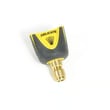
| Weak/uneven spray pattern | Clean or replace spray tip | Nozzle 195983XGS |
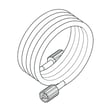
| Water leaking, hose damage | Replace water hose | Hose 84006753 |
A clogged nozzle or restricted inlet can mimic “bad pump” symptoms. Confirming the cause first helps avoid paying for unnecessary pump service and gets your 580752420 back to normal pressure faster.
Last updated: January 2026
Is it worth repairing a pressure washer?
Yes, repairing a pressure washer is usually worth it when the problem is a wear item or a simple flow restriction, and the engine and pump on your Craftsman 580752420 are otherwise in good shape. If the pump or engine has major internal damage, replacement is often the better value.
- Repair first if the unit starts and runs smoothly but has weak spray, leaks, or poor detergent draw.
- Repair first if the fix is likely a hose, nozzle, cap, or seal.
- Consider replacement if the engine won’t run reliably even after basic tune-up steps.
- Consider replacement if the pump is cracked, seized, or heavily leaking.
- Consider replacement if you need maximum uptime and repeated breakdowns are costing time.
These are frequent, lower-cost fixes that often restore performance:
- Clean or replace a clogged spray tip; see nozzle 195983XGS.
- Replace a damaged or leaking high-pressure line; see hose 84006753.
- Replace a missing or damaged fuel cap; see pressure washer cap 190581GS.
- Follow the maintenance schedule (oil checks, inlet screen cleaning, nozzle cleaning) in the 580752420 operator’s manual.
| Situation | Typical best choice | Why |
|---|---|---|
| Weak spray, pulsing, or poor rinse | Repair | Often nozzle, inlet screen, air in pump, or hose-related |
| Small external leaks | Repair | Usually seals, fittings, or hose issues |
| Engine runs poorly and won’t stay running | Depends | Could be simple maintenance, could be deeper fuel/ignition issues |
| Major pump or engine failure | Replace | High parts and labor cost; risk of follow-on issues |
A pressure washer like the Craftsman 580752420 is rated up to 3,000 PSI; when it’s maintained correctly, small issues (clogs, worn hoses, minor leaks) can look like “big failures.” Fixing the right small part can bring back pressure and prevent pump damage.
- Confirm water supply is on and flowing; purge air from the pump.
- Inspect the inlet screen and nozzle for debris.
- Check for hose kinks, cuts, or coupling leaks.
- If symptoms persist, use solving pressure washer problems to narrow the failure by symptom.
Last updated: January 2026
What PSI should my pressure washer be?
For the Craftsman pressure washer model 580752420, the rated maximum outlet pressure is 3,000 PSI. In real use, the “right” PSI depends on the surface and nozzle you choose; using a lower-pressure tip is often safer for paint, wood, and vehicles. See the 580752420 operator's manual for the model’s specifications and nozzle guidance.
We recommend matching PSI to the task by selecting the correct spray tip and keeping proper distance.
- Cars, patio furniture, lawn equipment: use a lower-pressure nozzle and a wider spray pattern
- Wood decks and fences: start gentle; increase only if needed to avoid gouging
- Siding and brick: medium pressure is usually enough for rinsing and general cleaning
- Concrete and driveways: higher pressure can help, but test a small area first
- Paint removal or heavy stains: use higher pressure carefully and keep the wand moving
This model’s quick-connect nozzles change both pressure and flow. The manual lists these typical outputs:
| Nozzle type | Typical use | Approx. output on 580752420 |
|---|---|---|
| Delicate (yellow, 40°) | Gentle cleaning | ~2350 PSI, ~2.7 GPM |
| General (orange, 15°) | Most all-purpose cleaning | ~2675 PSI, ~2.5 GPM |
| Max (red, 0°) | Stubborn spots, heavy rinsing | up to 3000 PSI, ~2.3 GPM |
Before assuming the pump is bad, we suggest these quick checks:
- Use a wider-angle nozzle first; avoid the 0° tip on delicate surfaces
- Keep the spray 8 to 24 inches from the surface (closer can damage materials)
- Make sure the water supply is cold and steady (this model calls for water under 100°F)
- Clean or replace a worn/clogged spray tip; a restricted tip can cause pulsing or odd pressure
- Inspect the high-pressure hose for kinks, leaks, or bulges; replace if damaged
If you need a replacement spray tip for this model, use the nozzle 195983XGS that fits the 580752420.
Using more PSI than the job needs can etch concrete, strip paint, shred wood fibers, and damage seals and O-rings. Using the correct nozzle and distance helps you clean faster while protecting the surface and your pressure washer.
Last updated: January 2026
What is the most common problem with pressure washers?
Low or no spray pressure is the most common issue on the Craftsman 580752420 gas pressure washer. In many cases it comes from a clogged spray tip, restricted water supply, or air trapped in the pump; less often it points to a worn pump component or leaking connection.
- Verify the garden hose is supplying steady cold water (under 100°F) before you start.
- Turn water ON, then squeeze the trigger to purge air from the pump before starting the engine.
- Inspect and clean the water inlet screen; replace it if torn.
- Clean the spray tip and the in-line filter screen in the wand.
- Confirm you are using the correct quick-connect nozzle for the job (detergent nozzle is low pressure).
For model-specific operating steps and nozzle cleaning, follow the 580752420 operator's manual.
If cleaning does not restore pressure, these model-compatible parts are common suspects:
- Spray tip clogged or worn: nozzle 195983XGS
- Wand connection or in-line filter area restricted (debris at the extension): pressure washer extension wand 6205
- High-pressure hose kinked, leaking, or internally damaged: hose 84006753
| What you notice | Most likely cause | What to do first |
|---|---|---|
| Weak spray | Clogged nozzle or inlet screen | Clean nozzle and inlet screen |
| Pulsing pressure | Nozzle restriction or air in system | Purge air; clean nozzle and in-line filter |
| No pressure with engine running | Wrong nozzle (detergent) or water supply issue | Switch nozzle; verify water flow |
| Leaks at connections | Worn O-ring/seal | Replace O-ring or seal (do not use sealant) |
Running with restricted water flow or a clogged nozzle can overheat the pump and trigger the thermal relief (warm water discharge). Fixing simple flow restrictions early helps protect the pump and keeps your PSI and GPM performance consistent.
Last updated: January 2026