



What type of oil does a Poulan Pro lawn mower take?
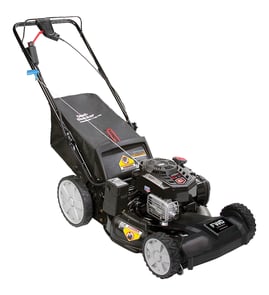
For the Poulan PR500N21SH walk-behind mower, we use SAE 30 4-cycle (4-stroke) engine oil for normal mowing temperatures. If you mow in cooler weather, a 10W-30 small-engine oil is the most common alternative.
- Use SAE 30 for typical spring and summer mowing
- Use 10W-30 when starting and mowing in cooler temps
- Use 4-cycle oil only (do not mix oil into the gas)
- Check oil level before every mow
- Change oil at least once per season (or every 25-50 hours)
| Outdoor temperature | Best common choice | Why |
|---|---|---|
| Above ~40°F | SAE 30 (4-cycle) | Stable viscosity in warm weather |
| Around 0°F to 40°F | 10W-30 (4-cycle) | Easier cold starting |
- Park the mower on a level surface and let the engine cool
- Remove the dipstick, wipe it clean, then reinsert to read the level
- Add oil slowly to avoid overfilling
- Stop at the full mark; overfilling can cause smoking and hard starting
Using the right 4-cycle engine oil helps protect the crankshaft, piston, and bearings from heat and wear. Correct oil viscosity also improves starting and reduces engine surging during a cut.
For other common maintenance items that affect performance (like blade condition and deck buildup), we recommend how to tune up a lawn mower video.
Last updated: February 2026
Where can I find my Poulan Pro model number?
On a Poulan walk-behind mower like model PR500N21SH, the model number is printed on the product ID label or tag attached to the mower deck or handle area. We use that model number to match the correct parts, diagrams, and hardware for your exact mower.
Look for a sticker-like label or a small metal tag in these spots:
- On top of the mower deck near the engine
- On the rear of the deck near the discharge opening
- On the side of the deck near a rear wheel height adjuster
- On the handle support brackets (where the handle bolts to the deck)
- Under the rear flap or near the rear skirt area
If the label is dirty, wipe it with a damp rag; grass dust and oil film can hide the characters.
Record the information exactly as shown on the tag:
- Model number (example: PR500N21SH)
- Product number or variant code (often a longer number near the model)
- Serial number (useful for production changes)
| Item on tag | Why it matters | Example format |
|---|---|---|
| Model number | Selects the correct parts list | PR500N21SH |
| Product/variant number | Narrows exact configuration | 96112013101 |
| Serial number | Helps confirm production run | Letters and numbers |
Poulan mowers can use different blades, discharge parts, and fasteners across close model families. Using the exact model number helps avoid ordering a blade, chute, or hardware that does not fit.
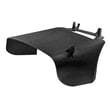
If you are replacing deck-side hardware while you are identifying the mower, match what you see to the correct part listing, for example a lawn mower discharge chute deflector 589482402 or lawn mower blade adapter 581547901.
Last updated: February 2026
Who makes Poulan Pro riding lawn mowers?
Poulan Pro riding lawn mowers are made under the Husqvarna group; Poulan and Poulan Pro are Husqvarna-owned brands, and many Poulan Pro mowers share Husqvarna manufacturing and parts sourcing. For your Poulan walk-behind model PR500N21SH, you will also see Husqvarna-branded replacement parts listed.
Even when the mower badge says Poulan Pro, the OEM part supply often comes through Husqvarna channels. When ordering, we match parts by model number and part ID, not by the decal on the deck.
- Use the full model number (PR500N21SH) when searching parts diagrams
- Match the part by part ID and description, not just by a generic name like “blade”
- Expect some parts to be labeled Husqvarna, Weed Eater, Murray, or Craftsman even when they fit Poulan models
- Replace worn fasteners (nuts, bolts, washers) when you service the blade or deck hardware
- If a part looks similar but mounts differently, stop and confirm the mounting pattern before installing
Here are a few examples of parts on this PR500N21SH parts list that are branded Husqvarna but used for Poulan fitment.
| Part type | Example part on this model | What it does |
|---|---|---|
| Blade | Husqvarna weed eater lawn mower blade 532406712 | Cuts grass; a bent or dull blade causes vibration and poor cut |
| Blade drive interface | Lawn mower blade adapter 581547901 | Couples the blade to the crankshaft; wear can cause slipping or wobble |
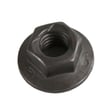
| Hardware | Husqvarna lawn mower lock nut, 3/8-in 532409149 | Secures assemblies; helps resist loosening from vibration |
Knowing Husqvarna is behind Poulan Pro helps you avoid wrong-part returns. The correct fit comes from matching the exact model (PR500N21SH) and the exact part ID, especially for blade, adapter, and deck components.
Last updated: February 2026
What is the best self-propelled lawnmower to buy?
The “best” self-propelled mower depends on your yard size, terrain, and how much maintenance you want. For most homeowners, we recommend choosing a reliable brand with easy parts support and matching the drive type and deck size to your lawn; your current Poulan PR500N21SH is a solid baseline for comparison.
- Drive system: front-wheel (best for flat), rear-wheel (best traction on slopes), all-wheel (best on hills and uneven ground)
- Deck size: 21-inch class is the most common for typical suburban lawns
- Cut options: side discharge, mulching, and bagging (3-in-1 or 4-in-1)
- Height adjustment: single-lever is faster; individual wheels are simpler to service
- Serviceability: common blade and wheel hardware, easy access to belts/cables, and available wear parts
| Yard situation | What we recommend | Why it fits |
|---|---|---|
| Mostly flat, tight turns | Front-wheel drive | Maneuvers easily around trees and beds |
| Slopes or bumpy ground | Rear-wheel drive | Better traction and control |
| Steep hills, mixed terrain | All-wheel drive | Pulls consistently without slipping |
| Want lowest upkeep | Battery self-propelled | No fuel storage, fewer tune-up items |
Use your PR500N21SH as a reference point and check these items before you buy:
- Blade and adapter design: common styles are easier to replace (see lawn mower blade removal tool)
- Wheel durability: larger wheels roll better in thick grass; worn wheels reduce drive performance (example part: wheel.7x1.75 532193931)
- Control cable feel: stiff or stretched cables make self-propel engagement inconsistent (example part: murray lawn mower zone control cable 532440934)
- Discharge and mulching setup: make sure the mower supports the cut style you actually use
A self-propelled mower that matches your terrain reduces scalping, improves cut quality, and prevents premature wear on drive components (wheels, cables, brackets). Choosing a model with readily available parts also keeps long-term ownership costs down.
Last updated: February 2026
Why won't my Poulan Pro riding mower blades engage?
On a Poulan PR500N21SH walk-behind mower, the blade is driven directly by the engine crankshaft, so “blades won’t engage” usually means the engine is not running smoothly, the blade is blocked, or the blade-to-crank connection is slipping. Start by checking for a jammed blade and a damaged blade adapter.
- Turn the engine off and let the muffler cool.
- Disconnect the spark plug wire and secure it away from the plug.
- Tip the mower with the air filter and carburetor facing up (to reduce fuel and oil leakage).
- Grass or debris jammed under the deck: Clear packed clippings and mud; a blocked blade can feel like it “won’t engage.”
- Loose or incorrect blade hardware: Verify the blade bolt is tight and the blade is installed in the correct orientation.
- Worn blade adapter: If the blade adapter’s drive features are rounded off, the engine can spin but the blade can slip. Replace the lawn mower blade adapter 581547901.
- Bent or damaged blade: A bent blade can bind against the deck or wobble badly; replace the blade if it is cracked, bent, or severely nicked.
- Operator presence control issue (engine dies when you try to mow): If the engine shuts off when you release the handle, the blade stops immediately. Inspect the control cable and handle bail for free movement.
| Symptom | What it usually means | Best next step |
|---|---|---|
| Engine runs, but blade does not spin | Blade adapter slipping or blade bolt loose | Inspect and replace adapter; tighten hardware |
| Rope is hard to pull after hitting something | Blade jam or engine/brake issue | Clear jam; inspect blade and adapter |
| Blade spins but cuts poorly | Dull or wrong blade orientation | Sharpen or replace blade; reinstall correctly |
- Use a proper blade-holding method and correct tool technique; see lawn mower blade removal tool.
- If the blade is dull, sharpen it evenly and balance it; see how to sharpen a lawn mower blade.
A slipping blade adapter or loose blade bolt can damage the crankshaft and create severe vibration. Fixing the drive connection early protects the engine and restores safe cutting performance.
Last updated: February 2026