Owner’s manual
 Error Codes


Are bottom mount fridges better?
A bottom-mount refrigerator like the Whirlpool WRF555SDHV00 is “better” when you want everyday fresh-food items at eye and waist level and you do not mind bending for freezer access. For many households, this layout improves comfort and organization compared with a top-freezer design.
What “better” usually means in real use
Bottom-mount designs put the refrigerator compartment on top (where you reach most often) and the freezer in a lower drawer.
Common advantages
- Easier access to fresh foods, drinks, and produce (less bending)
- Wider refrigerator shelves and clearer sight lines for meal prep
- Freezer drawer can hold bulky items (pizza boxes, bags of frozen food)
- Often better day-to-day ergonomics for frequent cooks
Common trade-offs
- You bend more to reach freezer items
- Freezer drawers can feel “deep”; small items may need bins for organization
- If you use frozen foods more than fresh foods, the layout may feel less convenient
Quick comparison: bottom-mount vs top-freezer
| Feature | Bottom-mount (like WRF555SDHV00) | Top-freezer |
|---|---|---|
| Fresh-food access | Best | Good |
| Freezer access | Requires bending | Best |
| Organization | Strong for fresh foods | Strong for frozen foods |
| Typical fit for cooks | Excellent | Good |
Installation and space planning tips (matters for “better”)
A refrigerator only performs well when it can breathe and the doors can open fully. Our WRF555SDHV00 guidance in the owner's manual calls out key clearances.
- Leave ventilation space at the sides and top
- Leave space behind the unit for airflow and (if equipped) water line connections
- Plan extra clearance near a wall so the door can swing open far enough for drawers and bins
- Keep the room within normal indoor temperatures for best cooling performance
Why it matters
Most people open the refrigerator section far more than the freezer. With a bottom-mount layout, the items you use most often are easier to reach, which reduces strain and makes it simpler to keep food visible and organized.
Last updated: February 2026
Do you remove cardboard from the bottom of a Whirlpool refrigerator?
No. On the Whirlpool WRF555SDHV00 bottom-mount refrigerator, any cardboard-like panel or cover at the bottom area is there to protect components and help manage airflow; it should stay in place. Only remove loose packing materials used for shipping (tape, foam, bags, and box inserts). See the owner's manual for unpacking and installation details.
What to remove vs. what to leave
Remove only packaging that is clearly temporary shipping material.
- Remove tape and glue residue from surfaces before turning the refrigerator on.
- Remove foam blocks, plastic bags, and any cardboard spacers used to immobilize shelves and drawers.
- Reinstall bins and shelves after cleaning the interior.
- Leave any fixed bottom cover/panel in place (even if it looks like cardboard).
- Dispose of or recycle removed packaging.
Quick check: is it packaging or a protective cover?
Use this checklist before pulling anything off the refrigerator base.
| What you see | Usually means | What we recommend |
|---|---|---|
| Loose cardboard insert sitting under or around the unit | Shipping protection | Remove it and recycle it |
| A panel that is fastened, clipped, or fitted to the cabinet base | Protective cover/airflow management | Leave it installed |
| Tape, film, or corner guards on doors and trim | Shipping protection | Remove it |
| Base grille at the front (snaps on/off) | Service access | Remove only when needed for cleaning/service, then reinstall |
Why it matters
That bottom area helps protect wiring and refrigeration components and supports proper ventilation. Removing a fitted cover can reduce airflow control, increase dust exposure, and lead to cooling performance problems.
If you already removed something
- Unplug the refrigerator.
- Look for screw holes, clips, or tabs that indicate a fitted panel belonged there.
- Reinstall the panel if it was attached to the cabinet.
- If cooling or ice/water performance changes afterward, check the setup steps in the owner's manual.
Last updated: February 2026
What are the disadvantages of a bottom freezer refrigerator?
Bottom-freezer refrigerators like the Whirlpool WRF555SDHV00 keep fresh food at eye level, but the tradeoffs are mostly about freezer access and layout: you bend more often, deep drawers can hide items, and the freezer area can be less convenient if you use it frequently. See the owner's manual for your model’s features and door/drawer handling.
Common disadvantages you’ll notice day to day
- More bending and lifting: You reach down for frozen foods, and heavy items (meat, bulk bags) often sit low in the drawer.
- Deep-drawer organization: Items stack and slide; smaller packages can get buried behind larger ones.
- Less convenient for frequent freezer use: If you grab ice cream, frozen meals, or ice often, the lower drawer can feel slower than a top-freezer layout.
- Kids and safety concerns: Children can access the freezer drawer easily; heavy items can shift when the drawer is pulled out.
- Potential for water/ice nuisance issues: Bottom-freezer designs commonly route defrost water and ice maker plumbing through areas where clogs or leaks can create puddles.
What to check on your WRF555SDHV00 to reduce the downsides
- Keep the freezer drawer glides clean and unobstructed so the drawer closes fully.
- Avoid overpacking; leave space so air can circulate and packages do not jam the drawer.
- Store heavy items low and centered to reduce tipping and shifting.
- If you see water under the unit or in the freezer, address it quickly (often a drain or ice maker water supply issue).
Quick comparison: bottom freezer vs. top freezer
| Feature | Bottom freezer | Top freezer |
|---|---|---|
| Fresh food access | Best (eye level) | Requires bending |
| Freezer access | More bending | Easier reach |
| Organization | Deep drawers can hide items | Shelves can be easier to sort |
| Best for | Fresh-food-heavy households | Frequent freezer users |
Why it matters
Most “disadvantages” are really fit issues. If your household uses the refrigerator section far more than the freezer, a bottom-mount like the WRF555SDHV00 usually feels more comfortable. If you live in the freezer, the drawer layout can become a daily annoyance.
Last updated: February 2026
What is the most common problem with Whirlpool refrigerators?
The most common Whirlpool refrigerator problems are cooling issues (warm fridge or freezer, temperature swings) and ice maker or water dispenser problems (no ice, slow water, leaks). On the Whirlpool WRF555SDHV00, these symptoms are usually tied to airflow restrictions, dirty condenser coils, door seal gaps, or water supply and filtration issues.
Most common symptoms and what they usually point to
- Fridge not cold enough: blocked air vents, evaporator fan issue, heavy frost from a defrost problem
- Freezer cold but fridge warm: airflow damper or return vent blocked by food/ice
- Ice maker not making ice: water supply off, low water pressure, frozen fill tube, ice maker failure
- Slow water dispenser: clogged water filter, air in the line, low household water pressure
- Water puddles: clogged/iced defrost drain, door left ajar, condensation from poor sealing
For model-specific operating checks and troubleshooting flowcharts, use the owner's manual.
Quick checks we recommend first (fast, no parts)
- Confirm the controls are set correctly and the doors close fully.
- Clear packages away from interior vents so cold air can circulate.
- Clean condenser coils (dust buildup is a top cause of poor cooling).
- If you have water/ice issues, confirm the household shutoff valve is fully open.
- Replace the water filter if flow is slow or taste/odor is off.
Common causes vs. what you’ll notice
| Problem area | What you notice | Typical fix |
|---|---|---|
| Airflow/vents | Warm spots, uneven temps | Repack food, clear vents |
| Condenser coils | Runs a lot, weak cooling | Clean coils |
| Water filtration | Slow dispense, small cubes | Replace filter |
| Ice maker system | No ice or irregular harvest | Diagnose ice maker and fill |
If your water flow is weak, the manual notes that water pressure and certain plumbing setups (including reverse osmosis) can affect performance; it also emphasizes proper water line connection practices. See the owner's manual for the water supply guidance.
Parts that commonly solve these problems on this model
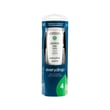
- Water flow and taste issues: filter, water EDR4RXD1
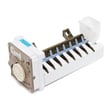
- No ice (after water supply checks): refrigerator ice maker assembly WPW10300024
- Temperature sensing issues: refrigerator thermistor W10316760
Why it matters
Cooling and ice maker complaints often share the same root causes: restricted airflow, heat not being rejected efficiently at the condenser, or inconsistent water supply. Fixing the underlying cause prevents food spoilage, repeat clogs, and unnecessary part replacement.
Last updated: February 2026