Owner’s manual
 View engine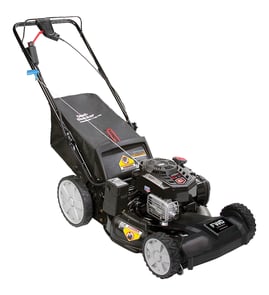

How do I find my Husqvarna model number?
On Husqvarna walk-behind mower model 917374421, the model and serial numbers are printed on a decal on the rear of the lawn mower housing (rear of the deck). Wipe the area clean and record both numbers so you can match the correct parts and diagrams.
Where to look on the mower
Check these common spots on the deck, starting with the most likely location:
- Rear of the mower housing (rear of the deck), on a decal
- Back side of the deck behind the engine (often easiest to see when the handle is folded)
- Near the rear door or discharge area (if equipped)
- On the underside lip of the deck near the back (look for a worn or dirty label)
Tips to read the decal clearly
A faded or grass-stained label is common on walk-behind mowers.
- Brush off dried grass and dirt first
- Wipe with a damp rag and mild soap; dry completely
- Use a flashlight at an angle to make embossed or faded text stand out
- Take a close-up photo and zoom in to read the characters
What numbers to record (and why it matters)
Use the model number to select the right parts list; use the serial number for exact production details.
| Number on decal | What it’s used for | Example for this mower |
|---|---|---|
| Model number | Matching diagrams and replacement parts | 917374421 |
| Serial number | Identifying the specific unit build | Varies by mower |
| Date of purchase (if known) | Helpful for maintenance and warranty paperwork | Varies |
Why it matters
Husqvarna walk-behind mowers can look similar across multiple model numbers, but parts like the drive system, blade, and control cables can differ. Using the exact model number helps ensure you get the correct items for your deck and drive configuration.
For additional identification details and specifications, use the owner's manual.
Last updated: February 2026
How many hours will a Husqvarna riding mower last?
A Husqvarna riding mower lasts 1,000 hours with normal residential use and routine maintenance. Since the model on this page (Husqvarna 917374421) is a walk-behind mower, we use the same durability drivers (maintenance, storage, mowing conditions) and follow the service schedule in the owner's manual.
What determines mower lifespan most
These items have the biggest impact on total engine hours and overall reliability:
- Oil changes on schedule and correct oil level before each use
- Clean cooling and deck areas to prevent overheating and corrosion
- Fresh fuel practices (do not store old gas in the tank over long periods)
- Sharp, balanced blade to reduce vibration and engine load
- Prompt repairs when you notice slipping drive, unusual noise, or vibration
Riding mower hours vs. walk-behind use
Hour meters are common on riding mowers and uncommon on walk-behind mowers like 917374421. For walk-behind models, most owners track lifespan by seasons and condition.
| Equipment type | Typical way lifespan is tracked | What to follow |
|---|---|---|
| Riding mower | Engine hours | Maintenance intervals and operating conditions |
| Walk-behind mower (917374421) | Seasons of use and performance | Maintenance schedule and inspections |
Parts that help reduce wear on 917374421
A worn or damaged cutting system increases load and vibration, which shortens engine and drive life.
- Replace a bent or heavily worn blade with the lawn mower 22-in deck mulching blade 532406713
- Keep fasteners tight and in good condition (common hardware includes lock nuts)
- Address drive issues early if the mower struggles to move or the wheels bind
Why it matters
Lifespan is driven by heat, vibration, and neglected maintenance. Keeping the blade sharp, the deck clean, and the engine serviced on schedule reduces strain and extends usable life.
Last updated: February 2026
Is it cheaper to repair or replace a lawnmower?
For a Husqvarna 917374421 walk-behind mower, repairing is usually cheaper when the fix is a wear item (blade, belt, cable, wheels) and you do the work yourself. Replacing is usually cheaper when the engine or drive system needs major labor or multiple expensive parts at once; check the owner's manual maintenance schedule first.
A practical way to decide (cost vs. value)
Use this quick rule: if the repair total is under about 30% to 50% of the cost of a comparable new mower, repair makes sense. If it is higher, replacement usually makes more sense.
Include these costs in your total:
- Parts (blade, belt, cable, fasteners)
- Tools you do not already own
- Your time (or labor if you are paying a shop)
- Any “while you are in there” items (worn wheels, hardware)
Repairs that are typically worth doing on this model
These are common, high-value fixes on a self-propelled walk-behind mower:
- Replace a worn or stretched ground drive belt: ground drive belt 532196857
- Replace a bent or dull blade: lawn mower 22-in deck mulching blade 532406713
- Fix self-propelled issues caused by a worn/broken cable: lawn mower drive control cable 532406259
- Replace worn wheels or traction parts (especially if it slips)
- Tighten or replace missing hardware (lock nuts, screws)
When replacement usually wins
Replacement is usually the better value when:
- The engine has low compression, heavy smoke, or major internal damage
- The transmission/drive case is damaged and multiple drive components are worn
- The deck is cracked or severely rusted through
- You need several major parts plus paid labor
Quick comparison
| Situation | Usually cheaper | Why |
|---|---|---|
| One worn wear-part (blade, belt, cable) | Repair | Low parts cost; fast DIY |
| Mower will not move but engine runs | Repair first | Often belt/cable/pulley related |
| Major engine problem | Replace | Labor and parts add up quickly |
| Multiple systems failing at once | Replace | Cost approaches a new mower |
Why it matters
Your 917374421 has a clear maintenance schedule (oil, blade, belt checks). Staying on top of those items reduces expensive failures and keeps repairs in the “cheap and quick” category.
Helpful DIY guidance
Last updated: February 2026
What size yard is the 917374421 good for?
The Husqvarna walk-behind mower model 917374421 is a good fit for small to medium yards, typically up to about 1/2 acre when the lawn is relatively open and you mow regularly. For larger properties, a riding mower usually saves significant time and effort.
How we estimate yard size for a walk-behind mower
We base yard-size guidance on the mower type (power-propelled 22-inch deck) and typical mowing pace, not on a single “acre rating.” Your real capacity depends on terrain and how often you mow.
- Deck size: 22-inch cutting width (from the model description in the owner's manual)
- Propelled drive: helps on slopes and reduces fatigue
- Obstacles: trees, beds, and tight gates slow mowing
- Grass conditions: tall or wet grass reduces speed and can clog the deck
- Bagging vs. mulching: bagging takes longer due to stops and heavier push effort
Quick sizing guide (typical)
| Yard size | Fit for 917374421 | What to expect |
|---|---|---|
| Up to 1/4 acre | Excellent | Fast mowing, easy handling |
| 1/4 to 1/2 acre | Good | Normal mowing time with weekly cuts |
| 1/2 to 1 acre | Possible | Longer sessions; best if open/flat |
| Over 1 acre | Not ideal | Consider a rider for time savings |
Why it matters
Choosing the right mower size helps you avoid long mow times, uneven cutting from rushing, and extra wear on drive components like the belt and pulleys.
Tips to get the most coverage per hour
- Keep the blade sharp; a dull blade slows you down and stresses the engine.
- Mow more often so you remove less grass each pass.
- Clean the underside of the deck to reduce drag and clumping.
- Use the correct cutting height for conditions (higher for thick or stressed grass).
- If you need to remove the blade, use a proper method; see lawn mower blade removal tool.
Last updated: February 2026