


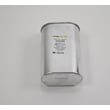
What tonnage is Goodman CKJ36-1A?
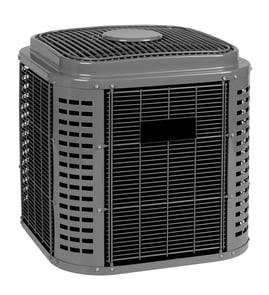
Goodman model CKJ36-1A is a 3-ton central air conditioner condensing unit (about 36,000 BTU/hr of cooling). This “36” size is commonly used for mid-sized homes, with actual fit depending on your climate, insulation, and ductwork.
Quick tonnage and BTU conversion
- 1 ton of cooling = 12,000 BTU/hr
- 3 tons = 36,000 BTU/hr
- “36” in a model number often indicates 36,000 BTU/hr capacity
| Nominal size | Approx. BTU/hr | Typical model size code |
|---|---|---|
| 2 ton | 24,000 | 24 |
| 2.5 ton | 30,000 | 30 |
| 3 ton | 36,000 | 36 |
| 3.5 ton | 42,000 | 42 |
| 4 ton | 48,000 | 48 |
Why tonnage matters
Correct tonnage helps your system control temperature and humidity efficiently. An oversized condensing unit can short-cycle (more wear on the compressor and contactor), while an undersized unit can run constantly and still struggle on hot days.
When tonnage is not the whole story
Even with the right nominal size, performance depends on:
- Indoor coil and air handler/furnace match
- Refrigerant charge and airflow
- Duct sizing and leakage
- Outdoor coil cleanliness and fan operation
Parts that commonly affect cooling performance
If your CKJ36-1A is not cooling well, these parts are often involved:
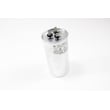
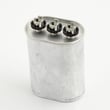
- Capacitor 45 12769 (weak run capacitor can prevent the compressor or fan from starting)
- Capacitor CAP050600440RTP (incorrect or failing capacitor can cause hard starts)
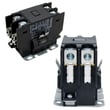
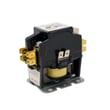
- Contactor (pitted contacts can stop the outdoor unit from running)
- Filter drier (restriction can affect refrigerant flow)
Last updated: February 2026
What is the average lifespan of a Goodman AC unit?
A Goodman central air conditioner like model CKJ36-1A typically lasts 15 years. With consistent maintenance and correct system sizing, many units reach 15 to 20 years; poor airflow, dirty coils, and electrical wear can shorten that lifespan.
Typical lifespan ranges
Most residential split-system outdoor condensing units fall into these ranges:
| Condition | Typical lifespan | What usually drives it |
|---|---|---|
| Normal use, average maintenance | ~12 to 15 years | Coil condition, electrical wear, refrigerant health |
| Well maintained, mild climate | ~15 to 20 years | Clean coils, stable voltage, good airflow |
| Neglected or harsh conditions | ~8 to 12 years | Corrosion, overheating, repeated hard starts |
What extends the life of your CKJ36-1A
- Keep the outdoor coil clean and the cabinet clear of leaves and grass clippings.
- Replace or clean the indoor air filter on schedule (restricted airflow overheats the system).
- Maintain proper refrigerant charge (low charge can overheat the compressor).
- Tighten and inspect electrical connections during seasonal service.
- Replace worn electrical start/run components before they damage the compressor.
Parts that commonly affect reliability
Electrical parts are frequent wear items on condensing units. If your system struggles to start, buzzes, or cycles erratically, these are common suspects:
Signs it is nearing end of life
- Hard starting, frequent breaker trips, or repeated capacitor failures
- Rising energy bills with no change in thermostat settings
- Longer run times and difficulty maintaining set temperature
- Unusual compressor or fan noises
Why it matters
Once a condensing unit gets into the 12 to 20 year range, small issues (airflow restrictions, dirty coils, weak capacitors, pitted contactor points) can cascade into compressor stress. Preventive maintenance and timely part replacement protect the most expensive components.
Last updated: February 2026
What is the most expensive part to replace on an AC unit?
On a central AC condensing unit like the Goodman CKJ36-1A, the compressor is typically the most expensive single component to replace because it is the sealed, labor-intensive “heart” of the refrigerant system. When a compressor fails, repair costs often rival the value of older equipment.
What usually costs the most (and why)
The compressor is expensive for two reasons: the part itself is costly, and the job often involves refrigerant recovery, brazing, evacuation, and recharge.
Common high-cost items on many AC units include:
- Compressor (often the top cost)
- Condenser fan motor (moderate to high)
- Coil repairs or replacement (labor-heavy)
- Refrigerant leak diagnosis and repair (time-intensive)
- Control board or defrost board (more common on heat pumps)
Lower-cost parts that can prevent bigger failures
Some “small” electrical parts fail more often and are far cheaper than a compressor. Replacing them early can prevent hard-starting and overheating.
On this CKJ36-1A parts list, examples include:
- Capacitor 45 12769
- Capacitor CAP050600440RTP
- Capacitor CAP050800440RTP
- Contactor (listed as “Contactor 25”)
Quick cost and symptom comparison
| Part type | Typical role | Common symptom when failing | Typical cost impact |
|---|---|---|---|
| Compressor | Pumps refrigerant | Hums, trips breaker, no cooling | Highest |
| Run capacitor | Helps motors start/run | Hard start, buzzing, fan not spinning | Low to moderate |
| Contactor | Switches high voltage to unit | Outdoor unit will not start | Low to moderate |
Why it matters
If the compressor is truly failed, it is important to confirm the root cause (weak capacitor, pitted contactor, airflow issues, or electrical problems) so the replacement does not fail again.
Safety note
AC condensing units contain high voltage and pressurized refrigerant. We recommend having a qualified technician handle compressor and sealed-system work.
Last updated: February 2026
What are common problems with Goodman air conditioners?
Common problems we see on Goodman central air conditioners like model CKJ36-1A include not cooling, weak airflow, outdoor unit not starting, and buzzing or clicking noises. Many issues trace back to power and control parts (capacitor or contactor), dirty coils, or airflow restrictions.
Most common symptoms and what they usually mean
- Not cooling or short cycling: dirty condenser coil, low refrigerant charge, failing capacitor, or compressor protection tripping
- Outdoor unit will not start: thermostat call not reaching the unit, failed contactor, failed run capacitor, or a power disconnect/breaker issue
- Buzzing or rapid clicking at the outdoor unit: weak capacitor, pitted contactor contacts, or loose wiring
- Weak airflow indoors: clogged air filter, blocked return/supply vents, or blower/duct issues (indoor equipment)
- Ice on lines or coil: airflow restriction or low refrigerant
Parts that commonly fail on a condensing unit
Two of the most frequent electrical failures are the run capacitor and the contactor. If your CKJ36-1A hums but will not start, starts slowly, or trips the breaker, these are the first parts we check.
- Run capacitor options listed for this model include capacitor 45 12769 and capacitor 60 CAP050600440RTP
- If the outdoor unit will not pull in when the thermostat calls for cooling, the contactor is a common suspect (this model lists a contactor by part number B13603-21)
Quick comparison: capacitor vs. contactor
| Part | What it does | Common failure signs | Typical next step |
|---|---|---|---|
| Run capacitor | Helps start and run the compressor/fan motor | humming, hard start, intermittent running | test capacitance, replace if out of spec |
| Contactor | Switches high voltage to the compressor/fan | outdoor unit dead, chattering, burnt contacts | check coil voltage, inspect contacts |
Why it matters
Air conditioning problems that start as “no cool” often become bigger failures if the compressor runs under stress (low airflow, dirty coil, weak capacitor). Catching the early signs helps protect the most expensive components.
Safety notes we follow
- Turn off power at the disconnect and breaker before opening the outdoor unit.
- Capacitors can hold a charge even with power off; discharge safely before handling.
- Refrigerant diagnosis and sealed-system repairs require a qualified HVAC technician.
Last updated: February 2026
Can I replace AC spare parts myself?
Yes, you can replace some parts on your Goodman CKJ36-1A condensing unit yourself, but stick to low-risk items that do not require opening the sealed refrigerant system. Anything involving refrigerant work or complex high-voltage diagnosis belongs with a qualified technician.
DIY-friendly repairs (when power is fully off)
These are common homeowner-level tasks on a central AC outdoor unit:
- Replace a run capacitor when the microfarad (µF) and voltage ratings match exactly
- Replace a contactor when the coil voltage and terminal layout match
- Clean leaves and debris from the condenser coil and base pan (gentle water flow)
- Tighten loose exterior panels and mounting screws
- Inspect low-voltage thermostat wiring connections if you can identify terminals confidently
Repairs to leave to a technician
These jobs require specialized tools, training, and procedures:
- Any refrigerant work (leak repair, charging, brazing, opening the sealed system)
- Replacing a filter drier (requires opening the refrigerant circuit)
- Compressor or condenser fan motor electrical diagnosis beyond basic checks
- Repeated breaker trips, burnt wiring, melted terminals, or arcing
Common replacement parts for CKJ36-1A
Use your unit’s data label and the part listing for CKJ36-1A to match ratings before ordering.
| Symptom | Common suspect | Example part on this model page |
|---|---|---|
| Hums but fan will not start | Dual run capacitor | Capacitor 45 12769 |
| Hard starting, intermittent run | Run capacitor | Capacitor CAP050800440RTP |
Why it matters
A condensing unit combines high voltage, high starting current, and stored energy in capacitors. Using the wrong capacitor rating or miswiring a contactor can damage the compressor or fan motor and create a shock hazard.
Quick safety checklist
- Turn off power at the outdoor disconnect and the breaker
- Verify power is off with a multimeter before touching terminals
- Discharge the capacitor safely before removing wires
- Take a clear photo of wiring before moving anything
For basic electrical testing, follow how to use a multimeter to test electrical parts video.
Last updated: February 2026