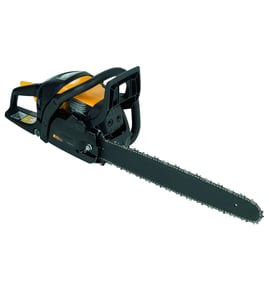

Are McCulloch chainsaws good quality?
Mcculloch chainsaws are generally a solid, good-quality choice for typical homeowner and PROperty-maintenance cutting, especially when they are kept tuned, fueled correctly, and maintained on schedule. For your Mcculloch PRO chainsaw, day-to-day reliability comes down to chain sharpness, clean fuel delivery, and PROper lubrication.
What “good quality” means for a chainsaw
Quality shows up most in how consistently the saw starts, cuts, and holds adjustment over time.
- Starts reliably when cold and hot
- Idles without stalling and accelerates cleanly
- Oils the bar and chain consistently
- Holds chain tension and cuts straight with a sharp chain
- Has durable wear parts (starter components, clutch, sprocket, fuel lines)
Quick checks that make any Mcculloch run better
These are the maintenance items that most often separate a “great saw” from a frustrating one.
- Use fresh, PROperly mixed fuel (and do not store mixed fuel for long periods)
- Keep the air filter clean so the carburetor can meter fuel correctly
- Replace a fouled spark plug and set the correct gap (per your plug spec)
- Sharpen the chain and set depth gauges correctly
- Confirm bar oil is flowing; clean the bar groove and oil port
Common issues and what they usually point to
| Symptom | Most common cause | Typical fix |
|---|---|---|
| Hard starting | Old fuel, dirty air filter, carburetor out of tune | Refresh fuel, clean filter, tune or service carburetor |
| Runs rough | Lean/rich carb setting, air leak, restricted fuel flow | Inspect fuel lines, adjust carb, replace filter/lines |
| Leaking gas | Cracked fuel line, loose connection, bad tank grommet | Replace fuel lines and seals |
| Poor cutting | Dull chain, wrong chain type, bar wear | Sharpen/replace chain, inspect bar |
Why it matters
A chainsaw’s engine and cutting system are tightly linked; a slightly dull chain or restricted fuel line makes the saw feel underpowered and can accelerate wear on the clutch, bar, and sprocket.
Helpful DIY guides
- Use tips for a hard to start chainsaw if your PRO is difficult to fire up consistently.
- Use chainsaw care and troubleshooting tips for routine upkeep that improves performance and lifespan.
Last updated: February 2026
How many cc is a McCulloch PRO?
For the Mcculloch PRO MAC 700 (model 600116-04), the engine size is typically about 70 cc. On older Mcculloch saws, “PRO” is a series name, so the cc rating is tied to the exact model family (like PRO MAC 700), not the word “PRO” by itself.
How to confirm you have the PRO MAC 700
Use the model tag and the parts breakdown to match the saw before ordering parts.
- Look for the model designation (PRO MAC 700) and the type/model number (600116-04) on the ID plate
- Match the illustrated parts list to your saw’s handle, starter cover, and clutch cover style
- Confirm whether your saw has a manual oiler or automatic oiler setup (varies by version)
- Verify the bar mount pattern and chain pitch/gauge currently installed
Why the cc rating matters
Engine displacement affects which parts and settings are correct, especially on fuel and ignition components.
| What you’re doing | Why cc matters | What to check first |
|---|---|---|
| Carburetor service or replacement | Jetting and carb calibration are model-specific | Carb model stamping, fuel line routing |
| Compression or top-end work | Cylinder/piston set must match the engine family | Cylinder casting marks, bore condition |
| Bar and chain selection | Powerhead size influences recommended bar length | Current bar length, chain pitch/gauge |
Common related fixes when a saw is “down on power”
If you are chasing performance issues on a PRO MAC 700, these checks usually pay off first:
- Fresh fuel mix at the correct ratio for your oil and usage
- Clean air filter and unobstructed muffler/spark arrestor screen
- New spark plug gapped correctly
- Fuel filter and fuel lines not cracked or soft
- Carburetor diaphragm condition and PROper adjustment
For step-by-step troubleshooting and repair help, use our DIY resources like chainsaw care and troubleshooting tips and tips for a hard to start chainsaw.
Last updated: February 2026
How do I find the model number on my PRO?
For your Mcculloch chainsaw, the model number is printed on an ID tag or stamped into the housing; on many saws it’s near the starter cover, rear handle, or the area by the oil and fuel caps. Use that full model number to match the correct diagrams and parts.
Where to look on the chainsaw
Check these common locations (wipe off oil and sawdust first):
- On the recoil starter (pull-start) housing
- On the rear handle or trigger handle area
- Near the bar mount studs and clutch cover area
- On the underside of the saw body near the fuel and bar-oil caps
- On a sticker or metal plate on the crankcase
What number you actually need
Chainsaws often show more than one identifier. Use this quick guide:
| What you see | What it means | Use it for parts? |
|---|---|---|
| Model number | Identifies the exact saw version | Yes |
| Type number / spec | Sub-version within a model | Often helpful |
| Serial number | PROduction run identifier | Sometimes |
Tips to avoid ordering the wrong parts
Model tags can be confusing, especially on older Mcculloch saws. We recommend:
- Write down the model number exactly as shown (include dashes and suffixes)
- Record any type/spec number listed on the same tag
- Compare your saw’s features to the diagrams (handle style, chain brake style, bar mount)
- If the tag is missing, look for a stamped number on the crankcase
Why it matters
Small differences in model or type can change the carburetor, fuel lines, ignition module, chain brake parts, and bar/chain fit. Using the exact model number keeps the parts match accurate.
For more chainsaw identification and repair basics, use our [chainsaw common questions] resource.
Last updated: March 2026