Owner’s manual
 Error Codes


What is the average lifespan of a GE refrigerator?
Most GE refrigerators average 10 to 15 years of service life with normal household use. For your GE GSH25JSTESS side-by-side, consistent maintenance (airflow, clean coils, good door seals) is what most often determines whether it lands closer to 10 years or pushes past 15; see the owner's manual for model-specific care and operating guidance.
Typical lifespan ranges (what we see most often)
- Average: 10 to 15 years
- Shorter life (often 7 to 10 years): heavy use, poor ventilation, dirty condenser area, frequent power issues
- Longer life (often 15+ years): clean condenser area, stable temperatures, doors sealing well, timely part replacement
| Condition | What it usually leads to | What to do |
|---|---|---|
| Coils/condenser area stays dusty | Compressor runs longer, more wear | Clean condenser area regularly |
| Door gasket leaks | Warm air intrusion, frost, longer run time | Inspect and replace worn gaskets |
| Ice maker or water system issues | Leaks, clogs, poor ice production | Replace filter and address valve issues early |
Maintenance that extends refrigerator life
- Keep the condenser area clean so the compressor does not overwork.
- Confirm doors close fully and seals are tight (no gaps, no tearing).
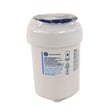
- Replace the water filter on schedule to protect the dispenser and ice maker; use the GE refrigerator water filter MWFP.
- If ice or cooling performance changes, check for airflow blockage and frost buildup.
- Address small issues early (unusual noises, warm spots, slow ice production) before they stress major components.
Why it matters
A refrigerator usually fails early because it is forced to run too long or too hot. Simple upkeep reduces compressor run time, stabilizes temperatures, and helps expensive sealed-system components last longer.
Last updated: February 2026
What is the most common problem with a GE refrigerator?
The most common GE refrigerator complaint is not cooling properly (fresh food warm, freezer warming, or temperatures swinging). On your GE GSH25JSTESS side-by-side, the fastest wins are checking control settings, door sealing, airflow, and listening for normal vs. abnormal operating sounds using the owner's manual.
Most common issues we see (and what to check first)
- Not cooling or not cold enough: confirm temperature controls are set correctly; allow 24 hours after plugging in or major changes.
- Runs a lot: frequent door openings, hot weather, or adding a lot of food can be normal.
- Frost buildup or ice crystals: often caused by a door left ajar or a poor door seal.
- Strange noises: gurgling, sizzling, popping, or dripping can be normal during refrigerant flow and the defrost cycle.
- Ice maker slow or not making ice: a new install can take 12 to 24 hours to start producing ice.
- Water leaks: commonly tied to a clogged/iced defrost drain or water line issues.
Quick troubleshooting checklist (GSH25JSTESS)
- Verify doors close fully and nothing is holding them open.
- Set controls one step colder if compartments are too warm; then wait for temperatures to stabilize.
- Listen during defrost: sizzling or dripping sounds can be normal.
- Check airflow: do not block vents with food packages.
- If ice maker is new or recently reconnected: wait 12 to 24 hours; discard the first few batches.
Common symptoms and likely parts to inspect
| Symptom | What it often points to | Example part for this model |
|---|---|---|
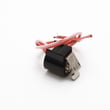
| Temps swing or food spoils | Temperature sensing/control issue | Refrigerator temperature sensor WR55X10025 |
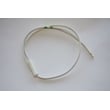
| Frost buildup, warm fridge | Defrost system problem | Refrigerator defrost heater WR51X10055 or refrigerator defrost bi-metal thermostat WR50X10065 |
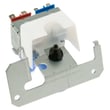
| No water/ice, weak fill | Water supply/valve issue | Refrigerator water valve WR57X33326 |
| Fridge light out | Bulb failure | Refrigerator light bulb 40A15 |
Why it matters
Cooling problems can quickly lead to food loss and can also make the compressor run longer than normal. Catching simple causes (controls, door sealing, airflow) first prevents unnecessary parts replacement.
Last updated: February 2026
Are GE side by side refrigerators good?
GE side-by-side refrigerators like model GSH25JSTESS are a solid, long-lasting choice for everyday use because they typically deliver consistent cooling, convenient ice and water dispensing, and flexible storage. Overall performance depends most on proper setup, clean airflow, and staying on top of routine maintenance in the owner's manual.
What “good” usually means for a side-by-side
A good side-by-side refrigerator keeps stable temperatures, makes ice reliably, and seals tightly so it does not run constantly.
- Holds 0°F in the freezer and 37°F to 40°F in the fresh food section
- Produces ice within 12 to 24 hours after first installation (typical for this design)
- Has adjustable shelves and bins for easier organization
- Runs with normal operating sounds (fans, water fill, defrost)
- Maintains good door sealing to prevent frost and temperature swings
Common pros and tradeoffs
Side-by-sides are popular, but they have a few predictable strengths and compromises.
| Category | Typical strength | Typical tradeoff |
|---|---|---|
| Storage | Easy access to both sections | Narrower shelf width for large platters |
| Convenience | In-door ice and water | Ice maker can sound loud during harvest/fill |
| Temperature control | Even cooling with fans | More sensitive to blocked vents and dirty coils |
Maintenance that keeps performance “good”
These steps have the biggest impact on cooling, taste, and reliability.
- Replace the water filter on schedule; use the correct filter such as GE refrigerator water filter MWFP
- Keep air vents inside both compartments clear (avoid packing food against vents)
- Confirm doors close fully and gaskets seal all the way around
- Set temperatures, then give changes 24 hours to stabilize
- If ice production is slow, verify the shutoff arm is not blocked and the unit is fully cooled
Why it matters
Most “bad refrigerator” complaints come from airflow restrictions, water filtration issues, or temperature settings drifting over time. Simple upkeep prevents warm spots, slow ice production, and unnecessary compressor run time.
Last updated: February 2026