
What should you not vacuum with a wet dry vac?
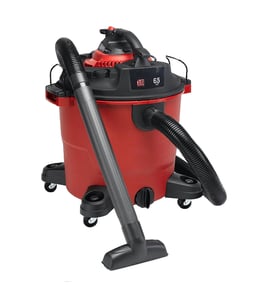
For a Shop-Vac shop vacuum like model QPV10, do not vacuum anything that is hot, burning, explosive, or likely to clog the filter and hose (especially fine dust). These materials can damage the motor, ruin the filter, or create a serious safety hazard.
Items you should not vacuum
- Hot or burning debris: fireplace ash, charcoal, cigarettes, welding/grinding sparks
- Flammable or explosive materials: gasoline, solvents, paint thinner, kerosene, propane dust environments
- Fine powders and drywall dust (unless you have the correct fine-dust setup): flour, cement dust, plaster, toner
- Large sharp debris: big glass shards, razor blades, sharp metal scraps (can puncture the tank or hose)
- Reactive or hazardous chemicals: strong acids/alkalis, unknown shop chemicals (can damage seals and create fumes)
- Wet food sludge and grease: can rot, smell, and coat the hose and float mechanism
What is usually OK (with the right setup)
Wet/dry vacs are versatile, but the setup matters.
| Material | Usually OK? | Best practice |
|---|---|---|
| Clean water spills | Yes | Use the wet pickup configuration; empty tank after use |
| Small dry debris (sawdust, dirt) | Yes | Use a clean, dry filter |
| Fine dust (drywall, concrete) | Sometimes | Use a fine-dust filter or bag; clean/replace filters often |
| Small glass bits | Sometimes | Sweep first; use a hose/nozzle that will not clog |
Why it matters
A wet/dry vacuum relies on airflow through the hose, filter, and motor. Hot debris can melt components or start a fire; fine powders can pass through or pack the filter, overheating the motor; sharp debris can tear hoses and seals.
Quick safety checklist before you vacuum
- Confirm the debris is cool and non-flammable.
- Match the setup to the job: wet pickup vs. dry pickup.
- If suction drops quickly, stop and check for a clogged filter or hose.
- Empty and rinse the tank after wet pickup; dry it to prevent odors.
For more DIY safety guidance before troubleshooting or repairs, use are diy appliance repairs safe.
Last updated: February 2026
How do I change my shop vac from dry to wet?
To switch a Shop-Vac QPV10 from dry pickup to wet pickup, you typically change the filter setup: remove the dry filter (paper or cartridge) and install the correct wet-use filter or foam sleeve, then confirm the tank is empty and the float shutoff moves freely before vacuuming liquids.
What to change (dry vs. wet)
Most wet/dry shop vacs use different filtration for dust versus liquids.
- Dry pickup: cartridge or paper filter (captures fine dust)
- Wet pickup: foam sleeve or wet filter (lets air pass while blocking splash)
- Never use a paper filter for wet pickup; it can clog quickly and may tear
- Keep the float cage clean so the float can shut off suction when the tank is full
- Use the correct hose and nozzle for liquids (a squeegee style nozzle works best)
Step-by-step: switching to wet pickup
- Unplug the vacuum.
- Remove the power head (motor lid) and check the tank is empty and clean.
- Remove the dry filter (cartridge or paper style, if installed).
- Install the wet-use filter (commonly a foam sleeve over the filter cage).
- Reinstall the power head and make sure the latches seal evenly.
- Vacuum small amounts of liquid first; stop when suction changes or the float shuts off.
Quick checks before you vacuum water
| Check | What you want to see | Why it matters |
|---|---|---|
| Filter type | Foam or wet-rated filter installed | Prevents clogging and damage |
| Float shutoff | Moves freely, not stuck with debris | Prevents overfilling |
| Tank condition | Empty, no loose dust piles | Avoids turning dust into sludge |
| Cord/GFCI | Plugged into a GFCI outlet | Reduces shock risk in wet areas |
Why it matters
Using the correct wet filter setup helps your Shop-Vac maintain airflow, prevents messy clogs, and lets the float shutoff protect the motor by stopping suction when the tank reaches its safe fill level.
For help confirming you have the right filter style for your exact configuration, use the model number QPV10 when searching on Sears PartsDirect.
Last updated: February 2026
What are the two holes for in a wet dry vac?
On a Shop-Vac shop vacuum like model QPV10, the two holes are typically the suction inlet (where the hose connects to pick up wet or dry debris) and the blower or exhaust port (where air exits and where you can connect the hose for blowing). For model-specific port locations, use the model lookup steps in how to find your appliance model number (and what it means for parts).
What each port does
- Suction inlet (main intake): Connect the hose here for normal vacuuming of dust, debris, and liquids.
- Blower or exhaust port: This is the motor’s air outlet; many wet/dry vacs let you attach the hose here to use the vacuum as a blower.
- Accessory or drain openings (on some units): Some designs also include a drain cap or accessory connection; these are separate from the two main ports.
Quick identification checklist
- The suction inlet is usually:
- The largest round opening
- Located on the front or lower side of the canister
- The one that fits the main hose cuff most naturally
- The blower/exhaust port is usually:
- Smaller than the inlet (or a different shape)
- Higher on the body or near the motor head
- Marked with “blow” or shown in icons on the housing
Why it matters
Using the correct port helps protect the motor and improves performance. For example, connecting the hose to the exhaust port won’t pick up debris, and using the wrong setup for wet pickup can reduce suction and increase mess.
Common setups (at a glance)
| Task | Hose connection | Filter note |
|---|---|---|
| Dry pickup (sawdust, dirt) | Suction inlet | Use a clean, dry filter |
| Wet pickup (water) | Suction inlet | Use the correct wet setup for your vac; keep filters appropriate for wet use |
| Blowing (leaves, dust from crevices) | Blower/exhaust port | No pickup; keep outlet clear |
Safety and care tips
- Unplug the vacuum before switching hose ports or changing filters.
- Keep the exhaust port clear so the motor can cool properly.
- Empty the tank before it overfills; wet pickup performance drops quickly when the tank is near full.
Last updated: February 2026
Are vacuum attachments interchangeable?
Vacuum attachments are sometimes interchangeable, but they are not universally compatible. For the Shop-Vac QPV10 wet/dry vacuum, the key is matching the hose and tool connection size (diameter and style); if those match, many nozzles, wands, and brushes will fit and work normally.
What determines whether an attachment will fit
Most compatibility issues come down to the connection, not the brand name.
- Hose diameter: wet/dry vacs commonly use sizes like 1-1/4 inch, 2-1/2 inch, or specialty sizes
- Connector style: friction fit, locking tab, threaded cuff, or quick-connect
- Tapered vs. straight ends: some tools wedge on; others need a straight cuff
- Wet pickup rating: some floor tools and filters are dry-only
- Airflow needs: small tools can reduce airflow on high-CFM wet/dry vacs
Quick fit-check you can do at home
Use this simple check before buying a new Shop-Vac accessory kit.
- Measure the outside diameter of the hose end (or the inside diameter of the tool opening) with a tape measure.
- Check whether your hose end is smooth, tapered, or has a locking feature.
- Test-fit another tool if you have one; it should seat firmly without wobbling.
Common outcomes
| What you see | What it usually means | What to do |
|---|---|---|
| Tool slides on but falls off | Diameter mismatch or taper mismatch | Look for the exact same diameter and a tighter cuff style |
| Tool will not start onto the hose | Tool opening is too small | Move up to the correct size family (often 2-1/2 inch for larger wet/dry vacs) |
| Tool fits but suction feels weak | Restriction or air leak | Use a better-sealing cuff or a larger-diameter tool set |
Why it matters
Using the wrong attachment can cause air leaks (poor suction), frequent clogs, or a tool that pops off during use. Matching the correct hose and accessory size helps your QPV10 perform better for both dry debris and wet pickup.
Helpful related DIY resource
If you end up troubleshooting a power or cord issue while swapping accessories, we recommend reviewing how to repair broken or damaged wires video.
Last updated: February 2026
How do I know what Shop-Vac model I have?
To identify your Shop-Vac model, find the model number on the vacuum’s rating label, then match that number when searching parts and diagrams. For this page, the model number you want is QPV10 (Shop-Vac wet/dry shop vacuum).
Where to look for the model number label
On most Shop-Vac wet/dry vacuums, the model and electrical ratings are printed on a sticker or metal plate in one of these spots:
- On the motor head (power head) near the switch or handle
- On the back or side of the tank (canister)
- Near the caster base or rear wheel area
- Near the cord wrap or cord entry point
What to write down (so parts match correctly)
When you find the label, record these details exactly as shown:
- Model number (example for this page: QPV10)
- Series or type (if listed)
- Electrical rating (amps and volts, such as 10.5A, 120V)
- Tank size (gallons, if shown)
- Any suffix letters/numbers after the model (they can change the parts list)
Quick check: model number vs. marketing description
Sometimes the tank says “10 gallon” or “10.5 amp,” but those are not the model number. Use this as a guide:
| What you see | What it means | What to use for parts |
|---|---|---|
| “10.5A” | Motor current rating | Not a model number |
| “10 gal” (or similar) | Tank capacity | Not a model number |
| “QPV10” | Actual model identifier | Use this |
Why it matters
Shop vacuum parts like the filter, hose, motor head gasket, and latches are sized by model. Using the exact model number prevents ordering a filter that will not seal, a hose that will not lock in, or a tank accessory that will not fit.
If the label is missing or unreadable
Use these steps to narrow it down:
- Measure the tank diameter and note the tank material (plastic vs. stainless)
- Note the hose diameter (common sizes are 1-1/4 inch, 1-7/8 inch, and 2-1/2 inch)
- Check whether the inlet uses a friction fit or a locking tab connection
- Compare the latch style (strap latches vs. side clips)
- Search by the closest match, then confirm by photos and dimensions
For help locating the model number tag and understanding why it matters for parts matching, use how to find your appliance model number (and what it means for parts).
Last updated: February 2026