Installation guide
 Owner’s manual
 Error Codes


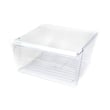
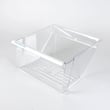
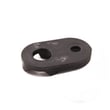
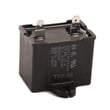
How to remove drip tray from Kenmore fridge?
On Kenmore side-by-side refrigerator model 10653293202, the small removable drip tray at the bottom of the dispenser lifts out for cleaning; it is designed to catch small spills and it does not drain. Remove it, empty or wash it at the sink, then slide it back into place.
Quick steps to remove and reinstall
- Remove any cup or glass from the dispenser area.
- Grip the front edge of the tray at the bottom of the dispenser.
- Lift the tray up and pull it straight out.
- Carry it to the sink to empty and clean.
- Dry the tray (optional) to reduce water spots.
- Reinstall by lining it up with the opening and pushing it back in until it sits flat.
What to expect (normal vs. not normal)
| What you see | What it usually means | What to do |
|---|---|---|
| Water sitting in the tray | Normal; there is no drain | Empty and rinse the tray regularly |
| Tray feels stuck | Dried spills or sticky residue | Wiggle gently while lifting; clean the edges |
| Water leaking below the tray | Spill overflow or a dispenser issue | Clean first; then inspect the dispenser area for cracks or misalignment |
Why it matters
Keeping the drip tray clean helps prevent odors, sticky buildup around the dispenser lever, and overflow that can drip onto the freezer door or floor.
Related parts and help
- If you are working on the dispenser area, our installation guide for model 10653293202 shows how trim and handles are removed for access.
- For step-by-step dispenser access tips, use our DIY article how to disassemble a Kenmore refrigerator dispenser.
- If you need replacement parts for your refrigerator, you can order from the parts list for model 10653293202 or search by model on Sears PartsDirect.
Last updated: February 2026
Where is the model number on a Kenmore side by side refrigerator?
On Kenmore side-by-side refrigerator model 10653293202, the model number is printed on the model and serial number label located on the inside wall of the refrigerator (fresh food) compartment. For the exact label location and what the tag looks like, use the owner's manual.
Quick ways to find the label
Check these common spots inside the fresh food section first:
- Inside the refrigerator compartment on a side wall (often near the top front)
- On the ceiling of the refrigerator compartment near the light housing
- Behind or beside the crisper pans (you may need to slide a pan out)
- Near the door hinge area, visible when the refrigerator door is open
What you should write down
We recommend recording these items exactly as shown on the label:
- Model number (for this unit: 10653293202)
- Serial number
- Purchase date (from your receipt)
Model vs. serial number (what’s the difference?)
| Item | What it identifies | Why it matters |
|---|---|---|
| Model number | The exact refrigerator design and parts list | Ensures you get the correct Kenmore replacement parts |
| Serial number | The specific unit and production run | Helps with service history and unit-specific details |
Why it matters
The model number is the key to matching parts like a water filter housing, door cam, or evaporator fan blade to your exact Kenmore configuration. Using the correct model number prevents ordering the wrong part and saves time on troubleshooting.
If you need to order parts after you find the label, start with the parts list for model 10653293202 on this page, or search by model number on Sears PartsDirect.
Last updated: February 2026
What causes a side-by-side refrigerator to stop cooling?
A Kenmore side-by-side refrigerator model 10653293202 usually stops cooling because power is interrupted, the controls are set to OFF or need a reset, airflow is blocked, or a cooling-system component (fans, defrost system, compressor start parts) is failing. Use the checks in the 10653293202 owner's manual to narrow it down fast.
Quick checks (fastest fixes first)
- Confirm the power cord is fully plugged into a grounded 3-prong outlet.
- Check the house breaker or fuse; reset or replace if tripped.
- Make sure the refrigerator and freezer controls are not set to OFF.
- If your model has digital controls, turn the unit OFF, then ON to reset.
- Look for blocked air vents in either compartment; move food packages away from vent openings.
- Wait 30 minutes if it just stopped; an automatic defrost cycle can temporarily change operation.
Airflow and temperature issues that mimic “no cooling”
Blocked vents prevent cold air from moving from the freezer to the fresh-food side, so the refrigerator section warms up even if the freezer is trying to cool.
| Symptom | Most likely area | What to check |
|---|---|---|
| Freezer cold, fridge warm | Air circulation | Vents blocked, diffuser area obstructed |
| Both sections warm | Power/controls or sealed system | Controls OFF, reset needed, compressor not running |
| Cooling comes and goes | Defrost or fan issue | Frost buildup, fan noise changes, intermittent operation |
Parts that commonly cause a cooling failure
If the basic checks do not restore cooling, these model-relevant parts are common suspects:
- Evaporator fan area (moves cold air through compartments); inspect the fan blade for damage: refrigerator evaporator fan blade WP2169142.
- Defrost system (prevents ice from choking airflow); a failed defrost thermostat can contribute to heavy frost: refrigerator defrost bi-metal WPW10225581.
- Compressor start components; a weak start circuit can prevent the compressor from running: refrigerator run capacitor WPW10662129.
Why it matters
When cooling stops, food safety and compressor health are the priorities. Quick power, control, and airflow checks prevent unnecessary part replacement and help you decide whether you are dealing with a simple settings issue or a true cooling-system problem.
If you need to order replacement parts for Kenmore 10653293202, use the parts list for this model or search by model number on Sears PartsDirect.
Last updated: February 2026
How to tell if a Kenmore refrigerator compressor is bad?
On Kenmore model 10653293202, a bad compressor typically shows up as poor or no cooling even though the refrigerator seems to run a lot, along with unusual compressor-related noises (clicking, repeated start attempts) or the unit failing to run at all. Use the owner's manual checks first to rule out control settings and airflow issues.
Quick symptoms that point to a compressor problem
- Refrigerator and freezer temperatures stay warm after several hours of running
- Compressor area is very hot to the touch, or you hear repeated clicking as it tries to start
- The refrigerator runs almost constantly but never reaches set temperature
- You hear a high-pitched or pulsating sound that is new and persistent (not normal cycling)
- Frost pattern and cooling performance suggest the sealed system is not moving refrigerant effectively
Rule out common look-alikes first (fast checks)
Before you blame the compressor, we recommend these model-appropriate checks:
- Confirm the temperature controls are set correctly for the room conditions
- Make sure air vents inside the compartments are not blocked by food packages
- If your model has digital controls, turn the unit OFF then ON to reset the controls
- Listen for normal operating sounds (evaporator fan, refrigerant gurgle, water valve buzz for ice maker)
- Give the refrigerator time after loading groceries; large loads can take several hours to pull down
What you can safely observe vs. what requires testing
| Check | What you may notice | What it usually means |
|---|---|---|
| Cooling performance | Warm fridge and warm freezer | Compressor not pumping, sealed-system issue, or airflow/control problem |
| Sound pattern | Repeated click, then silence | Start device/capacitor issue or compressor locked |
| Run time | Runs constantly without reaching temp | Inefficient cooling, possible compressor or sealed-system restriction |
| Normal sounds | Gurgling, popping, fan noise | Often normal operation, not a compressor failure by itself |
Parts that are commonly involved when diagnosing “bad compressor” symptoms
A compressor diagnosis often overlaps with other components in the sealed system and controls. For this model, these parts are commonly referenced during troubleshooting:
- Refrigerator compressor W10309990 (the compressor itself)
- Refrigerator run capacitor WPW10662129 (helps the compressor start and run)
- Refrigerator microcomputer W11629974 (controls operation and can affect run behavior)
Why it matters
Replacing a compressor is a major repair; many “compressor is bad” complaints are actually caused by airflow problems, control settings, or a start/run issue. Doing the quick checks first helps you avoid replacing the wrong part and gets cooling restored faster.
Last updated: February 2026
How wide is a Kenmore side by side refrigerator?
Most Kenmore side-by-side refrigerators measure about 32 to 36 inches wide; Kenmore model 10653293202 fits that standard range. For the exact published cabinet width for your unit, use the dimensions section in the 10653293202 owner's manual.
What “width” should mean for fit
When people ask width, they usually mean one of these measurements:
- Cabinet width: the main box, not counting extra clearance
- Overall width with doors/handles: can be wider than the cabinet
- Required opening width: cabinet width plus ventilation and door-swing space
Clearances that change the opening you need
Even if the refrigerator cabinet is within a 32 to 36 inch range, the installation opening must include clearance. The guidance for this model family calls for:
- 1/2 inch (1.25 cm) space on each side and at the top for ventilation
- If next to a fixed wall, 2 inches (15.08 cm) minimum on the side needed for door swing (depending on layout)
- Extra space behind if you have an ice maker or water line connections
| Planning for | Use this measurement | Typical target |
|---|---|---|
| Refrigerator cabinet width | Case only (no clearance) | 32 to 36 inches |
| Rough opening width | Case plus ventilation | Add 1 inch total (1/2 inch each side) |
| Door swing next to a wall | Hinge-side clearance | Add about 2 inches where needed |
Quick measuring tips (most accurate)
- Measure the widest point across the front (often the doors or handles)
- Measure the opening in 2 to 3 spots (front and back) for out-of-square walls
- Confirm clearance needs in the installation guide
Why it matters
A refrigerator that is “the right width” can still bind in the opening or run warm if ventilation space is tight. Planning for door swing also prevents dents, rubbing gaskets, and blocked shelves.
If you are replacing interior storage while you measure, model-matched items like the refrigerator crisper pan WP2188656 are available from the parts list for 10653293202, and you can also search by model on Sears PartsDirect.
Last updated: February 2026