Owner’s manual



How many years should a snowblower last?
A gas snowblower like the Craftsman 536887752 should last 15 to 20 years with normal residential use and consistent maintenance. The biggest lifespan drivers are off-season storage, fuel care, and replacing wear items (belts, shear bolts) before they cause bigger damage.
What “normal lifespan” looks like
Most owners get a long service life when they follow the maintenance schedule and avoid running the machine with slipping belts or damaged auger hardware. For model-specific maintenance intervals and specs (oil type, capacities, adjustments), use the Craftsman 536887752 operator’s manual.
- 15 to 20 years: typical for a well-maintained, quality gas, dual-stage unit
- 10 to 15 years: common when maintenance is occasional or storage is damp/dirty
- Under 10 years: more likely with frequent heavy use, impacts (rocks/curbs), or fuel system neglect
Wear parts that most affect longevity
Replacing common wear items on time helps protect the drivetrain and auger system.
- Auger shear bolts/pins (designed to break to protect the auger/gearcase)
- Auger drive belt (if it’s loose, glazed, or cracked)
- Ground drive belt (if the unit slips or won’t move consistently)
- Friction wheel (if drive is weak or surges)
- Scraper bar and skid shoes (if you’re scraping unevenly or hitting gravel)
If you’re already seeing drive issues, these model-compatible parts are common starting points:
Maintenance checklist that extends life
- Change engine oil on schedule; keep oil at the correct level
- Use fresh fuel; stabilize fuel before storage
- Clear packed snow after use to prevent freeze-up and corrosion
- Check belt condition and cable adjustments mid-season
- Grease/lubricate points called out in the manual
Quick “repair vs. replace” guide
| If your Craftsman 536887752 has… | Usually makes sense to… |
|---|---|
| Minor slipping, worn belts, broken shear bolts | Repair (wear items) |
| Repeated drive problems tied to friction wheel wear | Repair if frame/engine are solid |
| Major engine compression issues or severe structural rust | Consider replacement |
Why it matters
A snowblower’s expensive failures often start as small wear issues (belt slip, missing shear bolts, poor lubrication). Staying ahead of those items is the simplest way to reach the full 15 to 20 year lifespan.
Last updated: January 2026
How to find Craftsman snowblower model number?
For Craftsman snowblower model 536887752, the model number is typically printed on a product identification label on the machine. On many Craftsman snow throwers, that label is commonly found on the rear of the unit between the wheels or on the side of the frame near the auger housing; confirm the exact location using the 536887752 operator's manual.
Where to look on model 536887752
Check these common label locations first:
- Rear of the snowblower between the wheels (near the axle area)
- Side of the frame near the auger housing
- On or near the engine mounting area (frame rail close to the engine)
- Under or behind the belt cover area (if your unit has a label there)
What the label usually includes (and what to write down)
When you find the tag, we recommend recording:
- Model number (for this unit: 536.887752 or 536887752)
- Serial number (unique to your snowblower)
- Engine information (often listed separately on the engine itself)
Model number vs. engine model number
Your snowblower and engine can have different IDs. Use this quick guide:
| What you’re identifying | Where it’s used | Where to find it |
|---|---|---|
| Snowblower model number (536887752) | Parts diagrams and snowblower components | Snowblower frame label |
| Engine model/type/code | Engine-specific parts and tune-up items | Engine shroud/engine label |
Why it matters
Using the correct model number helps us match the right Craftsman parts and diagrams for your exact configuration (for example, the correct belts, shear pins, and chute components for model 536887752).
Last updated: January 2026
How to get rid of an old snowblower?
If you’re disposing of an old Craftsman gas snow thrower like model 536887752, the safest approach is to remove hazardous materials first (gasoline and engine oil), then choose a legal disposal option such as recycling/scrap, donation (if it runs), or a bulky-item pickup.
Safe prep steps (do this first)
- Run the engine until it stops to use up remaining fuel, then let it cool.
- Drain the fuel tank and carburetor into an approved fuel container.
- Drain engine oil into a sealed container for oil recycling.
- Disconnect the spark plug wire so it cannot start accidentally.
- Clean off packed snow, salt, and debris so it’s safer to handle.
For model-specific safety and shutdown steps, follow the 536887752 operator’s manual.
Best disposal options (most common)
- Metal recycling or scrap yard: Most gas snowblowers are largely steel and recycle well.
- City or county bulky waste pickup: Many municipalities accept small-engine equipment with fluids removed.
- Donation: If it starts, drives, and throws snow reliably, some charities or reuse centers may accept it.
- Sell or give away for parts: A non-running unit can still be valuable to someone repairing a similar Craftsman.
- Junk removal service: Convenient if you cannot transport it.
Quick decision guide
| Condition of snowblower | Best option | Why it matters |
|---|---|---|
| Runs and works well | Donate or sell | Keeps usable equipment out of the waste stream |
| Runs but needs work | Sell “as-is” | Someone can repair it with compatible parts |
| Does not run | Scrap/recycle or give away for parts | Recovers metal and reduces landfill waste |
| Leaking fluids | Recycle after draining | Prevents spills and contamination |
Why it matters
Gas snowblowers contain fuel and oil that should not go into regular trash. Draining fluids first helps protect people handling the machine and helps ensure the unit can be recycled properly.
Last updated: January 2026
How to tell what year a Craftsman snowblower is?
For Craftsman model 536.887752 (model number 536887752), the most reliable way to estimate the build year is to use the serial number from the ID tag on the snowblower (not the engine model). Craftsman serial formats vary by production run, so the year is decoded from the tag pattern.
Where to find the model and serial tag
On this Craftsman gas snow thrower, the model and serial label is typically on the rear of the frame, near the handles, or on the chassis behind the engine.
- Look for a sticker or metal plate that lists MODEL and SERIAL
- Wipe off packed snow, salt, and grime so every character is readable
- Write the serial number exactly as shown (letters and numbers)
- If the snowblower tag is missing, check for a secondary tag on the frame rails
- Treat the engine numbers as separate; they help with engine parts, not the snowblower’s build year
For diagrams and label locations, use the 536887752 operator’s manual.
How to decode the year (what usually works)
Craftsman snowblower serial numbers are not one universal format. Many use a date-code style where one character indicates the year, but the position can vary.
| What you have | What it usually tells you | Best use |
|---|---|---|
| Snowblower model number (536887752) | Product family and configuration | Finding correct parts diagrams |
| Snowblower serial number | Often includes a date code | Estimating build year |
| Engine model/type/code | Engine production info | Engine-specific parts and service |
Common serial-number patterns you may see
- MMDDY style (month, day, year digit) embedded in the serial
- A single year digit (for example, “9” could indicate a year ending in 9)
- A longer code where the year is not the first digit, so you must identify the date segment first
Why it matters
Knowing the approximate year helps when you are matching parts that changed mid-production (belts, friction wheel, chute components) and when you are comparing your unit to diagrams.
If you are ordering wear items while you are identifying the unit, these are common for this model:
Last updated: January 2026
Is it cheaper to repair or replace a snowblower?
For the Craftsman 536887752 gas snowblower, it’s usually cheaper to repair when the problem is a normal wear item (belt, shear pins, friction wheel) and the total repair cost stays well under half the price of a comparable replacement machine; replace when you’re facing repeated major failures or expensive drivetrain or engine work.
A practical cost rule we use
A simple way to decide is to compare the total repair bill (parts + labor + downtime) to replacement cost.
- Repair if the fix is a single, common wear part and the machine is otherwise solid.
- Repair if the total repair cost is under ~50% of what you would spend on a similar new snowblower.
- Replace if you’re stacking multiple repairs in the same season (for example, drive issues plus auger issues plus starting problems).
- Replace if the engine or major drivetrain components are failing and the repair estimate is high.
- Replace if corrosion or structural wear makes repairs short-lived.
For model-specific maintenance intervals and adjustment procedures that can prevent repeat repairs, use the Craftsman 536887752 operator’s manual.
Common “repair makes sense” examples on this model
These are typical repairs that often restore performance at a reasonable cost:
- Slipping or broken ground drive belt: snowblower drive belt 1733324SM
- Auger not throwing snow due to a worn or loose auger belt: snowblower gas belt 585416MA
- Unit will not move forward because the drive system is slipping: friction wheel 1501435MA
- Auger jams or stops after hitting debris (safety protection parts): kit shearbol 1501227MA
Quick comparison table
| Situation | Usually cheaper choice | Why |
|---|---|---|
| One worn belt or friction wheel | Repair | Low parts cost, fast turnaround |
| Repeated breakdowns each season | Replace | Costs add up; reliability drops |
| Major engine or drivetrain failure | Often replace | High labor and parts cost |
| Basic tune-up and adjustments needed | Repair | Maintenance restores performance |
Why it matters
A snowblower like the Craftsman 536887752 is designed with wear parts (belts, shear pins, friction wheel) that are expected to be replaced over time. Fixing those items is typically the most cost-effective way to keep the machine dependable through winter.
Last updated: January 2026
What happens if you don't drain gas from a snowblower?
If you do not drain (or properly treat) fuel before storage, your Craftsman snow thrower model 536887752 can develop stale, moisture-contaminated gasoline that gums up the carburetor and corrodes fuel-system parts. The most common result is hard starting or a no-start condition next season; cleaning the fuel system is often required (see the 536887752 operator's manual).
What can go wrong when fuel sits
Old fuel, especially alcohol-blended gasoline, can cause several problems during 30+ days of storage:
- Fuel separates and absorbs moisture, which can create acids and corrosion
- Varnish and gum form in the carburetor and fuel passages
- The primer and choke become less effective because fuel flow is restricted
- The engine may surge, run rough, or stall under load
- Rubber components can swell or degrade over time
What we recommend for model 536887752 storage
The manual for this model warns that the fuel system should be emptied before storage of 30 days or longer. Use one of these approaches:
- Run it dry: Start the engine and let it run until it stops, indicating the carburetor and fuel lines are empty
- Short storage: If you will use it again soon, keep fuel fresh and avoid long sit times
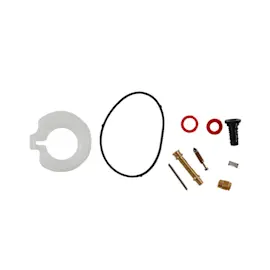
- Next-season start-up: If it will not start after storage, the carburetor may need cleaning before it will run reliably
Quick comparison: drain vs. leave fuel in
| Storage approach | Best for | Typical outcome |
|---|---|---|
| Run engine until it stops (fuel system empty) | 30+ day storage | Fewer no-start issues |
| Leave fuel sitting in tank/carburetor | Any long storage | Higher risk of clogging/corrosion |
Why it matters
Fuel-related problems are one of the top reasons a gas snowblower will not start after the off-season. Preventing varnish and corrosion helps protect the carburetor, reduces repair time, and gets your 536887752 ready for the first snowfall.
Last updated: January 2026
Who repairs Craftsman snow blowers?
For the Craftsman gas snow thrower model 536887752, we recommend using Sears Home Services for diagnosis and repair. They service Craftsman equipment and can handle common issues like no-start conditions, drive problems, and auger or chute performance concerns.
Best repair options for model 536887752
- Sears Home Services: Professional in-home or shop repair (where available)
- Local small-engine repair shops: Often service Craftsman snow throwers; confirm they work on 2-stage units
- DIY repair: Practical for routine maintenance and common wear items when you follow the safety steps in the manual
What to do before scheduling service
Quick checks that can save time
- Verify the ignition key is installed and controls are in the correct start position
- Check engine oil level and confirm you are using fresh, clean unleaded gasoline
- Inspect for obvious damage after hitting a foreign object (shear pins and belts are common wear points)
- Note symptoms: will not start, will not move, will not throw snow, abnormal vibration
Helpful info to have ready
| Item | Example for this unit | Why it matters |
|---|---|---|
| Model number | 536887752 | Ensures correct procedures and parts matching |
| Symptom | “Auger won’t engage” | Speeds up diagnosis |
| Recent event | “Hit a rock” | Points to shear pins, belts, auger damage |
Why it matters
Snow throwers like the Craftsman 536887752 use belts, cables, and shear pins that wear over time. Choosing a repair provider familiar with snowblower drive and auger systems helps get a safe, correct fix and reduces repeat failures.
For operating, safety, and maintenance guidance specific to this model, use the 536887752 operator's manual.
Last updated: January 2026