Installation guide
 Owner’s manual



What brand of dryer has the least problems?
Speed Queen dryers typically have the fewest problems over the long run because they are built for heavy-duty use and simpler serviceability. For a more mainstream option, Whirlpool, Maytag, and LG are commonly strong picks for reliability when the dryer is installed correctly and the venting is kept clear; use the DBVH520EJ2WW owner's manual to keep your GE dryer running its best.
What “least problems” usually comes down to
Reliability is driven as much by setup and maintenance as the logo on the front.
- Correct venting (short, smooth, not kinked)
- Regular lint removal and periodic vent cleaning
- Avoiding chronic overloading
- Stable power supply (proper breaker/fuse setup)
- Level installation to reduce vibration and wear
Brand comparison (typical ownership experience)
| Brand | Typical strengths | Typical tradeoffs |
|---|---|---|
| Speed Queen | Very durable, service-friendly | Higher upfront cost, fewer style features |
| Whirlpool / Maytag | Strong parts availability, solid reliability | Model-to-model variation |
| LG | Efficient, feature-rich, often reliable | Repairs can be more electronics-driven |
| GE | Good performance, widely supported | Reliability varies by series and usage |
How to reduce problems on your GE DBVH520EJ2WW
Even if you are comparing brands, these steps prevent the most common dryer complaints (long dry times, overheating, noise).
- Clean the lint filter every load; keep the screen housing clear
- Confirm the venting meets the DBVH520EJ2WW installation guide recommendations
- Clean the exhaust duct and inside exhaust connection at least yearly (qualified technician recommended)
- If drying times increase, check for crushed ducting and a stuck exterior damper
- If the dryer shakes, level it and adjust the leveling legs
Why it matters
Most “problem” calls trace back to airflow restrictions and installation issues, which can cause long dry times, extra wear on drum support parts, and nuisance shutdowns. A reliable brand choice helps, but good venting and maintenance protect any electric dryer.
Last updated: February 2026
What is the life expectancy of a GE dryer?
A GE electric dryer like model DBVH520EJ2WW typically lasts 10 years. With consistent venting and cleaning habits, it commonly reaches 12 to 15 years, because airflow restrictions and overheating are what shorten dryer life the fastest.
What most affects dryer lifespan
- Vent and duct condition (clogs make the heater and motor work harder)
- Lint filter cleaning before every load
- Load size (overloading strains the drum belt, idler pulley, and drum glides)
- Installation quality (proper power supply and grounding)
- Annual internal cleaning of the cabinet and exhaust connection by a qualified technician
Maintenance schedule we recommend
| Task | How often | Why it matters |
|---|---|---|
| Clean lint filter | Every load | Keeps airflow strong and reduces heat stress |
| Inspect and clean exhaust ducting | At least yearly | Prevents long dry times and overheating |
| Clean inside dryer and exhaust connection | At least yearly | Reduces lint buildup around moving and heating parts |
| Check venting to outdoors | Ongoing | Proper venting protects components and performance |
Parts that often wear first (and what symptoms look like)
If your DBVH520EJ2WW is otherwise heating and running but gets noisy, squeals, or stops tumbling, these common wear items are worth checking:
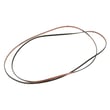
- Dryer drum belt WE03X29897 (drum will not turn, or intermittent tumbling)
- Idler pulley WE12X83 (squealing, belt slipping)
- Dryer drum glide bearing (green) WE03X37317 (scraping, thumping, drum drag)
Why it matters
Most “end of life” dryer complaints are really airflow and maintenance problems that cause longer dry times, higher temperatures, and extra strain on the heater circuit, motor, and drum support system. Following the cleaning guidance in the DBVH520EJ2WW owner’s manual keeps performance steady and extends service life.
Last updated: February 2026
What is the most common problem with a GE dryer?
The most common problem we see with a GE dryer like model DBVH520EJ2WW is poor drying or no heat caused by restricted airflow, usually from lint buildup or obstructed venting. This often shows up as long dry times, overheating, or the dryer shutting down on safety.
Quick checks that fix many “common” dryer problems
- Clean the lint filter before each load.
- Inspect the vent path for kinks, crushed flex duct, or a stuck outside damper.
- Clean the exhaust ducting at least once a year.
- Avoid overloading; heavy loads dry slower and can seem like a heating failure.
- If the dryer is shaking or noisy, level it; some noise is normal but an uneven dryer gets louder.
Common symptoms and the usual causes
| Symptom | Most common cause | What to do first |
|---|---|---|
| Takes too long to dry | Improper or obstructed ducting | Verify venting setup and clear lint restrictions |
| No heat or weak heat | Airflow restriction or heater circuit issue | Check venting, then test heater and thermostats |
| Won’t start | Door not fully closed, switch issue, power issue | Confirm door closure, then check the door switch |
| Thumping/squealing | Worn belt or pulley, drum support wear | Inspect belt and idler pulley for wear |
Parts that commonly fail when symptoms persist
If airflow is good and the problem continues, these are frequent wear or failure items on electric dryers:
- Dryer drum belt WE03X29897 (broken belt can stop tumbling)
- Idler pulley WE12X83 (squeal, poor tumbling, belt wear)
- Door switch WE4M415 (dryer may not start if the switch does not close)
- Heating components such as the heater and safety thermostat (often affected by overheating from poor venting)
Why it matters
Restricted airflow is the root cause behind many GE dryer complaints because it lengthens drying time and can trigger overheating protection, which then looks like a “no heat” or “dryer stops” problem.
Where to confirm model-specific care and venting guidance
Use the DBVH520EJ2WW owner’s manual and the DBVH520EJ2WW installation guide for the correct venting setup, cleaning intervals, and safety steps (including disconnecting power before maintenance).
Last updated: February 2026