Installation guide
 Owner’s manual


Can I replace dishwasher parts myself?
Yes, for KitchenAid KUDS30FXBL0 you can replace many common dishwasher parts yourself if you shut off power and water first and follow the correct steps. Mechanical items (rack hardware, door balance parts, hoses) are typically DIY-friendly; electrical wiring and control repairs require extra care.
What we consider DIY-friendly on KUDS30FXBL0
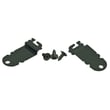
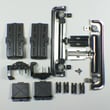
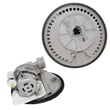
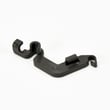
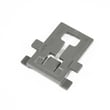
- Rack hardware and stops (for example, dishwasher dishrack slide rail stop, upper WPW10195622)
- Rack wheels and adjusters (for example, adjuster W10712394)
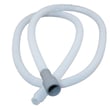
- Drain hose replacement (routing and clamps matter)
- Door balance parts (springs and links)
- Basic access panel removal and reinstallation
Safety steps we follow before any repair
- Turn off power at the breaker (do not rely only on the door switch)
- Shut off the water supply valve under the sink
- Protect the floor and pull the dishwasher out slowly so you do not kink the water line or drain hose
- Keep the power cord or wiring away from the motor and lower tub area
- Use proper grounding and never use an extension cord (per the installation instructions)
Quick “DIY or call a pro?” guide
| Repair type | Typical difficulty | Why |
|---|---|---|
| Rack parts (stops, wheels, adjusters) | Easy | No plumbing or wiring changes |
| Drain hose | Medium | Must avoid kinks, leaks, and bad routing |
| Door tension adjustment | Medium | Spring tension must match on both sides |
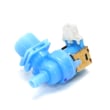
| Water inlet valve, pumps, wiring | Advanced | Electrical shock and leak risk if miswired/missealed |
Why it matters
A dishwasher that is not level, not centered, or has pinched hoses can leak, drain poorly, or have a door that falls open or will not latch correctly. Following the correct install and service steps prevents repeat failures.
For model-specific access, leveling, centering, and door spring tension steps, use the KUDS30FXBL0 installation guide.
Last updated: February 2026
How to fix rubber seal on KitchenAid dishwasher?
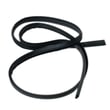
On the KitchenAid KUDS30FXBL0 dishwasher, a loose rubber door seal is usually fixed by fully seating the gasket into the door channel and then keeping the door closed so the seal “sets” evenly. Use steady pressure along the entire perimeter so it does not twist or buckle.
Quick fix steps (reseat the seal)
- Turn off power to the dishwasher at the breaker.
- Open the door and wipe the seal and the channel with a damp cloth; remove detergent residue and grit.
- Starting at the top center, press the gasket firmly into the channel a few inches at a time.
- Work evenly down both sides, then across the bottom; avoid stretching the rubber.
- Close and latch the door for several hours (overnight is ideal) to help the gasket conform.
If it still leaks after reseating
Most leaks after a “reseat” come from alignment or a damaged sealing surface.
- Check that the seal is not torn, flattened, or hardened.
- Confirm the door closes squarely and latches without needing extra force.
- Inspect the lower edge area for gaps; bottom leaks are often caused by a section not fully pressed into the channel.
- Make sure the dishwasher is centered in the cabinet opening so the door does not rub or bind.
Common symptoms and what they point to
| What you see | Most likely cause | What to do next |
|---|---|---|
| Drips at one corner | Seal not seated or twisted | Reseat that section and re-latch |
| Water along bottom edge | Lower section not fully in channel | Press in firmly across bottom |
| Door feels “off” or rubs | Unit not centered/level | Re-center and level per guide |
Why it matters
A properly seated door gasket keeps wash water inside the tub, protects the toe panel area from moisture, and helps prevent repeat leaks that can damage flooring.
Helpful references
- Use the KUDS30FXBL0 installation guide to confirm the dishwasher is centered and secured so the door closes without rubbing.
- If you need to remove panels for access during inspection, follow the safety and handling notes in the KUDS30FXBL0 owner’s manual.
Last updated: February 2026
What is the most common problem with a KitchenAid dishwasher?
The most common KitchenAid dishwasher problem is poor wash results or standing water caused by restricted water flow or drainage. On the KitchenAid KUDS30FXBL0, we see this most often when the filter area, spray paths, or drain route gets partially blocked, which reduces cleaning power and can leave water in the tub.
Most common symptoms customers notice
- Dishes come out gritty or still have food soil
- Cloudy glassware or detergent not fully dissolving
- Water left in the bottom after the cycle
- Humming or buzzing with little water movement
- Longer-than-expected cycle times (many modern cycles run 2 to 3 hours)
Quick checks that fix the majority of cases
Start with these no-parts steps before replacing anything:
- Confirm the water supply valve is fully open
- Make sure the door closes tightly and latches
- Run the shortest cycle and check for water in the tub after about 2 minutes
- Inspect the drain hose routing for kinks and make sure it has a proper high loop
- Clean the filter area and check spray arms for debris in the holes
When it is a part problem (common culprits)
If the basics check out, these parts commonly affect cleaning and draining on KUDS30FXBL0:
| Problem you see | Most likely area | Part that often solves it |
|---|---|---|
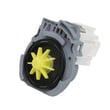
| Standing water, won’t drain | Drain system | Dishwasher drain pump WPW10348269 |
| Slow drain or intermittent drain | Drain path | Dishwasher drain hose 8269144A |
| Weak wash, poor circulation | Wash system | Dishwasher sump and motor assembly WPW10780877 |
| No heat, poor drying, lukewarm wash | Heating | Dishwasher heater W10703867 |
Why it matters
Restricted wash or drain performance forces the dishwasher to work harder, extends cycle time, and can leave detergent and soil behind. Fixing the root cause (blockage, hose routing, or a failing pump) restores normal water movement and cleaning.
Where to confirm model-specific steps
Use the KUDS30FXBL0 installation guide for drain and electrical requirements, and the KUDS30FXBL0 manual for cycle behavior and operating checks.
Last updated: February 2026
What's the average lifespan of a KitchenAid dishwasher?
A KitchenAid dishwasher typically lasts 10 to 14 years with normal household use. For your KitchenAid KUDS30FXBL0 undercounter dishwasher, consistent cleaning, correct loading, and fixing small issues early (drain, heating, or water-fill problems) helps it reach that lifespan.
What affects dishwasher lifespan most
- Water quality: hard water speeds up mineral buildup on the heater and internal parts.
- Maintenance habits: keeping the sump area clean and using rinse aid improves performance.
- How often you run it: multiple loads per day shortens overall service life.
- Drying and heating performance: weak heating can leave moisture that contributes to odor and residue.
- Drain health: slow draining strains the drain pump and can leave dirty water behind.
Quick maintenance checklist (high impact)
- Use rinse aid regularly; many energy-efficient dishwashers rely on it for drying and deposit control.
- Run hot water at the sink before starting a cycle to improve wash results.
- Check for standing water after a cycle; address slow drains promptly.
- Keep spray arms clear of labels, seeds, and broken glass.
- Follow the cleaning and care steps in the KUDS30FXBL0 owner’s manual.
Common “end-of-life” symptoms and likely areas
| Symptom | What it often points to | Example part for this model |
|---|---|---|
| Water left in tub | Drain restriction or weak drain pump | Dishwasher drain pump WPW10348269 |
| Poor drying, cool dishes | Heating circuit or heater issue | Dishwasher heater W10703867 |
| Dishes not getting clean | Wash motor/sump issues, sensor issues | (Inspect sump, spray arms, and wash action) |
Why it matters
Dishwashers are designed to run longer, energy-saving cycles (often 2 to 3 hours per load). When cleaning, heating, and draining stay strong, the machine runs efficiently and avoids the extra wear that comes from repeated re-washes and heavy buildup.
Last updated: February 2026