Installation guide
 Owner’s manual
 Error Codes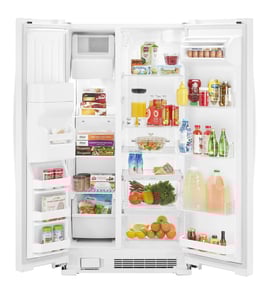
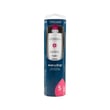


Where is the model number on a Kenmore side by side refrigerator?
On Kenmore side-by-side refrigerator model 10653652300, the model number is printed on the model and serial number label located on the inside wall of the refrigerator (fresh food) compartment. Use that label any time you order parts or schedule service; see the 10653652300 owner's manual.
Where to look (fast checklist)
- Open the refrigerator (fresh food) door.
- Look along the inside side walls of the fresh food compartment.
- Check near the upper area of the compartment wall where labels are easiest to read.
- If you do not see it right away, look behind items on the top shelf area.
- Write down both the model number and serial number from the same label.
What the label information is used for
The model and serial label helps us match the correct Kenmore parts and diagrams for your exact build.
| Label item | What it tells us | Why it matters |
|---|---|---|
| Model number (10653652300) | Exact design and parts list | Ensures correct fit and compatibility |
| Serial number | Production details | Helps narrow down version changes |
| Purchase date (if recorded) | Ownership record | Useful for maintenance history |
Why it matters
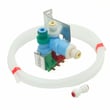
Kenmore side-by-side refrigerators often have similar-looking shelves, bins, and water system parts across model families. Using the exact model number helps avoid ordering the wrong item, such as a water component like the refrigerator inlet valve W10408179.
Last updated: February 2026
What's better, a side-by-side or a French door refrigerator?
For most kitchens, neither style is universally “better”; it depends on how you shop and cook. A side-by-side like Kenmore 10653652300 makes freezer items easier to organize and reach, while French door models usually fit wide platters and large fresh-food items more comfortably.
Quick comparison
| Feature | Side-by-side | French door |
|---|---|---|
| Fresh-food space | Narrower shelves; tall items fit well | Wider shelves; better for platters and pizza boxes |
| Freezer access | Eye-level shelves; easy organization | Bottom drawer; can require more bending |
| Kitchen fit | Works well in tighter aisles | Often needs more door-swing clearance |
| Typical cost | Often lower | Often higher |
Choose a side-by-side when
- You use the freezer daily and want shelves at eye level.
- Your kitchen has a narrow walkway and you want slimmer door swing.
- You like separating frozen foods into multiple shelves and bins.
- You want a familiar layout for ice and water dispensing.
Choose a French door when
- You store wide items often (party trays, sheet pans, large produce bins).
- You want the refrigerator compartment at eye level most of the time.
- You prefer a larger, more open fresh-food layout.
Why it matters for installation and day-to-day use
Clearance and door swing can be the deciding factor. For side-by-side refrigerators, we follow the spacing and placement guidance in the 10653652300 owner's manual so doors open fully and airflow stays unobstructed.
Practical tip
Before choosing, measure your tightest spot (doorway, island clearance, and where the doors will swing) and compare it to the refrigerator’s required clearances.
Last updated: February 2026
How wide is a Kenmore side-by-side refrigerator?
Most Kenmore side-by-side refrigerators are about 32 to 36 inches wide; your Kenmore model 10653652300 falls in that common size range, but the exact cabinet width is best confirmed in the 10653652300 owner's manual.
Typical width ranges (what you can expect)
Side-by-side refrigerators are built in a few common widths. Use this to plan space, then confirm the exact spec in the manual.
- 32 to 33 inches: narrower side-by-side models
- 35 to 36 inches: most full-size side-by-side models
- Counter-depth versions: often still 35 to 36 inches, but shallower front-to-back
| Refrigerator type | Typical width | Best use case |
|---|---|---|
| Narrow side-by-side | 32 to 33 in. | Tight kitchen openings |
| Standard side-by-side | 35 to 36 in. | Most installations |
| Counter-depth side-by-side | 35 to 36 in. | Flush look with cabinets |
Don’t forget clearance for doors and airflow
Even when the cabinet fits, you still need room for ventilation and door swing. For Kenmore 10653652300 installation planning, we follow the spacing guidance in the manual.
- Allow 1/2 inch of space on each side and at the top for ventilation
- If installed next to a fixed wall, leave at least 2 inches on the hinge side (door swing clearance varies by setup)
- If the refrigerator has an ice maker, allow extra space behind for the water line
- Measure the opening at top, middle, and bottom; walls are often not perfectly square
- Plan for the handles and the doors to clear nearby cabinets and countertops
Why it matters
Width is only part of fit. A side-by-side that is “the right width” can still bind on a wall, scrape cabinets, or run hot if airflow is restricted. Confirming the exact width and required clearances prevents installation problems and cooling issues.
Last updated: February 2026
What are the most common problems with Kenmore refrigerators?
The most common problems we see on Kenmore refrigerators like model 10653652300 are cooling issues (often airflow or defrost related), water dispenser or ice maker troubles, leaks, and unusual noises. Many fixes start with basic checks in the 10653652300 owner's manual and then testing key components such as fans, the defrost system, and water supply parts.
Common problems and what usually causes them
- Not cooling or warm temperatures: dirty condenser coils, failed condenser fan, failed evaporator fan, or a defrost failure causing ice buildup.
- Refrigerator runs but doesn’t seem cold enough: blocked air vents, doors opened often, or controls not set correctly.
- Water dispenser slow or stops: clogged or misinstalled filter, air in water lines after filter changes, or a weak inlet valve.
- Water or ice leaking at the dispenser: ice stuck in the chute holding the trap door open, or air in the lines causing dripping.
- Unit won’t run at all: power cord unplugged, tripped breaker, controls set to OFF, or the unit is in a normal defrost cycle.
Quick checks we recommend first
- Confirm power and controls; the manual notes checking the outlet, fuse/breaker, and control settings.
- Listen for fan operation; a failed fan can cause warm temps and noise changes.
- If water flow drops, remove and reinstall the filter correctly, then flush the system.
- If the dispenser drips after a filter change, flush water; normal use typically clears air within 24 to 72 hours.
- If ice spills, hold the glass under the chute 2 to 3 seconds after releasing the lever.
Parts that commonly solve these symptoms
| Symptom | Common part involved | Example part for 10653652300 |
|---|---|---|
| No water to dispenser or ice maker | Water inlet valve | Refrigerator inlet valve W10408179 |
| Slow water flow, dripping after service | Filter housing or water line issue | Refrigerator water filter housing WP2186443 |
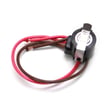
| Frost buildup, warm freezer | Defrost thermostat or heater | Refrigerator defrost bi-metal WPW10225581, refrigerator heater WP2323198 |
Why it matters
Cooling, defrost, and water supply problems can cascade. For example, a defrost issue can restrict airflow and make the refrigerator run longer, while a water restriction can reduce ice production and cause dispenser complaints.
Last updated: February 2026
What causes a side-by-side refrigerator to stop cooling?
When a Kenmore side-by-side refrigerator model 10653652300 stops cooling, the most common causes are loss of power, controls set to OFF or incorrectly set, blocked air vents that prevent cold-air circulation, or dirty condenser coils that reduce heat transfer. Start with the quick checks in the 10653652300 owner's manual.
Quick checks (fastest fixes first)
- Confirm the power cord is fully plugged into a grounded 3-prong outlet.
- Check the home breaker or fuse; reset or replace if needed.
- Make sure the refrigerator and freezer controls are not set to OFF.
- If your model has digital controls, turn the unit OFF then ON to reset.
- Look for packages blocking air vents in either compartment; clear the airflow path.
- Verify both doors close firmly and completely.
Airflow and heat removal problems
Cold air has to move from the freezer into the fresh-food section, and heat has to leave through the condenser area. If either is restricted, temperatures rise.
| Symptom you notice | Likely cause | What to do next |
|---|---|---|
| Freezer cold, fridge warm | Blocked vents or airflow issue | Clear vents; avoid overpacking; allow space around vents |
| Both sections warm | Dirty condenser coils or control/power issue | Clean condenser coils; verify controls and power |
| Temps drift up after loading groceries | Warm food load or frequent door openings | Limit door openings; allow several hours to recover |
When it points to a part problem
If power, settings, vents, and coils check out, cooling can still fail due to a defrost system issue (ice buildup restricting airflow) or a sealed-system/fan problem. For water-related symptoms that sometimes get confused with “not cooling” (no ice, no water dispensing), a failed inlet valve can also be involved.
- Heavy frost on the freezer back wall: defrost system likely needs attention (for example, refrigerator defrost bi-metal WPW10225581 or refrigerator heater WP2323198).
- No ice and no water: check the shutoff valve and supply line; then consider the refrigerator inlet valve W10408179.
- Fan noise changes when doors open, or no fan sound at all: airflow components may need diagnosis.
Why it matters
A refrigerator that is not cooling can spoil food quickly, and restricted airflow or dirty condenser coils can make the compressor run longer and harder, increasing energy use and wear.
Last updated: February 2026
What's the average lifespan of a Kenmore refrigerator?
Most Kenmore refrigerators last 10 to 15 years on average; a well-maintained Kenmore 10653652300 side-by-side often reaches the upper end of that range when airflow, door sealing, and defrost performance stay in good shape. For model-specific care steps, follow the 10653652300 owner's manual.
Typical lifespan and what affects it
A refrigerator’s life is mostly determined by how hard the sealed system and fans have to work day to day.
- Condenser coil cleanliness (dirty coils raise compressor run time)
- Door gasket condition (air leaks cause temperature swings and moisture)
- Room conditions (high heat or humidity increases workload)
- Usage habits (frequent door openings, overpacking, blocking vents)
- Timely repairs (fixing small issues before they strain the compressor)
Maintenance checklist that helps you hit 15+ years
Use these as your baseline routine for a Kenmore side-by-side:
- Vacuum and brush condenser coils regularly
- Keep doors closing squarely; avoid slamming or hanging on the handles
- Confirm the freezer and fresh food vents are not blocked by food packages
- Clean spills promptly to prevent odors and airflow restriction
- Replace worn door gaskets if you feel cold air leaking
Quick guide: symptoms that shorten lifespan
| What you notice | What it usually means | What to do next |
|---|---|---|
| Warm fridge, freezer OK | Airflow or diffuser issue | Check vent blockage; inspect the air diffuser area |
| Frost buildup, warming temps | Defrost system problem | Inspect defrost components and airflow |
| Water under fridge | Drain or water supply issue | Check drain path and water line connections |
| Long run times, hot cabinet sides | Dirty coils or poor ventilation | Clean coils; ensure clearance around cabinet |
Why it matters
When a refrigerator runs longer to hold temperature, it accelerates wear on the compressor, fans, and controls. Simple care steps from the manual (cleaning, correct control settings, and troubleshooting guidance) reduce that workload and extend service life.
Last updated: February 2026
How to tell if a Kenmore refrigerator compressor is bad?
If your Kenmore refrigerator model 10653652300 is warm or not holding temperature and you hear repeated clicking, loud pulsing, or the unit runs for long periods without cooling, the compressor or its start components are failing. Confirm by ruling out airflow, defrost, and power issues first using the 10653652300 owner's manual.
What you should check first (fast, no tools)
- Make sure both compartments have airflow; blocked vents can mimic compressor failure.
- Listen for normal operating sounds; this model can run longer and may make pulsating or high-pitched compressor sounds during efficient operation.
- Check the condenser area for heavy dust and confirm the condenser fan runs when the compressor is trying to run.
- Verify doors seal and close fully; warm air leaks cause long run times.
- If you have an ice maker, note that buzzing during fills is normal and points to the water valve opening, not a compressor issue.
Symptoms that point strongly to a compressor or start problem
- Clicking every few minutes with little or no cooling (often a start device/overload issue).
- Compressor very hot to the touch and shutting off, then trying again.
- Compressor silent while interior lights work and fans may run (possible control or start circuit issue).
- Runs constantly but freezer never gets to 0°F and fresh food never gets to 37°F.
Quick decision guide
| What you observe | Most likely area | What to do next |
|---|---|---|
| Clicking, then stops | Start components or compressor locked | Have a tech test compressor amperage and start circuit |
| Runs, but weak cooling | Sealed system restriction/leak or compressor wear | Professional sealed-system diagnosis |
| Frost/ice buildup, poor airflow | Defrost system | Check defrost heater and defrost thermostat |
| No cooling and no fans | Power/control issue | Check outlet, controls, and wiring per manual |
Parts that can mimic “bad compressor” symptoms
On model 10653652300, these common cooling-related parts can cause warm temps even when the compressor is OK:
- Refrigerator defrost bi-metal WPW10225581 (defrost thermostat)
- Refrigerator heater WP2323198 (defrost heater)
- Refrigerator condenser fan W10181323 (moves air across condenser)
Why it matters
A compressor replacement is a sealed-system repair; it is higher cost and requires specialized tools. Checking airflow, defrost performance, and condenser cooling first prevents replacing the wrong part and gets your Kenmore refrigerator cooling reliably again.
Last updated: February 2026
What is the cubic foot of my Kenmore refrigerator model 10653652300?
Your Kenmore refrigerator model 10653652300 has an approximate total capacity of 21.9 cubic feet. This is the combined fresh food and freezer volume, and it helps you compare storage space when choosing shelves, bins, and organizing food.
How to confirm capacity for your exact configuration
We recommend checking the capacity listing in the 10653652300 owner's manual. Some versions of the same model family can have small differences based on features (ice maker, dispenser setup, or interior trim).
Typical places to find the capacity information:
- Product specifications section
- Model identification or product record pages
- Feature overview pages
- Energy or performance information pages
Why cubic feet matters (and when it does not)
Capacity is mainly a shopping and organization spec; it does not change cooling performance by itself. It is most useful when you are comparing side-by-side refrigerators or planning how much food you can store.
- Helps estimate weekly grocery storage
- Helps plan shelf and bin layout (crisper, meat pan, door bins)
- Helps compare similar Kenmore side-by-side refrigerators
- Helps set expectations for freezer width versus fresh food width
Quick reference: what “21.9 cu. ft.” means
| Spec | What it tells you | What it does not tell you |
|---|---|---|
| Total capacity (cu. ft.) | Overall interior volume | Exact shelf space or bin shapes |
| Fresh food vs. freezer split | How space is divided | How evenly air circulates |
| Usable space | What you can actually fit | Not always listed in specs |
Related parts that affect usable storage (not capacity)
If you are trying to restore storage space (cracked pans, missing shelves), these common items can help:
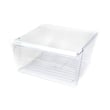
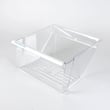
- Refrigerator crisper pan WP2188656
- Refrigerator meat pan WP2188664
- Refrigerator glass shelf WPW10141748
Why it matters
Knowing the cubic feet for model 10653652300 helps you set realistic storage expectations and choose replacement shelves and pans that match the original interior layout.
Last updated: February 2026