Error Codes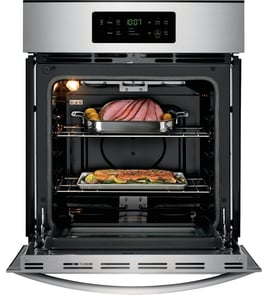



What is the best brand for electric wall ovens?
There is no single “best” brand for every kitchen; the best electric wall oven brand is the one that matches your cooking needs, cutout size, and serviceability. For a Dcs wall oven like model WOU230SS-88493A, we recommend comparing features (convection, self-clean, controls) and long-term parts support before choosing.
How we recommend choosing the best wall oven brand
Use these factors to narrow brands and specific models:
- Fit first: confirm cabinet cutout height, width, and depth before shopping.
- Cooking performance: look for true convection, even baking, and strong broil output.
- Controls: knobs vs touch, display readability, and preheat behavior.
- Cleaning: self-clean vs steam-clean, and how easy the door glass is to wipe.
- Reliability and service: local technician availability and parts access.
- Features you will actually use: probe, air fry modes, smart features, Sabbath mode.
Brand comparison checklist (quick view)
| What you care about most | What to prioritize | What to watch for |
|---|---|---|
| Even baking | Convection fan design, multiple rack positions | Hot spots, weak fan circulation |
| Easy ownership | Strong parts availability, common components | Hard-to-source boards, long lead times |
| Simple operation | Straightforward controls, clear display | Overly complex menus |
| Easy cleaning | Durable interior finish, effective self-clean | Door lock issues, staining |
Why it matters
Wall ovens are built-in appliances; a “great” brand on paper can become a poor choice if it does not fit your cutout or if key components (like a control board, temperature sensor, or door latch) are difficult to service. Comparing brands through the lens of installation fit and repair support helps you avoid expensive rework later.
Helpful DIY resource (for ownership and repairs)
If you plan to maintain or troubleshoot an electric wall oven over time, basic electrical testing skills help you diagnose issues like no-heat, intermittent heating, or dead display.
Last updated: February 2026
What are the electrical requirements for a single wall oven?
For the Dcs WOU230SS-88493A electric wall oven, a typical single wall oven installation uses a dedicated single-phase 120/240V or 120/208V, 60 Hz AC supply on a separate circuit protected by a time-delay fuse or circuit breaker; wiring is commonly 3-wire or 4-wire depending on the home’s setup.
Typical electrical supply and wiring
Most single electric wall ovens are designed to work with either of these supply types:
- 120/240 VAC, 60 Hz, single-phase (common in many homes)
- 120/208 VAC, 60 Hz, single-phase (common in some condos and multi-unit buildings)
- 3-wire or 4-wire connection (4-wire is common in newer installations)
- Separate, dedicated circuit (no other appliances on the same breaker)
- Overcurrent protection on both sides of the line (breaker or time-delay fuses)
What to verify before you install or troubleshoot
Because the exact breaker size and wire gauge depend on the oven’s rated load, we recommend confirming these items before installation or when diagnosing power issues:
- The home supply voltage (240V vs 208V)
- The circuit is dedicated to the oven
- The junction box and cable are sized for the oven’s amperage
- The grounding method matches the wiring type (3-wire vs 4-wire)
- The breaker is not tripping and is correctly seated
Quick reference table
| Item to check | What “correct” usually looks like | Why it matters |
|---|---|---|
| Supply voltage | 120/240V or 120/208V | Wrong voltage can cause weak heating or no heat |
| Frequency | 60 Hz AC | Ensures controls and heating operate normally |
| Circuit type | Dedicated, single-phase | Prevents overloads and nuisance trips |
| Connection | 3-wire or 4-wire | Affects grounding and neutral configuration |
Why it matters
Wall ovens draw high current, especially during preheat and self-clean (if equipped). A dedicated, correctly protected circuit helps prevent breaker trips, slow heating, control resets, and wiring overheating.
Helpful DIY resource
If you need to confirm power at the junction box or test components safely, use a meter and follow safe practices in how to use a multimeter to test electrical parts video.
Last updated: February 2026
What are the parts of an oven called?
Ovens like the Dcs WOU230SS-88493A wall oven are made up of a cabinet, a heated cooking cavity, and a set of electrical and mechanical components that control heat, airflow, lighting, and the door. Most customers refer to these components by common names such as elements, thermostat, control board, and door parts.
Common oven parts and what they do
Here are the most common names you will hear for wall oven components:
- Oven door assembly: door glass, hinges, handle, and gasket that seal heat in
- Oven racks: support cookware at different rack positions
- Bake element: primary heat source for baking (typically at the bottom)
- Broil element: high heat for broiling (typically at the top)
- Temperature sensor (probe): tells the control how hot the oven is
- Electronic oven control (control board) and touch panel: sets modes, times, and temperature
- Convection fan (if equipped): circulates hot air for more even baking
- Oven light and lens/cover: illuminates the cavity and protects the bulb
Quick “name map” (common terms)
| What you see or experience | Common part name | What it affects |
|---|---|---|
| Oven will not heat in bake | Bake element, control board, sensor | Baking temperature |
| Oven will not broil | Broil element, control board | Top heat |
| Uneven cooking | Convection fan, sensor, door gasket | Heat distribution |
| Door will not close or drops | Door hinges, hinge receivers | Door alignment and seal |
| Light out | Light bulb, socket, lens | Visibility |
How to identify the right part name before ordering
Because part naming can vary by brand and design, we recommend using a consistent checklist:
- Confirm the full model number on the rating plate: WOU230SS-88493A
- Describe the symptom (no heat, uneven heat, door issue, no display)
- Note which mode fails (bake, broil, convection)
- Look for visible damage (blistered element, torn gasket, loose hinge)
- If testing electrical parts, use a meter and follow safe practices from are diy appliance repairs safe
Why it matters
Using the correct part name helps you troubleshoot faster and prevents ordering the wrong component. For example, “thermostat” is often used casually, but many modern wall ovens actually regulate temperature using a sensor probe and an electronic control board.
Last updated: February 2026
How to replace wall oven control board?
To replace the control board on your Dcs wall oven model WOU230SS-88493A, we turn off power at the breaker, pull the oven forward enough to reach the control compartment, then move each wire connector to the new board one at a time to prevent mix-ups.
Safety first (wall ovens are high voltage)
- Switch OFF the dedicated oven breaker (most wall ovens use 240 volts).
- Verify power is off with a multimeter before touching wiring.
- Let the oven cool completely.
- Wear cut-resistant gloves; sheet metal edges are sharp.
- Support the oven securely before sliding it out of the cabinet.
Typical control board replacement steps
- Turn off the breaker and confirm the display is dark.
- Remove the oven door (if your hinge style allows) to reduce weight.
- Remove the mounting screws that secure the oven to the cabinet.
- Slide the oven forward onto a sturdy support at cabinet height.
- Remove the control area cover (often the top cover or rear control shield, held by multiple screws).
- Take clear photos of all connectors.
- Transfer wires one connector at a time from the old board to the new board.
- Reinstall the cover, slide the oven back, reinstall mounting screws and the door, then restore power.
What to label or photograph
- Harness plugs and their positions
- Any single-wire spade terminals
- Ground wire locations
- Ribbon cable orientation (if present)
Quick checks before restoring power
| Check | What we look for |
|---|---|
| Wiring | Fully seated connectors, correct positions |
| Routing | No pinched wires under covers |
| Mounting | Board secured, no loose screws |
| Reinstall | Oven anchored to cabinet before use |
Why it matters
The control board manages heating, timing, and safety logic. Correct wiring and secure connections prevent no-heat problems, dead displays, nuisance error beeps, and blown fuses.
For safe electrical testing during this repair, use how to use a multimeter to test electrical parts video.
Last updated: February 2026