Installation guide
 Owner’s manual
 Error Codes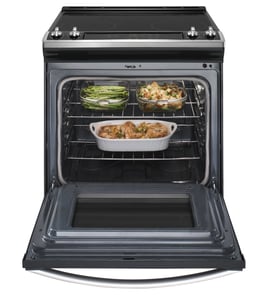


What is the life expectancy of a KitchenAid range?
KitchenAid ranges like model KSEG700ESS3 have a typical life expectancy of 13 to 15 years. Consistent cleaning, avoiding overheating, and addressing small issues early (like uneven baking or weak heating) are the biggest factors in getting the full lifespan from an electric slide-in range.
- Heat stress: frequent high-heat broiling and self-clean cycles can shorten component life.
- Spillovers and corrosion: baked-on spills can damage finishes and affect heating performance.
- Electrical supply quality: loose connections or miswiring can cause control and heating issues.
- Ventilation and airflow: blocked vents can raise internal temperatures.
- Maintenance habits: regular cooktop and oven care reduces wear.
Use the care and cleaning guidance in the KSEG700ESS3 user guide to keep performance steady.
- Clean the ceramic glass cooktop with non-abrasive methods (scraper and approved cleaner).
- Wipe out the oven after heavy spills so soils do not bake on.
- Avoid lining the oven bottom with foil (it can cause heat problems).
- Let the oven fully preheat before loading food to reduce extended element run time.
- Keep the oven vent area clear so hot air can escape.
| Symptom | Often repairable? | Typical next step |
|---|---|---|
| Oven not heating evenly | Yes | Inspect/replace bake element |
| Cooktop element stuck on or won’t heat | Yes | Check infinite switch or surface element |
| Display or keypad not responding | Often | Check keypad/control components |
| Heavy rust, insulation breakdown, repeated major failures | Sometimes not cost-effective | Compare repair cost vs replacement |
Knowing the expected lifespan helps you decide when routine maintenance is enough versus when a targeted repair (like a heating or control component) can extend the useful life of your KitchenAid range.
Last updated: January 2026
Is the KSEG700ESS worth the money?
For the KitchenAid KSEG700ESS3 electric slide-in range, it’s worth the money when you’ll use its everyday cooking features (consistent baking, convection options, and a ceramic glass cooktop) and you want a model with strong long-term serviceability through replaceable parts. Review the feature set in the KSEG700ESS3 user manual to confirm it matches how you cook.
This model’s documentation highlights features that typically drive value for frequent cooks.
- AquaLift® self-cleaning technology (lower-temp, water-assisted cleaning)
- Convection cooking modes for more even baking and roasting
- Steam bake capability (uses a steam rack with water reservoir)
- Ceramic glass cooktop with multiple element options (including warm zone)
- Electronic oven controls with settings like Energy Save and control lock
Use this to decide if KSEG700ESS3 fits your kitchen and habits.
- You bake or roast weekly and care about repeatable results
- You want convection and steam bake options for bread, pastries, or roasts
- You prefer a smooth-top electric cooktop and will maintain it properly
- You want a range that can be repaired with model-specific replacement parts
- You plan to keep the range 8 to 12 years
A range can be a better value when common wear items are replaceable instead of forcing a full appliance replacement.
| If this happens | Typical fix | Example compatible part for this model |
|---|---|---|
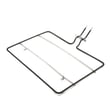
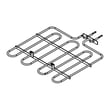
| Oven not heating evenly or not heating | Inspect and replace bake element | Bake element W10779716 |
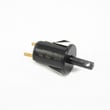
| Cooktop element won’t regulate heat | Test and replace infinite switch | Range infinite switch W10917724 |
| Oven control issues (display, timing, functions) | Diagnose control and keypad circuits | (Check the parts list for your exact symptom) |
“Worth it” is usually about total cost over time: cooking performance you’ll actually use, plus the ability to maintain the range with correct KitchenAid parts when something wears out.
Last updated: January 2026
Why is my oven suddenly not getting power?
If your KitchenAid KSEG700ESS3 electric range suddenly has no oven power, start with the home power supply and control settings. A tripped 2-pole breaker, a loose cord/terminal connection, Energy Save mode, or Control Lock can make the oven seem dead even when nothing is broken.
- Reset the range breaker fully OFF, then back ON (most ranges use a 2-pole breaker).
- If cord-connected, confirm the plug is fully seated and the cord is not damaged.
- Wake the display: press any keypad; Energy Save can blank the display after inactivity.
- Make sure Control Lock is off (keys will not respond when locked).
- After a power loss, press CANCEL UPPER to clear the flashing display.
Control and display behavior for this model is covered in the KSEG700ESS3 user manual.
| Symptom | Most likely cause | Best next step |
|---|---|---|
| No display, no beeps | Breaker, outlet, cord/terminal connection | Verify power at the supply; reset breaker |
| Display on, oven will not heat | Heating circuit or control | Inspect bake element; check for error codes |
| Cooktop works, oven does not | Oven circuit component or control | Inspect element; consider control diagnosis |
A failed bake element is a common cause on electric ranges.
- Look for blisters, cracks, or burn spots on the lower element.
- If damaged, replace the element.
- If it looks normal, the issue can be wiring, a safety device, or the electronic control.
For this model, the compatible part is the bake element W10779716.
Power-loss symptoms can mimic a bad control board. Checking the breaker, modes (Energy Save/Lock), and obvious heating failures first helps prevent unnecessary parts replacement.
Last updated: January 2026
What is the KSEG700ESS's cooking power?
For KitchenAid model KSEG700ESS3, “cooking power” is measured in watts (W) for the radiant cooktop elements and kilowatts (kW) for the range’s total electrical load, not BTU. The exact element-by-element watt ratings aren’t specified in the model-specific documents we have; use the rating plate and the KSEG700ESS3 user guide to confirm the numbers for your unit.
KSEG700ESS3 is the exact model covered here. If your label shows KSEG700ESS (without the “3”), it’s typically a closely related revision, but we still recommend verifying power ratings from your appliance’s rating plate.
- Open the oven door and locate the model/serial/rating plate on the oven frame (top-right area behind the door).
- Look for the total connected load listed in kW (often shown for 120/240V and sometimes 120/208V).
- Check the manual’s feature and operation sections for how the Rapid boil, Triple zone, and Melt elements behave (they cycle to regulate heat).
- Match cookware size to the element to get the best real-world performance.
- If you’re installing or verifying electrical supply, follow the circuit guidance in the KSEG700ESS3 installation instructions.
| What you’re measuring | Unit | What it affects |
|---|---|---|
| Cooktop element output | W | Boil speed, searing, simmer control |
| Oven heat output | W | Preheat and temperature recovery |
| Total range load | kW | Circuit sizing and wiring requirements |
BTU ratings are for gas burners. KSEG700ESS3 is an electric slide-in range, so using a “5,000 to 17,000 BTU” range would be comparing it to a different type of appliance.
Using the correct watt and kW ratings helps you set realistic performance expectations, choose cookware that heats evenly on radiant elements, and confirm your home’s electrical supply matches the range’s requirements.
Last updated: January 2026