Owner’s manual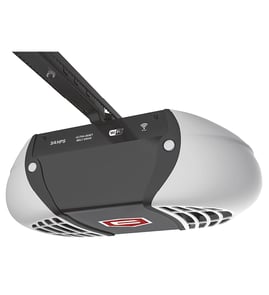


How do I pair my remote to my garage door opener?
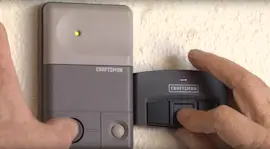
To pair a remote to your Chamberlain 2280-976 garage door opener, we use the opener’s Learn button on the motor unit to put it in programming mode, then press the remote button within about 30 seconds until the opener confirms the new code (lights flash or you hear clicks). For model-specific button locations, use the owner's manual.
Quick pairing steps (most Chamberlain openers)
- Make sure the door is closed and the opener has power.
- Locate the Learn button on the motor unit (often behind the light lens or a small cover).
- Press and release Learn; an indicator light typically turns on or starts blinking.
- Within about 30 seconds, press and hold the button on the remote you want to use.
- Release when the opener confirms programming (light flash and/or clicking sound).
- Test the remote from inside the garage.
If it won’t pair
- Replace the remote battery and try again.
- Move closer to the motor unit; interference can reduce range.
- Confirm you are pressing Learn (not a force or travel adjustment control).
- Clear the opener’s memory (if needed), then reprogram all remotes and keypads.
- If the opener lights blink in a pattern, match the pattern to a diagnostic code using Chamberlain error codes.
What you should see (common confirmations)
| What you do | What the opener does | What it means |
|---|---|---|
| Press Learn | LED turns on/blinks | Opener is ready to learn a remote |
| Press remote button | Lights flash or you hear clicks | Remote code stored |
| Press remote again | Door moves | Pairing successful |
Why it matters
Pairing the remote correctly ensures the opener’s receiver and the remote share the same rolling-code signal, which prevents random operation and restores reliable open/close control.
Last updated: February 2026
What is the average lifespan of a 2280-976 garage door opener?
A Chamberlain 2280-976 garage door opener typically lasts 10 to 15 years under normal residential use. Lifespan depends most on how often the door cycles, how well the door is balanced, and whether routine maintenance (lubrication, sensor alignment, force settings) is kept up.
Typical lifespan and what affects it
Most openers wear out from repeated cycling and extra strain caused by a heavy or binding door.
- Daily use: More open/close cycles shortens motor and gear life
- Door balance: A poorly balanced door overloads the opener
- Drive type: Belt drives often run smoother and can reduce vibration-related wear
- Environment: Heat, cold, and humidity can age plastic gears and electronics faster
- Maintenance: Lubrication and periodic checks reduce strain and noise
Signs it is nearing end of life
If you see multiple symptoms together, repairs become less cost-effective.
| Symptom | Common cause | What to check first |
|---|---|---|
| Door reverses or stops | Force/travel out of adjustment, door binding | Door balance and track movement |
| Grinding/clicking noises | Worn gears/sprocket, loose hardware | Rail, chain/belt tension, mounting |
| Remote range drops | Antenna/wall control issues, interference | Reprogram remotes, inspect wiring |
| Lights blink repeatedly | Safety sensor or control fault | Sensor alignment and obstructions |
Maintenance that extends lifespan
We recommend doing these basics a few times per year.
- Test door balance (disconnect trolley and lift by hand; it should stay near mid-travel)
- Tighten opener mounting and rail fasteners
- Clean and align safety sensors; keep lenses clear
- Lubricate door rollers/hinges (avoid getting lubricant on sensor lenses)
- Verify force and travel settings match the door’s movement
Why it matters
A well-balanced, smoothly moving garage door reduces load on the motor, gears, and logic board. That directly improves reliability, reduces nuisance reversals, and helps your 2280-976 reach the upper end of the 10 to 15 year range.
For model-specific adjustment points and safety checks, follow the 2280-976 owner's manual. For troubleshooting blink patterns and diagnostics, use Chamberlain error codes.
Last updated: February 2026
How do I identify my 2280-976 model?
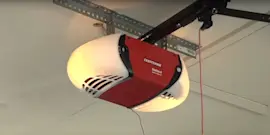
To identify a Chamberlain 2280-976 garage door opener, we look for the model/serial label on the opener’s motor unit (power head). It’s typically on a sticker under the light lens or on the side of the housing near the antenna or an access cover.
Where to look on the opener (power head)
Check these common label locations on the Chamberlain motor unit:
- Under the front light lens (remove the lens cover to view the label)
- On the side panel of the motor unit (often opposite the hanging antenna wire)
- Behind a small access door or end cover on the housing
- Near the logic board area (after removing the light cover, if equipped)
- On the ceiling-mounted rail support area close to the motor unit (less common)
For model confirmation details and diagrams specific to your unit, use the 2280-976 owner's manual.
If you are checking a remote or wall control
The opener model number (2280-976) is on the motor unit, but remotes and wall controls also have their own model numbers. When you’re trying to match accessories:
- Look on the back of the remote for a sticker
- Remove the visor clip if it covers the label
- Check inside the battery compartment for a printed ID
- For a wall control, check behind the faceplate (power off first)
Quick ID checklist (what to write down)
Use this list so you have everything needed to match parts and troubleshooting steps:
| Item | What to record | Where you’ll find it |
|---|---|---|
| Opener model | 2280-976 | Motor unit label |
| Serial number | Alphanumeric code | Same label as model |
| Remote model | Remote ID | Back or battery compartment |
| Symptoms | Lights blinking, won’t close, etc. | Observed behavior |
Why it matters
The exact model number (2280-976) determines which safety sensors, wall control, remote programming steps, and diagnostic blink patterns apply. If you’re seeing flashing lights or diagnostic codes, our Chamberlain error codes guide helps you match the pattern to the right fix.
Last updated: February 2026
How to reset and program 2280-976 garage door opener?
To reset and program your Chamberlain 2280-976 garage door opener, we erase the opener’s stored remote codes (reset) and then re-learn each remote and keypad (program). This is the right fix when remotes won’t work, you replaced a remote, or you want to remove old devices.
Reset (erase all remotes/keypads)
Use this when you want a “fresh start.” After this, every remote and keypad must be programmed again.
- Close the garage door and keep people and pets clear of the opening.
- Locate the LEARN button on the motor unit (usually under the light cover or near the antenna wire).
- Press and hold LEARN for about 6 to 10 seconds until the indicator light turns off (or changes state).
- Release the button; stored devices are now erased.
- Test an old remote; it should no longer operate the door.
For model-specific button location and indicator behavior, use the owner's manual.
Program a remote (handheld transmitter)
- Stand inside the garage with the door in view.
- Press and release the LEARN button on the motor unit.
- Within 30 seconds, press and hold the button on the remote you want to use.
- Release when the opener light blinks or you hear a click (confirmation varies by unit).
- Repeat for additional remotes.
Program a wireless keypad (if equipped)
Keypad steps vary by keypad style and PIN setup. The common flow is:
- Press and release LEARN on the motor unit.
- Enter your PIN on the keypad, then press the ENTER/OK key.
- Confirm operation by opening and closing the door.
Quick troubleshooting if programming fails
- Replace the remote/keypad battery.
- Make sure you are pressing LEARN (not a travel/force adjustment control).
- Move closer to the opener to rule out range/interference.
- Check for blinking light patterns and match them to the Chamberlain error codes.
Why it matters
Resetting removes access for lost remotes and clears corrupted memory. Reprogramming ensures the opener, wall control, safety sensors, and remotes work together reliably and safely.
| Task | What it does | When to use it |
|---|---|---|
| Reset (erase) | Deletes all learned remotes/keypads | Lost remote, moving into a home, security cleanup |
| Program (learn) | Adds a remote/keypad back to memory | New remote/keypad, battery change, after reset |
Last updated: February 2026
Is it cheaper to repair or replace a garage door opener?
Repairing a Chamberlain garage door opener like model 2280-976 is cheaper when the problem is limited to common wear or adjustment items (safety sensors, wall control, remote programming, force/travel settings). Replacing is the better value when the opener is 10 to 15 years old and the repair cost approaches about half the price of a new unit.
Quick decision guide (repair vs replace)
Use these checkpoints to decide fast:
- Repair when the door reverses, won’t close, or lights blink due to sensor alignment, dirty lenses, or wiring at the photo eyes.
- Repair when the opener runs but the door won’t move because of drive gear wear, a loose chain/belt, or a simple adjustment.
- Repair when remotes stop working and the fix is reprogramming, replacing batteries, or correcting wall control issues.
- Replace when the opener has repeated failures (motor, logic board symptoms, intermittent operation) within a short period.
- Replace when the opener is 10 to 15+ years old and you want quieter operation and newer features.
- Replace when a single repair estimate is near 50% of a new opener.
Typical cost comparison
Actual pricing varies by region and door size, but these ranges help set expectations.
| Option | Typical scope | Typical total cost range | Best when |
|---|---|---|---|
| Repair | Sensors, adjustments, remote/wall control troubleshooting, gear/drive service | $100 to $300 | Opener is otherwise reliable |
| Replace | New opener + installation | $300 to $600+ | Opener is older or frequently breaks |
Why it matters
A garage door opener is a safety system (auto-reverse and photo eyes) and a convenience system (remote access). If you keep repairing an aging unit, you often pay more over time and still deal with downtime. If the issue is minor, a targeted repair restores safe, reliable operation quickly.
What we recommend checking first on model 2280-976
Start with the items that most often decide whether you’re looking at a simple repair:
- Review diagnostic and adjustment steps in the 2280-976 owner's manual.
- If you see blinking lights or a door that won’t close, use the Chamberlain error codes guide.
- Confirm the safety sensor lenses are clean and aligned, and the sensor wires are secure.
- Test manual door balance (door should move smoothly by hand when disconnected).
- Verify force and travel limits are set correctly before replacing parts.
Last updated: February 2026